
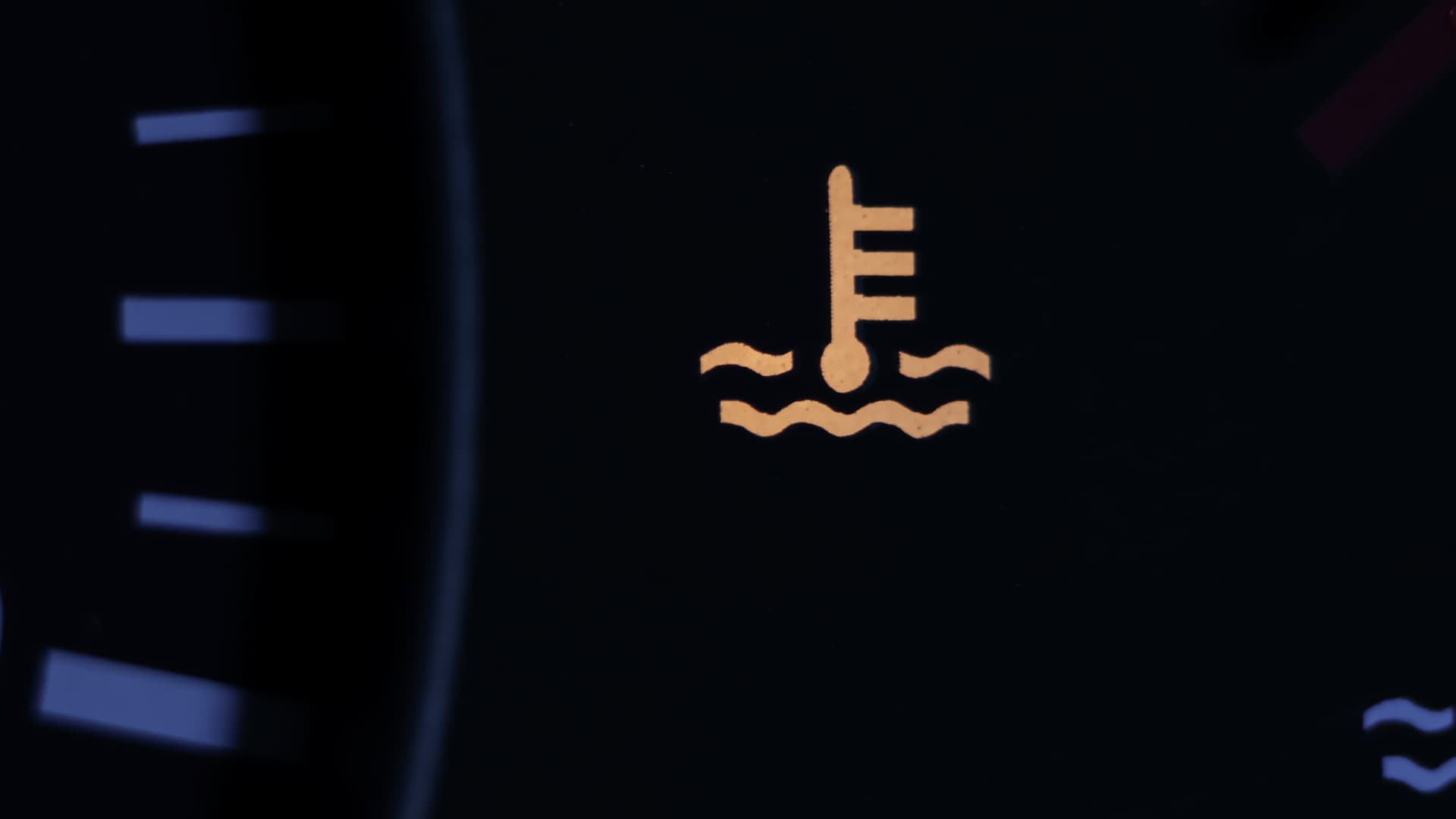
A coolant level warning light usually means the engine coolant is low, but it can also point to an overheating problem, depending on the vehicle and warning symbol.
Here’s what you need to know:
- If the warning light is red or appears with a rising temperature gauge, steam, or other signs of overheating, pull over safely and shut off the engine.
- Don’t open the radiator cap while the cooling system is hot and pressurized.
- Once the engine has cooled, check the coolant level and determine whether the warning is caused by low coolant or another cooling-system issue.
Keep reading to learn what the coolant warning light means, what may be causing it, and what you should do next.
This Article Contains:
- What Does the Coolant Level Warning Light Mean?
- Can You Drive With the Coolant Level Warning Light On?
- What Should You Do When the Coolant Light Comes On?
- Why Is My Coolant Level Low?
- Why Is the Coolant Light On When the Coolant Is Full?
- Can You Refill Coolant Yourself?
- How Does a Mechanic Diagnose a Coolant Warning?
- 4 FAQs About the Coolant Level Warning Light
What Does the Coolant Level Warning Light Mean?
A coolant level warning light usually means your vehicle has detected low engine coolant. In some vehicles, a similar coolant temperature warning light or engine temperature warning light may indicate that the coolant temperature is too high.
Coolant level matters because the cooling system needs enough coolant fluid to absorb engine heat and keep the engine temperature under control. If the level drops too low, the engine overheats.
Here’s how to interpret the most common coolant warnings:
| Warning | What It May Mean | What to Do |
| Yellow/orange coolant warning | Coolant level may be low | Check the coolant once the engine is cool |
| Red coolant temperature warning | Overheating engine, or critically low coolant | Stop safely and shut off the engine |
| Blue temperature light | Cold engine on some vehicles | Drive gently until normal operating temperature is reached |
| A warning appears with normal coolant level | Sensor or cooling-system fault | Arrange a diagnosis if it persists |
NOTE: Dashboard car lights, colors, and symbols vary by manufacturer. Check your owner’s manual if you’re unsure whether you’re seeing a low coolant light, temperature light, or another warning.
Once you understand the light, the next step is deciding whether it’s safe to keep driving.
Can You Drive With the Coolant Level Warning Light On?
It depends on whether the engine is overheating.
Do not continue driving if the coolant warning light appears with a high engine temperature, steam, rapid coolant loss, or other signs of overheating. Driving an overheating engine can cause serious and expensive damage.
If the low coolant light appears but the engine operating temperature remains normal, find a safe place to stop and let the engine cool before checking the coolant level in the coolant tank.
| Situation | Recommended Action |
| Red warning light and high temperature | Stop driving |
| Steam or a significant coolant leak | Stop driving |
| Low coolant warning and normal temperature | Check the coolant level once the engine is cool |
| Coolant level is normal, but the light remains on | Arrange a diagnosis |
If the warning doesn’t require you to stop driving immediately, the next step is to check the coolant safely and look for signs of a problem.
What Should You Do When the Coolant Light Comes On?
IMPORTANT: Never remove the coolant reservoir or radiator cap while the system is hot and under pressure. Hot coolant can spray out and cause severe burns.
Start by checking whether the engine is getting too hot:
- Check the temperature gauge. If the engine temperature is climbing into the hot range, pull over safely.
- Turn off the engine if overheating is suspected.
- Let it cool completely before inspecting anything under the hood.
- Check the coolant reservoir and compare the coolant fluid level with the MIN and MAX markings.
- Look for a leak around the reservoir, hoses, radiator, water pump, or beneath the vehicle.
- Top up the coolant if necessary, using the manufacturer-specified engine coolant or antifreeze mixture.
- Have the vehicle inspected if the warning light returns or the coolant level drops again.
If the coolant is genuinely low, topping it up may help temporarily. But it’s also important to understand why the coolant loss occurred.
Why Is My Coolant Level Low?
A properly functioning cooling system should not require frequent top-ups. Repeated low coolant level readings often point to a leak or another problem affecting coolant flow.
1. Coolant Leak
A coolant leak is one of the most common causes of falling coolant levels.
Leaks may develop around the:
- Radiator
- Coolant reservoir or expansion tank
- Hoses and connections
- Water pump
- Heater hoses
- Radiator cap or seals
A larger leak may leave coolant beneath the vehicle. Smaller leaks can be harder to spot and may only appear once heat and pressure build inside the system.
2. Cooling System or Engine Problem
Low coolant level can also result from a faulty thermostat, water pump, radiator, cooling fan, or another issue that affects coolant circulation and heat transfer.
In some cases, internal coolant loss may be linked to a damaged or blown head gasket. A head gasket problem can allow coolant to escape internally, although it should not be assumed to be the cause of every warning light.
The key concern is repeated coolant loss. If the level keeps dropping or the engine overheats, the underlying problem needs to be diagnosed rather than repeatedly refilling the reservoir.
But what if the coolant level looks normal and the warning still appears?
Let’s find out.
Why Is the Coolant Light On When the Coolant Is Full?
If the coolant reservoir is already at the correct level, don’t keep adding coolant.
A coolant light that remains on despite a full reservoir may point to a problem with the warning system instead of the coolant level itself.
Possible causes include:
- A faulty coolant level sensor
- Damaged sensor wiring or a loose connector
- Air trapped in the cooling system after service
- A problem with the reservoir or sensor assembly
- Manufacturer-specific warning-light behavior
A mechanic can test the coolant level sensor and, where relevant, the coolant temperature sensor to determine why the warning light remains on.
That brings us to the next question — one you’re probably already thinking about.
Can You Refill Coolant Yourself?
Yes, you can refill the coolant yourself, provided the engine is completely cool and the reservoir is safely accessible. Check the owner’s manual for the correct coolant specification, and add coolant only to the indicated level.
Keep these precautions in mind:
- Never open a hot cooling system
- Do not overfill the coolant tank
- Do not choose coolant based on color alone
- Use the coolant recommended by the manufacturer
Most importantly, adding coolant restores the level but does not fix the cause of coolant loss. If the warning light returns or you repeatedly need to add coolant, the system should be inspected to prevent further damage.
How Does a Mechanic Diagnose a Coolant Warning?
When the coolant light keeps returning, a mechanic first determines whether the coolant is genuinely low or whether a sensor or another component is triggering the warning incorrectly.
During the diagnosis, they may:
- Check the coolant level and condition.
- Inspect the reservoir, radiator, hoses, and connections.
- Look for signs of a coolant leak.
- Pressure-test the cooling system if necessary.
- Test the coolant level sensor or coolant temperature sensor.
- Check for a faulty thermostat, water pump, radiator fan, or radiator based on the symptoms.
- Investigate internal coolant loss if other symptoms point to an engine problem.
This helps identify the actual cause of the warning instead of simply adding coolant each time the light appears.
Got more questions?
Check out these FAQs.
4 FAQs About the Coolant Level Warning Light
Here are answers to some commonly asked questions about this warning alert:
An intermittent coolant light can occur when the coolant level is close to the sensor threshold. As the engine warms and coolant moves through the system, the sensor reading may change, and the light may switch off. A faulty sensor or wiring issue can cause similar behavior.
Yes. Coolant contracts slightly in cold temperatures. If the level is already near the minimum mark, this may be enough to trigger a warning light. However, a recurring temperature light or coolant warning should still be investigated rather than automatically blamed on cold weather.
Yes. Low coolant can reduce the amount of hot engine coolant flowing through the heater core, which may cause weak, inconsistent, or cold cabin heat.
It may turn off once the coolant reaches the correct level, depending on the vehicle and the cause of the warning. If the coolant is at the proper level but the warning light stays on, the problem may involve the coolant level sensor, wiring, coolant temperature sensor, or another cooling-system component.
Get Your Coolant Warning Checked
If the coolant warning keeps returning, the coolant level continues dropping, or you’re unsure whether your vehicle is safe to drive, call AutoNation Mobile Service experts to diagnose the issue at your driveway.
We offer upfront pricing and back all eligible repairs with a 12-month/12,000-mile warranty.