
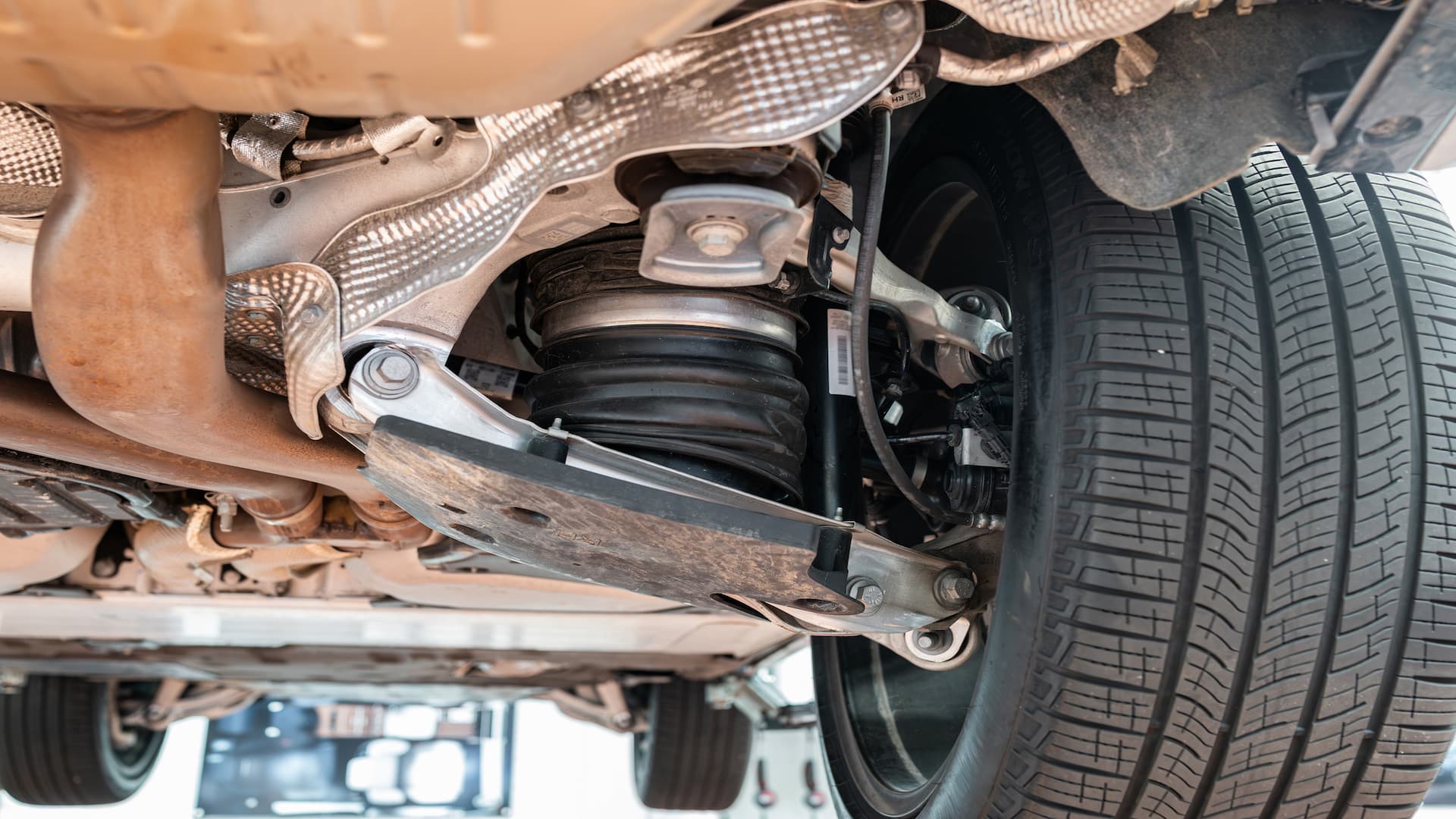
An air suspension warning light indicates that the vehicle has detected a fault in the system responsible for maintaining and adjusting ride height.
Common causes:
- Air leaks: Cracks or deterioration in the air springs, lines, or fittings can allow pressure to escape.
- Compressor problems: A worn compressor can’t build enough air pressure to maintain the vehicle’s ride height.
- Faulty ride-height sensors: Damaged or inaccurate sensors can send incorrect height readings to the suspension control system.
What you should do:
- Check for sagging: Look at your car. If one corner or the whole car sits too low, do not drive it.
- Limit driving: Take short, slow trips if the car is level, but avoid heavy loads or rough roads.
- Get a diagnostic scan: Take your car to a mechanic to read the specific fault codes stored in the suspension module.
If your air suspension warning light comes on, don’t leave the underlying issue unchecked. A professional service like AutoNation Mobile Service can diagnose the fault and determine what needs to be repaired.
This Article Contains:
- What Does an Air Suspension Warning Light Mean?
- Can You Drive With the Air Suspension Warning Light On?
- What Causes the Air Suspension Warning Light to Come On?
- How Does a Mechanic Diagnose an Air Suspension Fault?
- How Much Does Air Suspension Repair Cost?
- Can You Just Reset the Air Suspension Light?
What Does an Air Suspension Warning Light Mean?
This light indicates that the vehicle’s air suspension system has detected a fault in the air suspension system. This can involve an air spring leak, a faulty ride-height sensor, or an issue that prevents the system from maintaining the correct ride height.
Depending on the vehicle, the warning may appear as a vehicle icon with up-and-down arrows, a suspension or air-bag symbol, an ‘AIR SUSP’ warning, or a message such as ‘Check Air Suspension’ or ‘Suspension Fault.’
But does a warning light mean you need to park the car immediately?
Let’s find out.
Can You Drive With the Air Suspension Warning Light On?
Yes, you can drive a short distance if the car sits at its normal ride height, handles normally, and makes no unusual noises, particularly if the warning light is amber or yellow. Just avoid rough roads, heavy loads, and high speeds.
Don’t drive if the vehicle:
- Sags at one corner or across the rear
- Is resting on its bump stops
- Sits unusually low or scrapes the ground
- Shows changes in steering or handling
- Displays a red suspension warning or Vehicle Too Low message
- Has an air compressor that runs continuously
If any of these symptoms are present, stop driving and arrange for professional assistance to prevent further damage or loss of vehicle control.
Now for the detective work:
What Causes the Air Suspension Warning Light to Come On?
Some reasons for the air suspension warning are:
1. A Leaking Air Spring (Air Bag)
The rubber in an air spring can crack or deteriorate over time, allowing air to escape. A slow leak may cause the vehicle to sit lower after being parked or sag at one corner.
2. A Failing Air Compressor or Related Components
A weak or failed compressor may not generate enough pressure to raise the vehicle. A compressor that runs more frequently or for longer than usual can point to a leak or pressure problem.
If the dashboard displays a service air suspension system warning, a blown fuse, or other electrical issues, it can also prevent the compressor from operating.
3. A Faulty Ride Height Sensor
Ride height sensors measure the vehicle’s position and send that information to the suspension control system. A faulty or misaligned sensor can provide inaccurate readings, causing the system to trigger a warning or adjust the ride height incorrectly.
4. Wiring, Connectors, or the Control Module
Damaged wiring, corroded or loose connectors, or a faulty suspension control module can interrupt communication within the system and trigger a warning. In some vehicles, wiring damage caused by chafing can produce suspension-related fault codes.
5. Low Battery Voltage or Extreme Cold
A weak battery or low system voltage can interfere with suspension operation. At the same time, cold temperatures can affect air pressure and make it harder for the system to reach or maintain the required ride height.
The warning light gives you a clue — but a proper diagnosis reveals the culprit.
How Does a Mechanic Diagnose an Air Suspension Fault?
Because the air suspension system contains pressurized components and electrical systems, diagnosing the fault can involve safety risks and requires specialized equipment. It’s best to have a qualified mechanic perform these checks rather than attempting to troubleshoot or test the system yourself.
Here’s how they’ll go about the process:
- Scan the suspension module: Use a manufacturer-capable scan tool to check for stored and active fault codes that may not appear on a basic OBD-II scan.
- Check ride height sensors: Compare live sensor readings with the vehicle’s actual ride height to identify inaccurate or implausible readings.
- Test for air leaks: Inspect the air springs, air lines, and fittings, and use a soapy-water solution to help locate escaping air.
- Test the compressor: Check whether the compressor can build the required pressure and whether it is drawing excessive electrical current.
- Inspect electrical components: Check the relevant fuses, relays, wiring, and connectors for damage, corrosion, or poor connections.
- Check battery voltage: Confirm that the vehicle’s battery and charging system are providing adequate voltage for the suspension system to operate properly.
Next, let’s find out what this process might cost you.
How Much Does Air Suspension Repair Cost?
Air suspension repairs typically cost about $620 to $1,400, depending on the failed component, vehicle, parts used, and labor rates. More complex systems and luxury vehicles can cost more, particularly when specialized parts or diagnostic equipment are required.
Typical repair costs include:
- Air spring: $1,400
- Air compressor: $1,045
- Control module: $855
- Ride height sensor: $620
If you plan to reset the warning light on your own, keep reading.
Can You Just Reset the Air Suspension Light?
Yes, you can clear an air suspension warning light with a compatible diagnostic scan tool, but resetting the warning message doesn’t repair the underlying fault. If the problem remains, the warning will likely return when the system detects the fault again.
Clearing the error code before diagnosing the issue can also remove valuable diagnostic information. Have a qualified mechanic inspect the system and read the error codes first, then clear the warning after the underlying problem has been repaired.
Get Your Air Suspension System Back on Track
An air suspension warning light indicates that something in the system needs attention. If the warning persists after a restart or your vehicle is sitting unusually low, don’t ignore it.
A professional inspection can help identify the underlying issue before it affects your vehicle’s ride height, handling, or other suspension components.
Why not let AutoNation Mobile Service take a look?
We’re a mobile auto repair and maintenance solution available seven days a week. We also offer upfront pricing, a simple online booking process, and a 12-month, 12,000-mile warranty on all repairs.
Book a service today to get your air suspension fixed.