
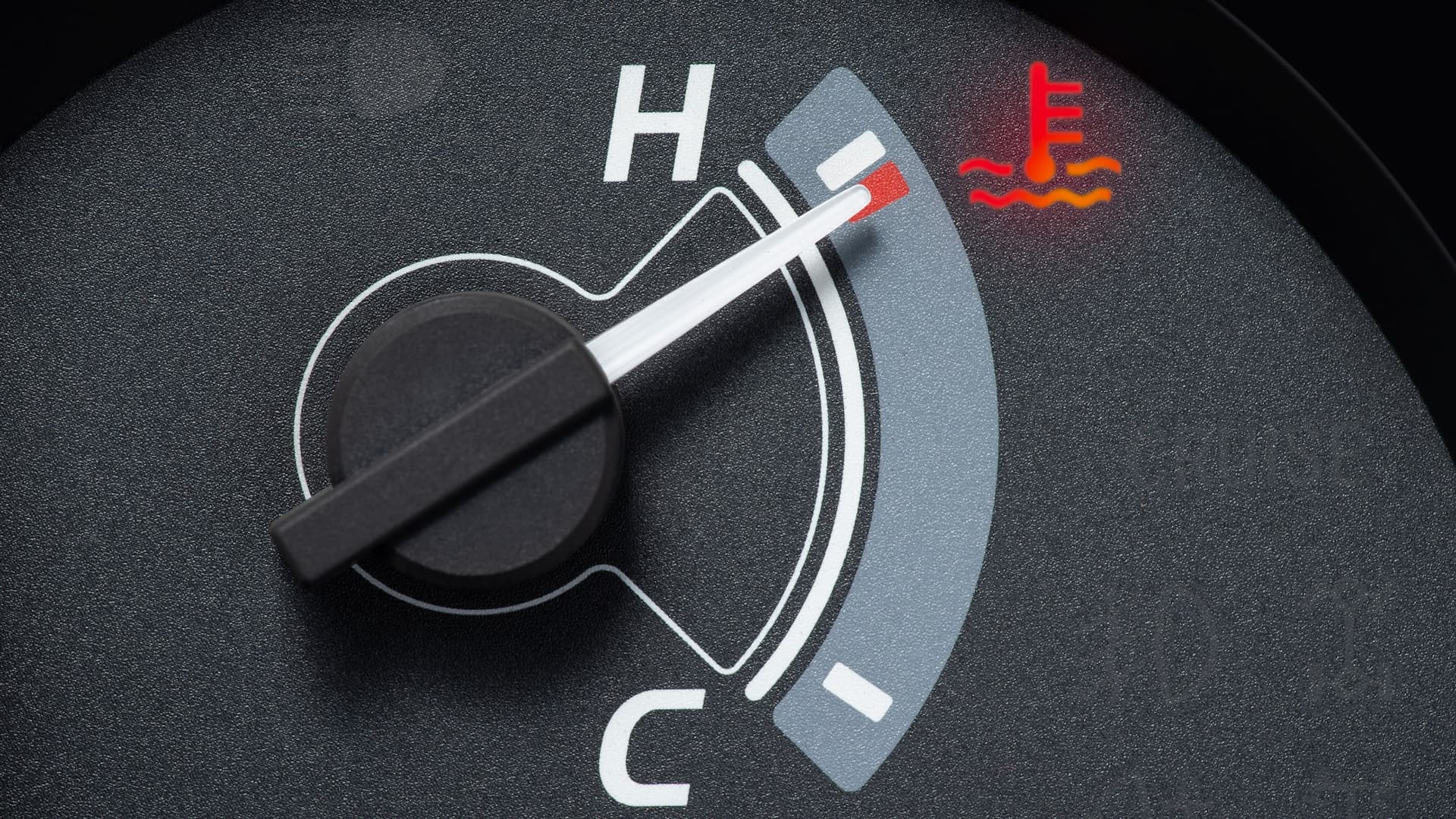
Have a lit engine temperature warning light on your dashboard?
If you see a blue light, it usually means the engine is still warming up and isn’t cause for concern. However, a red or orange light means the engine is overheating and needs immediate attention.
Understanding what the warning light means and knowing what to do next can help prevent serious engine damage. We’ll also look at common causes and how to fix the problem.
This Article Contains:
- What Does the Engine Temperature Warning Light Mean?
- Can You Drive With the Engine Temperature Warning Light?
- Why Is Your Engine Temperature Light On? 9 Common Causes
- What to Do When Your Engine Temperature Warning Light Comes On
- How Does a Mechanic Address the Engine Temperature Warning Light?
- How Can You Prevent the Engine Temperature Warning Light?
What Does the Engine Temperature Warning Light Mean?
This warning light is designed to alert you when your engine’s coolant temperature is outside its normal operating range. On most vehicles, the warning light is represented by a thermometer floating above wavy lines, symbolizing engine coolant.
Under normal driving conditions, most engines operate between 195°F and 220°F (i.e., 90°C to 105°C). The cooling system continuously circulates coolant through the engine and radiator to maintain this temperature. If the coolant becomes too hot, the warning light illuminates to help prevent overheating and serious engine damage.
NOTE: Unlike the check engine light, which can indicate a wide range of engine or emissions-related problems, the engine coolant temperature light specifically indicates a problem with your vehicle’s cooling system or operating temperature.
Now that you know what the warning light means, let’s understand whether it’s safe to continue driving.
Can You Drive With the Engine Temperature Warning Light?
The engine coolant temperature light may vary in symbol, color, and behavior depending on your vehicle’s make and model. However, the warning color usually indicates how serious the issue is and what action you should take next.
| Light Color | Meaning | Recommended Action |
| Blue light | The engine is cold and hasn’t reached its optimal temperature. | Drive gently until the car engine warms up. Avoid heavy acceleration or high engine speeds. |
| Red/orange light | The engine is overheating, or the coolant temperature is dangerously high. | Pull over safely as soon as possible and switch off the engine. |
| Flashing blue or red lights | May indicate a more urgent cooling system problem or a manufacturer-specific warning. | Stop driving when it’s safe, refer to your owner’s manual, and contact a professional if necessary. |
Important: Driving with an overheating engine can damage the head gasket, warp the cylinder head, crack the engine block, or even result in complete engine failure. Even if your vehicle still seems to drive normally, the engine can overheat quickly, leading to repairs that are far more expensive than addressing the issue early.
If you’re wondering what causes this light to come on in the first place, let’s take a look.
Why Is Your Engine Temperature Light On? 9 Common Causes
The engine temperature warning light can illuminate for several reasons, ranging from something as simple as a low coolant level to more serious internal engine problems.
Here’s a look at all possible causes:
1. Low Coolant
Coolant absorbs engine heat and transfers it to the radiator, where it is cooled before circulating back through the system. If the coolant level drops too low, the engine can’t regulate its temperature effectively and may begin to overheat.
Symptoms:
- Low coolant level in the reservoir
- A temperature gauge that’s running higher than normal
2. Coolant Leak
A leak in the water pump, hoses, radiator, or gaskets can cause coolant levels to drop, preventing your vehicle’s cooling system from working properly. Even a small leak can eventually trigger the engine temperature warning light.
Symptoms:
- Frequent need to top up coolant
- Coolant puddles beneath the vehicle
- Visible coolant leaks in the engine compartment
- Sweet smell around the engine
- White residue around cooling system components
3. Faulty Thermostat
The thermostat controls when coolant circulates between the engine and radiator. If it’s stuck closed, it can restrict coolant flow, resulting in an overheated engine.
Symptoms:
- The temperature gauge rises quickly after startup
- The engine overheats within a few minutes of driving
4. Faulty Water Pump
The water pump helps circulate coolant throughout the cooling system. If it fails, coolant flow is reduced or stops completely, allowing engine temperatures to rise rapidly.
Symptoms:
- Coolant leak near the water pump
- Whining or grinding noise from the engine
- Engine overheating
5. Radiator Problems
A clogged, damaged, or obstructed radiator can’t efficiently remove heat from the coolant. As a result, excess heat remains trapped in the engine.
Symptoms:
- The engine overheats in traffic or hot weather
- Coolant leaks
- Damaged or clogged radiator fins
6. Cooling Fan Failure
The cooling fan pulls air through the radiator when you’re idling or moving at slow speeds. If the fan fails, your engine may overheat even though it runs normally at higher speeds.
Symptoms:
- Engine overheats while stopped or in slow-moving traffic
- The temperature returns to normal once the vehicle is moving
7. Low Engine Oil Level
Engine oil helps lubricate moving parts and carries away some of the heat generated during operation. Low oil levels increase friction, causing engine temperatures to rise.
Symptoms:
- Low oil level on inspection
- Oil pressure warning light
- Burning oil smell
8. Internal Engine Problems
Problems with critical engine components, such as a blown head gasket, cylinder head, or engine block, can cause internal coolant leaks and persistent overheating. These issues often require extensive repairs.
Symptoms:
- White exhaust smoke
- Milky engine oil
- Coolant loss without visible leaks
- Persistent overheating
9. Faulty Temperature Sensor
The sensor monitors coolant temperature and sends data to the vehicle’s computer. If it fails, it may trigger the warning light even when the engine isn’t actually overheating.
Symptoms:
- The warning light comes on intermittently
- Erratic temperature gauge readings
- No other signs of engine overheating
So what happens if you notice one or more of these signs while driving?
What to Do When Your Engine Temperature Warning Light Comes On
If you spot the coolant temperature warning light while driving, follow these steps to help prevent further engine damage.
- Pull over safely as soon as possible.
- Turn off the air conditioning to help reduce engine load. If you need to drive a short distance to reach a safe location, turn the heater to its highest setting, as this will draw heat away from the engine.
- Switch off the car engine and allow it to cool for at least 30 minutes.
- Don’t remove the radiator cap while your engine is still hot, as pressurized boiling coolant and steam can cause serious burns.
- Once the engine temperature has cooled down, inspect the coolant level in the reservoir. If your vehicle allows it, you can also take off the radiator cap and verify that the radiator is full.
- Inspect the engine compartment for visible coolant leaks, steam, or damaged cooling system components.
- Top up the coolant if the level is low using the manufacturer-recommended coolant. If coolant isn’t available, distilled water can be used temporarily in an emergency until the cooling system can be properly serviced.
If these steps don’t resolve the problem, the warning light stays on, or the engine overheats again, arrange a professional inspection to identify and repair the root cause.
How Does a Mechanic Address the Engine Temperature Warning Light?
To fix the warning light, your mechanic will inspect the coolant system to determine why the warning light came on before carrying out the necessary repairs.
Here’s an overview of what they’ll do:
- Verify the coolant level and check the cooling system for any leaks, damaged hoses, or radiator issues.
- Test key cooling system components, including the thermostat, water pump, radiator fan, etc, to identify the source of the problem.
- Repair or replace the faulty component and refill or replace the coolant if needed.
- Pressure-test the coolant system, clear any fault codes (if applicable), and verify the engine maintains its optimal temperature without the warning light returning.
The best way to prevent an overheating engine is to stay on top of routine cooling system maintenance. Here are the ways you can do this.
How Can You Prevent the Engine Temperature Warning Light?
While overheating can’t always be prevented, following these five steps can significantly reduce the risk of severe engine damage from this issue:
- Park your vehicle in the shade (if possible). You can also use sunshades to help keep your vehicle cool during hot weather.
- Regularly monitor the engine temperature gauge and coolant level. Only top up coolant when the engine has completely cooled, and allow the engine to cool down if it begins to overheat.
- Keep a spare bottle of the manufacturer-recommended coolant in your vehicle so you can top up the system if the coolant level becomes low.
- If the engine starts to overheat, turn the heater to its highest setting to draw heat away from the engine by directing it into the cabin (use only as a temporary fix).
- Have the cooling system inspected and serviced at the intervals recommended by your vehicle’s manufacturer. As a general guideline, you should get your coolant changed every 60,000 to 100,000 miles.
Trust AutoNation Mobile Service to Diagnose and Fix the Warning Light
Ignoring a coolant temperature warning light can lead to severe engine damage and expensive repairs.
If the warning light is on or you have an overheated engine, let the expert technicians at AutoNation Mobile Service diagnose and fix the underlying problem.
Our mobile mechanics come to your driveway, seven days a week, so you don’t have to risk driving an overheating vehicle. We also back every service with a 12-month, 12,000-mile warranty for added peace of mind.