
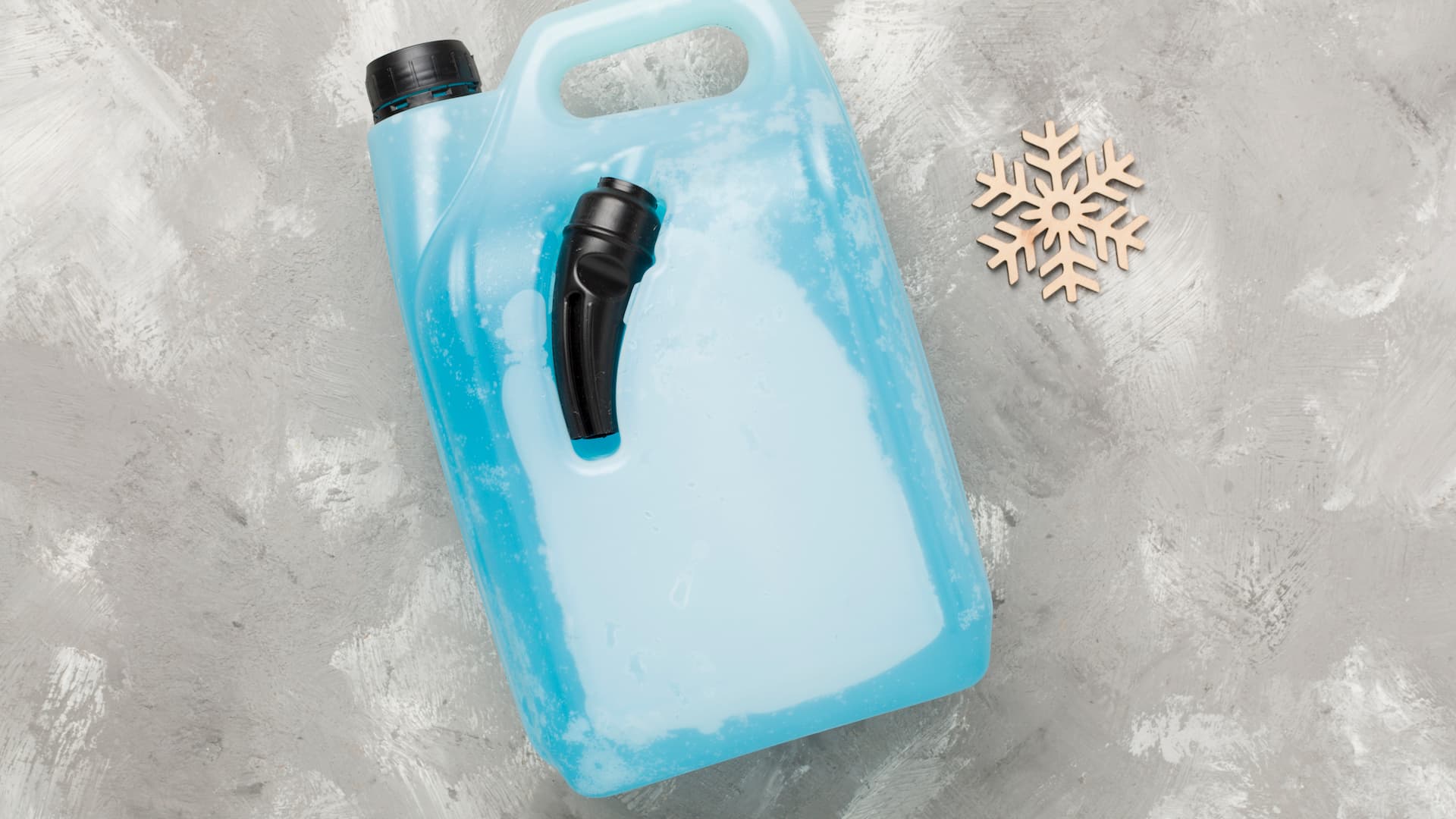
A 50/50 mix of antifreeze and water typically provides freeze protection down to about –34°F (–37°C). In extremely cold climates, some coolant concentrates can be mixed at 70/30 for protection down to around –84°F (–64°C).
However, more antifreeze isn’t always better. Concentrations above 70% can actually reduce freeze protection and heat transfer, so always follow your vehicle and coolant manufacturer’s specifications.
Below, we’ll explain how coolant behaves in cold weather and how to protect your cooling system throughout winter.
This Article Contains:
- At What Temperature Does Coolant Freeze?
- Under What Weather Conditions Does a Car Need Antifreeze?
- 5 Essential Coolant Care and Maintenance Tips
- 2 FAQs About Coolant Freezing
At What Temperature Does Coolant Freeze?
The freezing temperature of a coolant depends on its mixture:
- A 50/50 coolant mixture of antifreeze and water freezes at about –34°F (–37°C) and is the most commonly recommended ratio for everyday driving conditions.
- A 70/30 antifreeze-to-water mix offers greater cold protection. It freezes at roughly –84°F (–64°C), but it’s typically used in extremely cold climates.
Pure antifreeze provides less freeze protection than a properly diluted mixture and shouldn’t be used unless specifically directed by the product or vehicle manufacturer.
NOTE: Coolant is a mixture of antifreeze and water. The water helps with heat transfer, while antifreeze lowers the freezing point and prevents corrosion. Using the wrong ratio can lead to freezing, overheating, or engine damage.
To know more, check out our detailed article on How Coolant and Antifreeze Differ.
Now that we know the freezing points of coolant, let’s look at when your car actually requires antifreeze.
Under What Weather Conditions Does a Car Need Antifreeze?
Antifreeze plays a critical role in protecting your vehicle in both cold and hot conditions:
A. Cold Weather Protection
If you live in a cold climate, the water in your cooling system can freeze if you aren’t using antifreeze. Since water freezes at 0°C, this can quickly lead to cracked engine blocks, burst radiators, or damaged hoses.
A 50/50 mix of antifreeze and water lowers the freezing point to about –37°C.
B. Hot Weather Protection
Despite its name, antifreeze is just as important when temperatures rise during the summer.
The same 50/50 mixture also raises the coolant’s boiling point above that of plain water. Combined with the cooling system’s pressure, this helps the coolant withstand high engine temperatures without boiling. Engines generate extremely high temperatures during everyday driving. Without proper coolant protection, excess heat can damage cylinder heads, pistons, and gaskets.
Even in mild temperature regions, antifreeze does more than regulate temperature. It contains corrosion inhibitors that prevent rust, scale buildup, and internal wear, helping your radiator and engine last longer.
So, coolant can protect your engine and combustion system all year round. However, regular maintenance is essential to get the most out of your antifreeze.
Let’s understand how to go about it.
5 Essential Coolant Care and Maintenance Tips
Here are some ways to keep your coolant in top condition:
- Inspect the coolant reservoir level monthly and before long drives. The level should stay between the “Min” and “Max” marks.
- Always use the coolant specified in your owner’s manual and follow the manufacturer’s recommended replacement interval. Coolant service intervals vary considerably by vehicle and coolant formulation, so don’t rely on coolant type alone to determine when it needs changing.
- Don’t mix incompatible coolants. Using coolant that doesn’t meet your vehicle’s specifications can reduce corrosion protection or cause deposits and other cooling-system problems. If you’re unsure which coolant is already in the system, check the owner’s manual rather than relying on color alone.
- Look for warning signs. Cloudy coolant, leaks under the car (green, orange, pink, or yellow liquid), rust in the reservoir, or dashboard alerts signal it’s time to replace coolant.
- Select an antifreeze ratio based on your climate for optimal protection.
2 FAQs About Coolant Freezing
Yes. Coolant can freeze if temperatures fall below the protection provided by its antifreeze-to-water ratio. A typical 50/50 mixture provides freeze protection down to about –34°F (–37°C).
Not necessarily. Increasing the antifreeze concentration can improve freeze protection up to a point, but mixtures containing more than about 70% antifreeze can reduce freeze protection and heat transfer.
Simplify Coolant Care with AutoNation Mobile Service
Using the proper antifreeze mixture is crucial for protecting your engine throughout the year.
If you’re unsure which coolant is right for your vehicle, expert technicians at AutoNation Mobile Service can help.
We can come to you to inspect your coolant and perform a flush or top-up as needed. We’re available seven days a week, provide upfront pricing, and back every service with a 12-month | 12,000-mile warranty.
Book a service today and enjoy stress-free winter car care.