
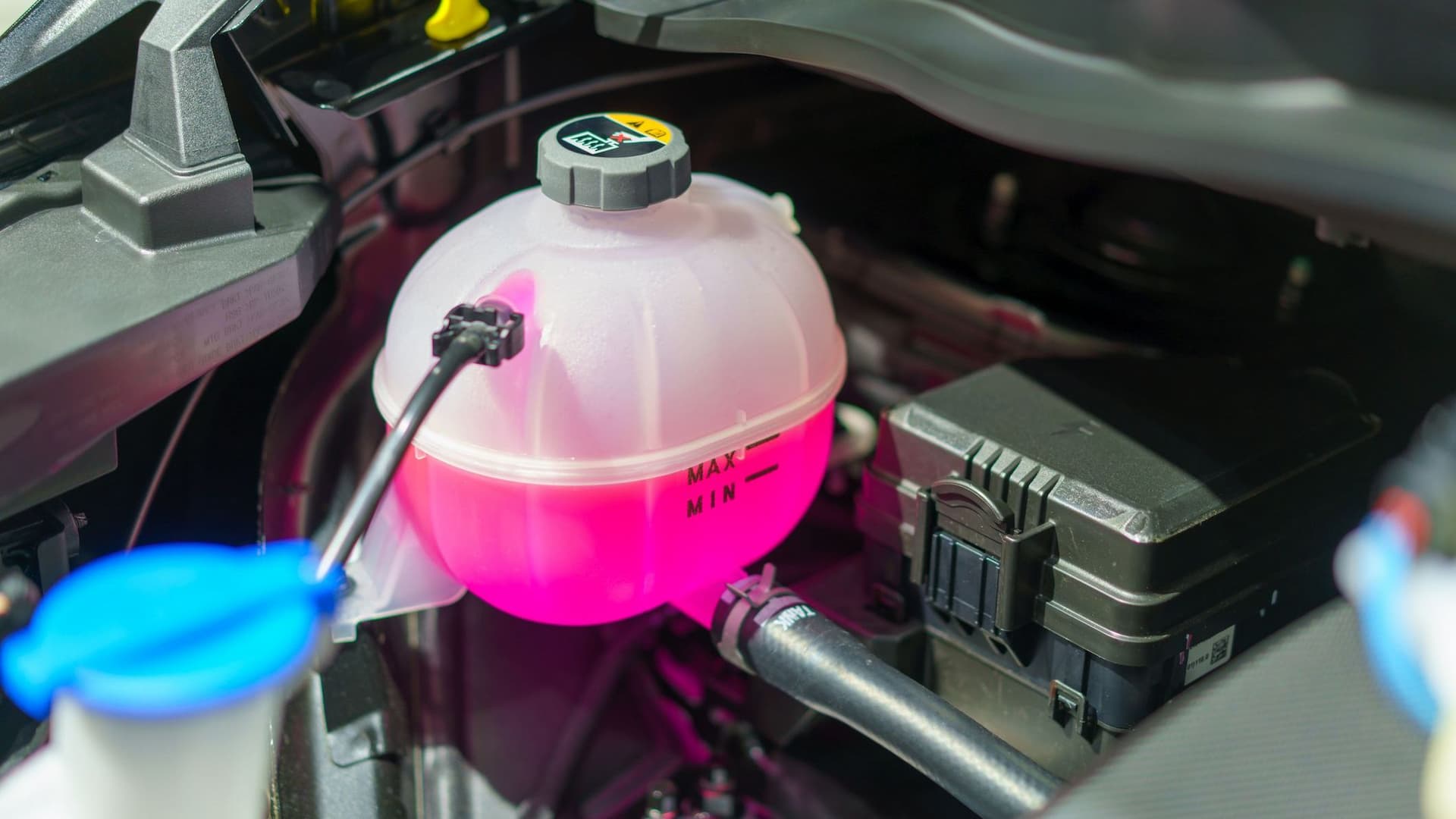
A coolant tank replacement typically costs between $150 and $600 for most vehicles. Some repairs stay near the lower end, while others cost more, depending on the tank design, labor time, and the condition of the cooling system.
Delaying the repair can cause low coolant levels, risking serious engine damage. From there, you’re looking at a much higher repair cost.
But before you take the final call, you must have a clear picture of the repair.
Let’s break down pricing, warning signs, lifespan, and what the replacement process usually involves.
This Article Contains:
- How Much Does Coolant Tank Replacement Cost?
- Is It Worth Replacing a Coolant Reservoir?
- Can You Drive With a Leaking Coolant Reservoir?
- Signs You May Need Coolant Reservoir Replacement
- How Long Does a Coolant Reservoir Last?
- What Happens During Coolant Reservoir Replacement?
How Much Does Coolant Tank Replacement Cost?
This is what coolant reservoir replacement usually costs:
A. Range
The average cost of a coolant reservoir replacement is typically between $150 and $600 for most passenger vehicles.
Here’s a breakdown of all the expenses:
- Labor cost: $100 to $350, which usually covers diagnosing the problem, removing the leaking coolant tank, and installing the new unit.
- Parts cost: $50 to $250, covering the reservoir itself along with coolant and small replacement materials.
Luxury models, turbocharged engines, and tanks with integrated sensors can push prices beyond the norm.
B. Factors Affecting Cost
These practical factors influence what you end up paying:
- Vehicle make, model, and engine layout: Tightly packed engine bay layouts sometimes require removing intake tubing, battery trays, or nearby components before the tank can come out. More teardown usually means higher labor charges.
- OEM vs aftermarket part selection: OEM (original equipment manufacturer) parts usually cost more because they match the original factory design and fitment. Aftermarket options can save money, but quality and long-term durability may vary.
- Tank quality and design: Basic overflow tanks cost less than pressurized surge tanks or dual-chamber designs. Stronger materials and higher pressure ratings increase manufacturing cost.
- Integrated coolant level sensors: Some reservoirs include built-in coolant level sensors that require replacing the full assembly if the sensor fails. Simpler designs with separate sensors usually cost less to repair.
- Labor rate variations by region and shop type: Your location and service provider alone can noticeably change the final quote. For instance, labor rates in urban regions run higher than those in rural areas. Similarly, dealerships usually charge more money than independent auto repair shops.
- Diagnostic time required: If the source of the coolant leaks is unclear, technicians may need extra inspection time or pressure testing before replacing any parts. This extra time spent adds to your bill.
- Cooling system bleeding complexity: Some vehicles trap air easily after repairs. Removing air pockets from the coolant system can add extra labor time because improper bleeding affects proper operation and cooling performance.
- Additional services: The total can climb if the repair also needs hose replacement, cleanup, coolant disposal, or extra maintenance work.
Repair cost matters, but so does knowing whether the tank is actually worth replacing.
Is It Worth Replacing a Coolant Reservoir?
Yes, it is.
These plastic tanks deal with constant heat and pressure changes from normal driving. Once a crack forms, it usually keeps spreading instead of staying contained.
A small leak can quickly turn into serious coolant loss, especially if the reservoir can no longer hold proper pressure. That may lead to overheating, steam from the engine bay, or worse — expensive engine damage.
Of course, you can use temporary sealants to keep the leak in check. But they rarely last long under normal operating conditions. Replacing the faulty tank early usually saves more money than waiting for a bigger problem to develop.
Which leads us to the next question:
Can You Drive With a Leaking Coolant Reservoir?
Sometimes, but only for a short distance and under the right conditions.
You may be able to drive a short distance for repairs if:
- The coolant level still looks safe
- The temperature gauge stays normal
- There’s no visible steam or smoke from the engine bay
- The vehicle is not actively losing large amounts of coolant
That said, even a slow leak can suddenly get worse once the engine heats up and system pressure rises. A cracked tank can fail without much warning, especially after sitting in traffic or driving in hot weather.
You should avoid long trips, highway driving, towing, or heavy loads if the cooling system is already losing coolant.
In many cases, the tank starts showing visible wear long before it cracks completely.
Signs You May Need Coolant Reservoir Replacement
A failing reservoir usually gives these warning signs before the leak turns into a bigger cooling system problem:
- Visible cracks in the reservoir, especially around seams or mounting points.
- A sweet smell near the engine bay, often caused by small coolant leaks landing on hot components.
- A growing puddle under the vehicle after it sits parked for a while.
- Repeated low coolant level warnings, even after topping off the coolant system.
- White smoke or steam coming from under the hood after the engine reaches operating temperature.
- Coolant residue or dried buildup around the tank, hose connections, or near the radiator cap.
- Reservoir material that looks brittle, faded, warped, or damaged from years of heat exposure.
- Rising temperatures or reduced performance once the cooling system struggles to circulate coolant properly.
- Frequent coolant loss without any obvious leak appearing underneath the truck or vehicle.
If you think you need a replacement, it helps to know how long these cooling tanks last.
How Long Does a Coolant Reservoir Last?
Most coolant reservoirs last around 5 to 10 years under normal driving conditions.
Over time, repeated heat cycles and constant system pressure cause the material to weaken. Cracks, warping, and slow coolant leaks become more common as the tank ages, especially in hotter climates or high-mileage vehicles.
Additionally, poor maintenance and contaminated coolant can shorten the reservoir’s lifespan even faster.
Replacing a leaking reservoir sounds simple, but the job involves more than swapping out one part.
What Happens During Coolant Reservoir Replacement?
Replacing a coolant reservoir involves working with a pressurized cooling system and careful bleeding procedures. Mistakes like trapped air pockets, loose hose connections, or the wrong coolant mixture can lead to overheating, poor performance, or recurring coolant leaks.
That’s why most drivers leave this repair to a professional mechanic, who’d follow these steps:
- Inspect the reservoir and entire cooling system for cracks, seepage, or related damage.
- Perform a pressure test if the source of the coolant leaks is unclear.
- Relieve system pressure safely before opening the coolant system.
- Drain enough coolant to prevent spills during the repair.
- Disconnect the hose connections and any electrical connectors attached to the tank.
- Remove mounting hardware and take out the damaged reservoir.
- Install the new reservoir and secure all fittings properly for proper operation.
- Refill the coolant system using the correct coolant type and water mixture for the vehicle.
- Bleed trapped air pockets from the system so coolant circulates properly.
- Run the engine and perform a final leak check before returning the vehicle.
Trust AutoNation Mobile Service for Coolant Tank Replacement
A leaking coolant reservoir is not something you want to ignore for long. Replacing it early helps protect the engine, maintain proper cooling system pressure, and reduce the risk of expensive repairs later.
AutoNation Mobile Service makes the repair process far more convenient. Our experienced mobile mechanic team comes directly to your location and is available seven days a week.
We offer upfront pricing, and back every repair with a 12-month | 12,000-mile warranty for added peace of mind.
Get a free quote online and schedule your coolant reservoir replacement without the hassle of sitting around at repair shops.