
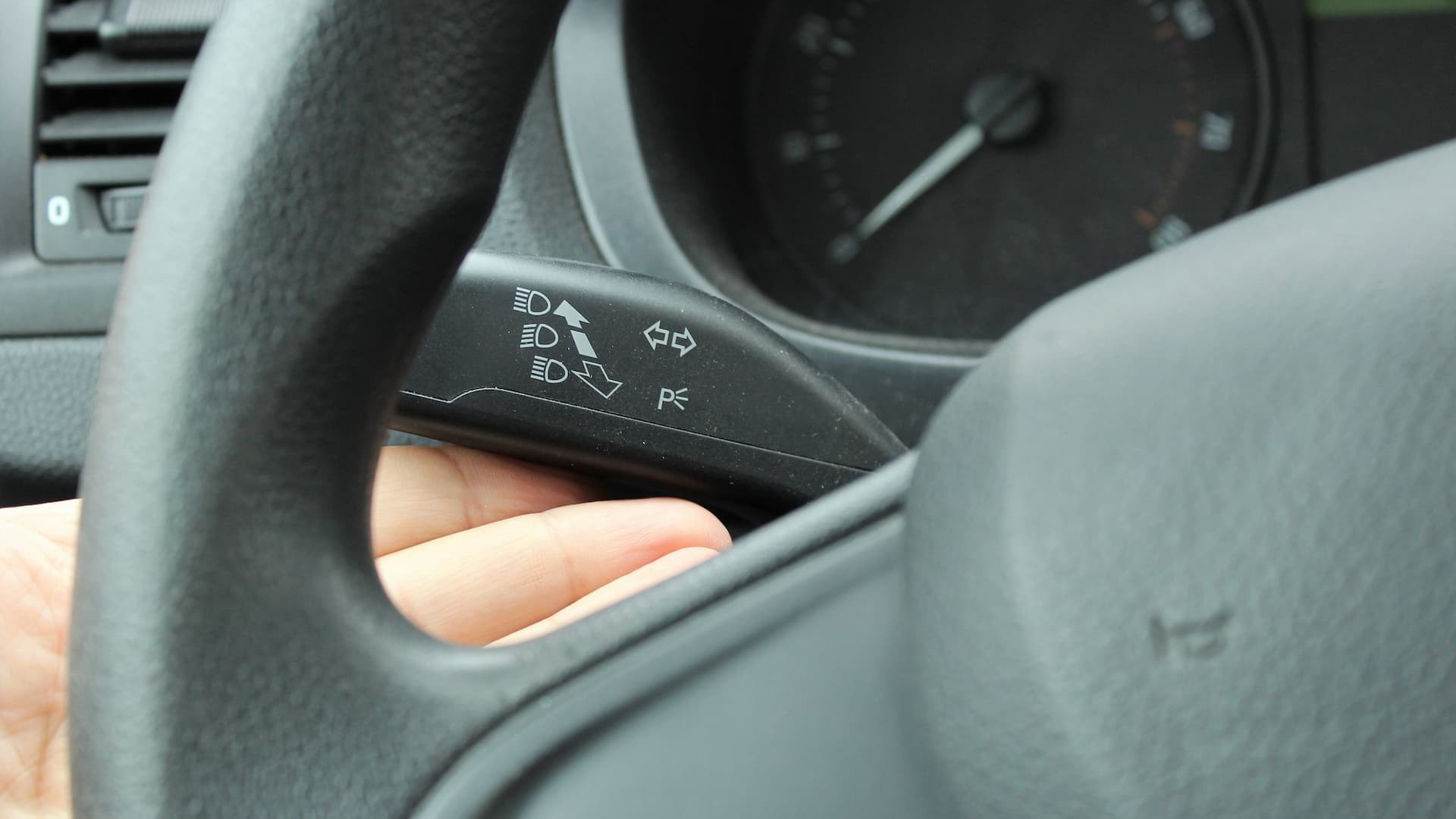
When your turn signals stop working reliably, every lane change and turn becomes less predictable for other drivers.
The good news?
You can resolve this issue with a turn signal switch replacement, which typically costs $160 to $320.
Keep reading to know more about turn signal switch replacement costs, pricing factors, symptoms of failure, and the repair process.
This Article Contains:
- How Much Does a Turn Signal Switch Replacement Cost?
- Is it Safe to Drive with a Damaged Turn Signal Switch?
- What Are the Signs of a Bad Turn Signal Switch
- What Causes Turn Signal Switch Failure?
- How to Diagnose and Replace a Bad Turn Signal Switch
How Much Does a Turn Signal Switch Replacement Cost?
Here’s a breakdown of the expenses:
A. Range
The average cost of a turn signal switch replacement service is between $160 to $320.
This includes:
- Parts cost: $60 to $150
- Labor charge: $100 to $170
B. Factors Affecting Cost
These factors can influence your final bill:
- Vehicle make and model: In many luxury and modern vehicles, the turn signal switch is built into a complex steering column assembly (with cruise control or advanced driver-assistance systems). Accessing and replacing the switch in these vehicles typically requires more labor, which can increase repair costs. Parts for these models may also be more expensive than those for standard vehicles.
- Location and repair shop type: Labor costs are usually higher in major cities and urban areas than in smaller towns or rural areas. Dealerships usually charge more than independent shops and mobile mechanics.
- OEM vs. aftermarket parts: Original equipment manufacturer (OEM) parts are typically more expensive but are designed specifically for your vehicle. Aftermarket parts cost less, but their quality and fit can vary.
- Related repairs: During diagnosis or replacement, a mechanic may uncover other issues affecting the turn signal system, such as damaged wiring or bad turn signal bulbs. Addressing these problems simultaneously can increase the total repair cost. For example, a turn signal light bulb replacement will add around $85 to $685 to your total repair bill.
It can be tempting to delay repairs to save money in the short term. However, continuing to drive with a faulty turn signal switch can have serious consequences.
Is it Safe to Drive with a Damaged Turn Signal Switch?
No, it’s not.
A broken turn signal switch can prevent your turn signals from working properly, making it difficult for other drivers to anticipate your lane changes and turns. This increases the risk of accidents, especially in heavy traffic or at intersections.
Since functioning turn signals are required by law in most states, driving with a defective switch could also result in traffic fines and tickets.
But how can you tell if the turn signal switch is actually the problem?
Let’s find out.
What Are the Signs of a Bad Turn Signal Switch
Here are some common symptoms of a faulty blinker switch:
- Turn signals not working: If you activate the turn signal lever and nothing happens — no lights, dashboard indicator, or clicking noise — the turn signal switch may have failed.
- Only one turn signal works: If moving the turn signal lever activates the left signal but not the right indicator light (or vice versa), your turn signal system is malfunctioning. The reason could be a faulty switch or a bad bulb.
- Turn signals flashing too fast or too slow: An unusually fast or slow blinking rate can indicate a problem with the turn signal system. While a burnt-out bulb is a common cause, a failing turn signal switch can also be responsible.
- Hazard lights work, but turn signals don’t: If the hazard lights function normally but the turn signals do not, the issue may be with the turn signal switch or its wiring. Although both systems use the same bulbs, they operate through separate circuits.
- Unusual clicking noise: Fast, irregular, or no clicking sounds when using the turn signals can indicate a problem with the switch, flasher relay, or body control module.
- Other steering column controls aren’t working: On many vehicles, the turn signal switch is integrated into a multifunction switch that also controls the high beams, headlamps flash function, windshield wipers, and other exterior lights. If several functions on the same stalk stop working properly, the multifunction switch may be failing.
Now that you know the key signs, the next step is to understand what causes the turn signal switch to fail.
What Causes Turn Signal Switch Failure?
Your turn signal switch may malfunction due to several reasons:
- Corrosion from moisture and road salt: Moisture, road salt, and other contaminants can find their way into the steering column and corrode the switch’s internal components. This corrosion can interfere with electrical connections and prevent the turn signals from operating properly.
- Wiring problems or loose connections: Damaged wiring, loose connectors, bad fuses, or electrical shorts can disrupt communication between the turn signal switch and the lighting system. This may cause the turn signals to work intermittently or fail completely.
- Worn internal springs and components: The turn signal switch contains small springs and mechanical parts that wear down over time. As these components lose tension or break, the switch may fail to make proper electrical contact, leading to malfunctioning turn signals.
NOTE: Avoid hanging air fresheners, keychains, or other items from the turn signal stalk. The extra weight can place unnecessary stress on the switch mechanism, potentially leading to premature wear.
While understanding the causes is helpful, accurately diagnosing the problem is the key to a successful repair.
How to Diagnose and Replace a Bad Turn Signal Switch
A turn signal switch replacement service involves disassembling components around the steering column and working near the airbag system. Even a small mistake can damage electrical components, create steering column issues, or accidentally trigger safety system faults.
A professional mechanic has the proper tools and service information to diagnose the problem accurately and replace the switch safely.
Here’s how the mechanic will proceed:
A. Diagnosis
- Inspect the turn signal fuses and relay (or control circuit) for potential faults.
- Test the turn signal circuit for proper power.
- Disconnect the battery and wait at least 10 minutes to allow any residual electrical charge to dissipate.
- Take off the steering column covers by removing the retaining screws.
- Visually inspect the wiring and connectors for damage or loose connections.
- Confirm that the blinker switch is faulty if the fuse, relay (or control circuit), and electrical tests pass, but the signals still don’t operate correctly.
The mechanic will then proceed with changing the faulty turn signal switch.
B. Replacement
- Disconnect the electrical wiring harness from the turn signal switch.
- Remove the mounting screws securing the faulty turn signal switch to the steering column assembly.
- Extract the broken turn signal switch from its mounting position.
- Install the new turn signal switch in the correct position on the steering column and reconnect the electrical wiring harness to the new switch.
- Reinstall the steering column covers.
- Reconnect the battery.
- Test both turn signals, hazard lights, headlamps, and high beams to verify the repair has been completed successfully.
Book a Convenient Turn Signal Switch Repair
Reliable turn signals are an important safety feature for your vehicle. Replacing a faulty switch is often far less costly than dealing with the consequences of an accident or traffic violation.
If you’re short on time, AutoNation Mobile Service brings the repair to you. Our experienced technicians can handle car repairs right from your driveway, seven days a week.
What’s more?
We offer upfront, transparent pricing and a 12-month/12,000-mile warranty on all repairs.
Schedule your appointment today for reliable vehicle maintenance and repairs.