
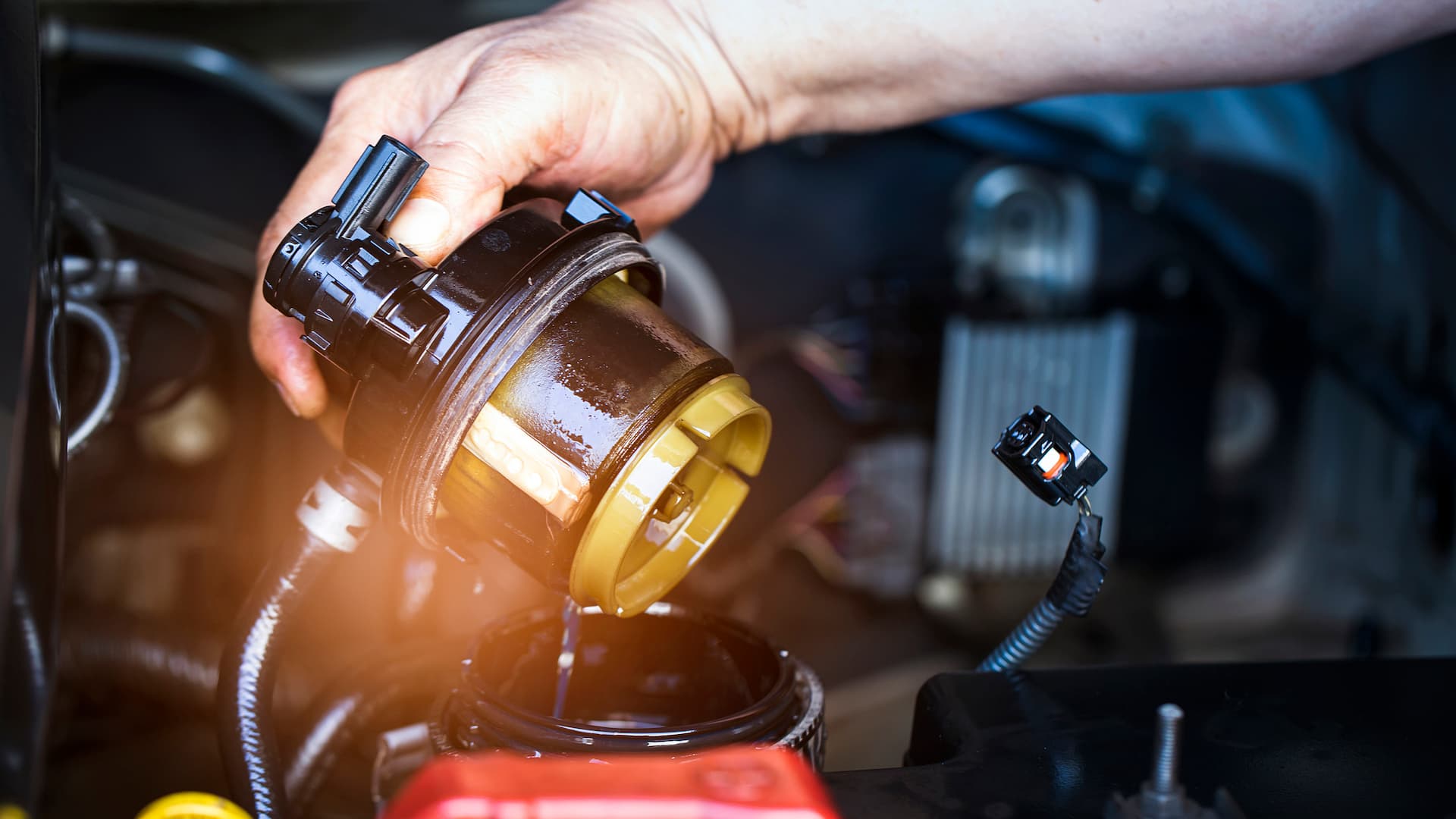
The water in fuel light is a dashboard warning, commonly found in diesel vehicles, that alerts you when excess water is detected in the fuel filter or water separator.
Ignoring the warning for too long can allow water to reach sensitive fuel system components and cause corrosion in the fuel injectors or fuel pump.
What Causes It?
- Condensation inside a partially filled fuel tank
- Contaminated fuel from a fuel station
- A loose, cracked, or poorly sealed fuel cap
- Moisture buildup from long-term outdoor storage
How to Fix It:
- Locate the fuel filter or water separator and place a container below the drain valve.
- Open the drain valve and let the water and contaminated fuel drain until clean fuel flows out, then close the valve securely.
- Prime the fuel system if the user’s manual for your diesel vehicle mentions it.
In this guide, we’ll discuss the water in fuel light in detail — what activates it and how to fix it. We’ll also share useful tips to prevent water from entering the fuel system.
This Article Contains:
- What Does the Water in Fuel Light Mean?
- Can You Drive With the Water in Fuel Light On?
- What Causes Water to Get Into Your Fuel
- How to Fix the Water in Fuel Warning Light
- 3 FAQs on Water in Fuel Light
What Does the Water in Fuel Light Mean?
The water in fuel (WIF) light is a dashboard alert that warns water has been detected or has accumulated in the fuel filter or water separator. It typically appears as a waterdroplet or wavy-line symbol, sometimes alongside a fuel pump icon. Depending on the vehicle, the light may be amber, yellow, or another color.
This warning is especially common in diesel vehicles because water can settle at the bottom of the fuel system when it separates from diesel fuel.
Your diesel vehicle has a fuel-water separator that collects water from the fuel before it reaches sensitive fuel system components. When water accumulates in the filter or separator, a water-level sensor detects it.
Here’s how it works:
The sensor measures electrical resistance between its electrodes. Because water has lower electrical resistance than diesel fuel, the resistance changes as water reaches the sensor. Once the water reaches a certain threshold, the sensor detects the change and sends a signal to the vehicle’s computer. The engine control module activates the WIF light to indicate that the separator needs attention.
NOTE: Gasoline vehicles can also have a water in fuel problem, but it is less common than in diesel engines. If you see a similar warning on a gasoline vehicle, check your owner’s manual for the appropriate repair.
But how serious is this warning?
Let’s take a closer look.
Can You Drive With the Water in Fuel Light On?
It’s best to avoid driving with the WIF light on.
Ignoring the warning can allow water to circulate through the fuel system, where it can cause corrosion and damage the fuel pump and fuel injectors. Over time, this can lead to poor engine performance, starting problems, or expensive fuel system repairs.
If the lightcomes on briefly and then goes out, the system may have detected only a small amount of water. However, you should still drain the fuel-water separator ASAP. If the lightstays on or keeps returning, have the vehicle inspected by a trained professional.
Before fixing the warning, it helps to know how water gets into the fuel system.
What Causes Water to Get Into Your Fuel
Water can enter your vehicle’s fuel system in several ways:
- Condensation: Temperature changes can cause moisture in the air inside a partially filled fuel tank to condense into water droplets. Because water is heavier than fuel, it settles at the bottom of the tank and can eventually be drawn into the fuel system.
- Contaminated fuel: Water may already be present in the fuel you purchase. Problems such as a leaking fuel station storage tank or poor quality control can allow water to enter the fuel before it reaches your vehicle.
- Damaged or loose fuel cap: A fuel cap that doesn’t seal properly can allow rainwater or water from a car wash to enter the fuel tank.
- Improper storage: Keeping a vehicle parked outdoors for a long time without protection from rain and cold can increase the chance of moisture getting into the fuel.
Now that you know the likely causes for the water issue, let’s look at how to address this dashboard alert.
How to Fix the Water in Fuel Warning Light
If you feel confident working on your vehicle, try draining the water from the fuel filter or water separator. However, doing this incorrectly can allow air to enter the fuel system or cause fuel leaks. If you are unfamiliar with the procedure, it’s best to have a qualified mechanic handle it.
The procedure varies by exact vehicle type and model, but draining the water typically involves these steps:
- Locate the fuel filter or water separator: Find the fuel filter assembly, which may be spin-on (a filter that screws into place) or cartridge-style (a replaceable filter element housed in a cartridge). Its location varies by exact vehicle, so check your owner’s manual if needed.
- Clean the area: Before opening the fuel filter’s drain valve, remove any dirt or debris around the assembly. This helps prevent contaminants from entering the fuel system when you open the drain.
- Place a container underneath: Position a clean container beneath the drain valve or drain plug.
- Open the drain valve: Loosen the drain valve or petcock.
- Drain the water: Allow the fluid to drain until clean diesel fuel begins to flow. This indicates that most of the collected water has been removed.
- Close the valve: Tighten the drain plug or valve securely to prevent leaks.
- Prime the fuel system if required: Some diesel engines require the fuel system to be primed after draining to remove air from the fuel line.
NOTE: If you drained a significant amount of contaminated fuel, follow your vehicle manufacturer’s guidance for refueling and fuel system inspection. If substantial water contamination is suspected, adding fresh fuel alone may not resolve the problem, and the system may require professional service.
Need more clarity on the WIF light?
Keep reading while we discuss some common doubts.
3 FAQs on Water in Fuel Light
Here are answers to some common questions drivers have about this warning light:
A fuel-water separator removes water from the fuel before it reaches the fuel system components. As the fuel and water mixture passes through the separator, tiny water droplets combine to form heavier droplets. Because water is heavier than fuel, these droplets sink to the bottom of the separator and collect in a chamber called the fuel bowl, which acts as a water reservoir.
A WIF sensor in this fuel bowl monitors the water level. When the water reaches a certain level, the sensor sends a signal to the vehicle’s computer, which turns on the warning light on the dashboard.
If you’ve already drained the fuel filter or water separator and the warning keeps coming back on, have the water sensor inspected and cleaned. Contaminants or debris can remain on the WIF sensor probes and trigger the warning. If cleaning doesn’t resolve the issue, the water sensor may need to be replaced.
To prevent water from entering your fuel system, keep the fuel cap tightly sealed, refuel only at trusted stations, and keep the tank reasonably full to reduce condensation. Additionally, keep up with regular fuel system maintenance such as checking the fuel filter, draining the water separator, and replacing the filter at the recommended intervals. When possible, park your vehicle under cover.
Act Quickly When a Warning Light Appears
A warning light suddenly appearing on your dashboard can be unsettling. But these alerts are designed to give you an early heads-up so you can address a problem before it causes more serious damage. If the WIF light or any other warning light comes on, don’t ignore it.
If you’re too busy to visit a garage, AutoNation Mobile Service brings the repair to you.
Our skilled technicians can visit your driveway seven days a week and diagnose the water issue. You’ll also get upfront pricing and a 12-month|12,000-mile warranty with every service.
Schedule your appointment today for reliable car maintenance.