
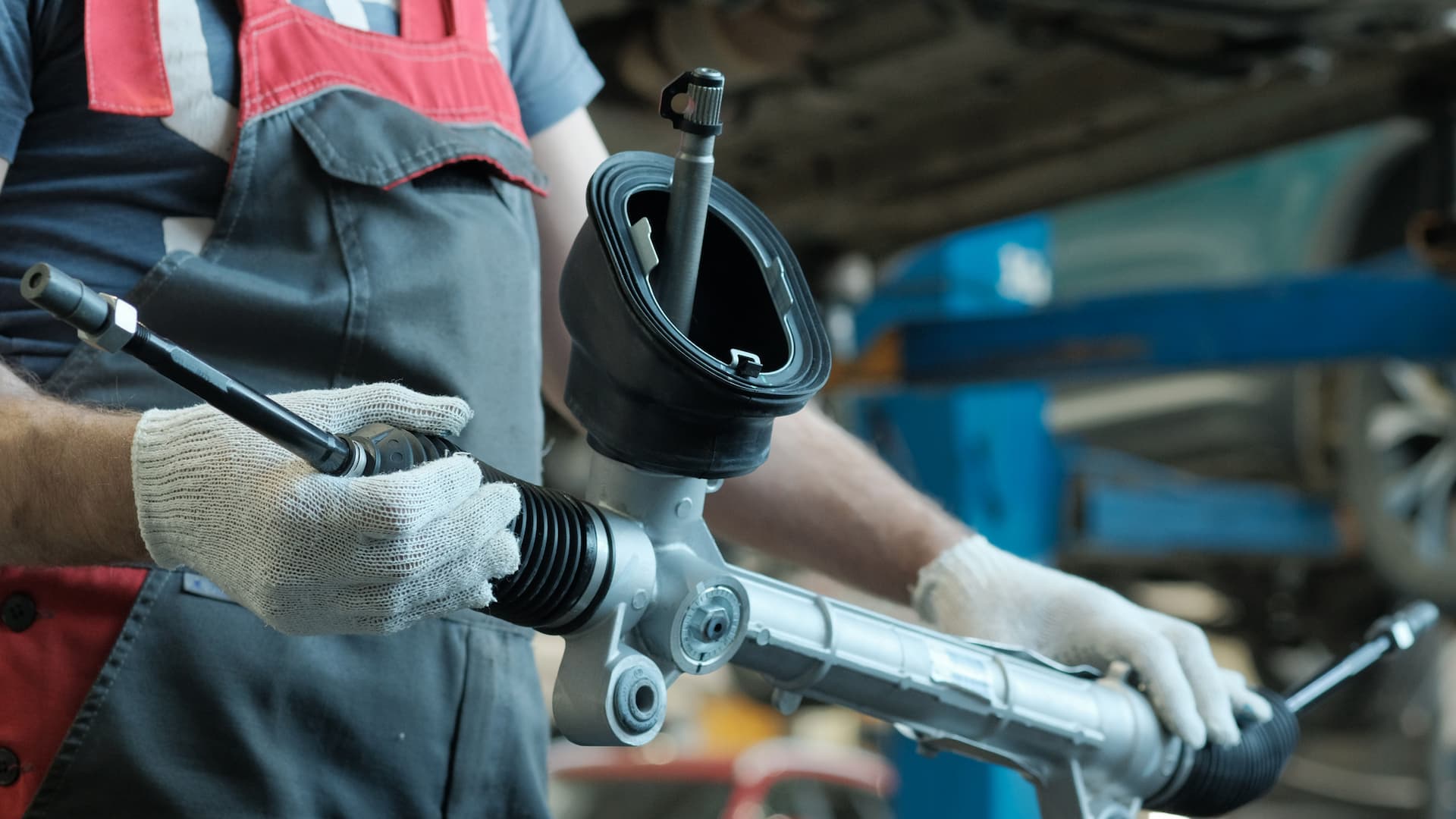
Clicking noises, grease leaks, or steering issues often point to a torn steering rack boot.
While the repair typically costs $210 to $600, delaying it can allow dirt and moisture to damage the steering rack and tie rods—leading to far more expensive repairs.
Let’s explore what a steering rack boot replacement can cost you, the factors that go into the final bill, and why you shouldn’t fix it yourself.
This Article Contains:
- How Much Does a Steering Rack Boot Replacement Cost?
- Can You Drive with a Bad Steering Rack Boot?
- 4 Signs You Need a Faulty Steering Rack Boot
- How Long Do Steering Rack Boots Last?
- Can You Replace a Steering Rack Boot Yourself?
- How to Prevent Steering Rack Boot Issues
How Much Does a Steering Rack Boot Replacement Cost?
Here’s what you need to spend to swap out the bad steering rack boot:
A. Range
The average cost of a steering rack boot replacement can range from $210 to $600.
This includes:
- Part: $12 and $80. Purchasing a full kit can go up to $200 (It includes parts such as clamps, cable ties, and extras like a bushing or installation tools.)
- Labor: $100 and $170 per hour
NOTE: The job can take about 2 to 3 hours as the mechanic has to remove parts like the front wheels and tie rods to reach the steering rack boot. This can bring your labor costs to about $200 to $510.
B. Factors Affecting Cost
Here are a few factors that impact your total replacement cost:
- Vehicle type: Some luxury cars have compact engine bays or tightly packed suspension components, making it harder to reach the steering rack boot. In contrast, a standard vehicle usually has simpler designs, allowing easier access and lower labor costs.
- Material of the steering rack boot: Standard steering rack boots are commonly made of rubber or thermoplastic, which are affordable. However, high-end boots may use expensive reinforced or polyurethane materials that drive up the cost.
- Parts quality: Original equipment manufacturer (OEM) steering rack boots are often more expensive but ensure a precise fit. Meanwhile, aftermarket parts can be more affordable but may vary in quality.
- Additional repairs: Steering rack boot replacement procedures can reveal other worn components, such as clamps, steering rack seals, or tie rods. Replacing these can add to the overall cost. For instance, a bad tie rod can add another $350 to $650 to the total cost.
Can You Drive with a Bad Steering Rack Boot?
No, it’s not safe to drive with bad steering rack boots.
The boot protects the steering rack and inner tie rods from dirt, water, and debris. When it’s torn or damaged, contaminants can enter and cause premature wear, rust, and seal failure inside the steering rack.
Over time, this can lead to power steering fluid leaks, loose steering, or complete rack failure, which is much more expensive to repair. Ignoring a damaged boot can also throw off your wheel alignment and cause uneven tire wear.
4 Signs You Need a Faulty Steering Rack Boot
If you notice these symptoms, take your vehicle to the mechanic ASAP:
- Clicking noise when steering
- Cracked rubber boot
- Grease leaking onto nearby components or underneath your vehicle
- Dirt, debris, or moisture buildup inside or around the boot
How Long Do Steering Rack Boots Last?
A steering rack boot can last around 5 to 15 years.
However, the lifespan can depend on:
- Material quality: Higher-grade rubber boots resist cracking and last longer.
- Driving habits: Frequent sharp turns or aggressive driving put extra stress on the boots, causing faster wear.
- Road conditions: Rough, dusty, or debris-filled roads expose the boots to more damage and contamination.
Can You Replace a Steering Rack Boot Yourself?
Replacing a steering rack boot yourself isn’t a good idea unless you have experience.
That’s because it requires lifting the car, disconnecting the tie rods, and working with critical steering components. If the steering alignment is even slightly off during reassembly, it can cause uneven tire wear, poor handling, or loss of steering control.
You’ll also need to measure and reinstall the tie rods precisely to maintain the correct alignment and deal with rusted components that require special tools, such as a torque wrench. A single mistake can lead to steering issues and safety hazards.
So for proper fit, function, and safety, it’s best to leave this job to a qualified mechanic.
Here’s how they’ll replace the steering rack boots:
- Lift the vehicle and remove the front wheels.
- Disconnect the tie rod ends from the steering knuckles (helps the wheels turn).
- Loosen or remove steering rack clamps or brackets for access.
- Slide off the old boot and clean the area.
- Install the new boot and secure it with steering rack clamps.
- Reconnect the tie rod ends and any removed components.
- Check steering movement and perform wheel alignment if needed.
NOTE: Replacing a steering rack boot usually involves disconnecting or adjusting the tie rods, which can alter wheel alignment. Even a slight misalignment can cause uneven tire wear, steering pull, or poor handling. A wheel alignment after replacement helps restore proper steering geometry and ensures safe, predictable driving.
How to Prevent Steering Rack Boot Issues
Follow these simple tips to extend the boot’s lifespan:
- Ensure your mechanic checks the boots during routine maintenance or oil changes for cracks, tears, or leaks.
- Minimize driving on pothole-ridden or uneven roads, which can strain the steering components and boots.
- Wash the underside of your vehicle regularly to remove dirt, salt, and debris that can degrade the rubber.
- Minimize driving on pothole-ridden or uneven roads, as it can strain the steering components and boots.
- Check wheel alignment, as misaligned wheels can cause premature boot wear.
AutoNation Mobile Service Makes Steering Rack Boot Replacements Easy
A faulty steering rack boot can let dirt and moisture in, causing leaks and loose steering. Replacing it early helps avoid costly rack damage.
Stuck at home?
No problem — AutoNation Mobile Service can come to you.
We offer expert auto repair services seven days a week with upfront pricing and easy online booking. Even better, all our repairs are backed by a 12-month, 12,000-mile warranty for peace of mind.
Contact us and let us reboot your steering rack.