
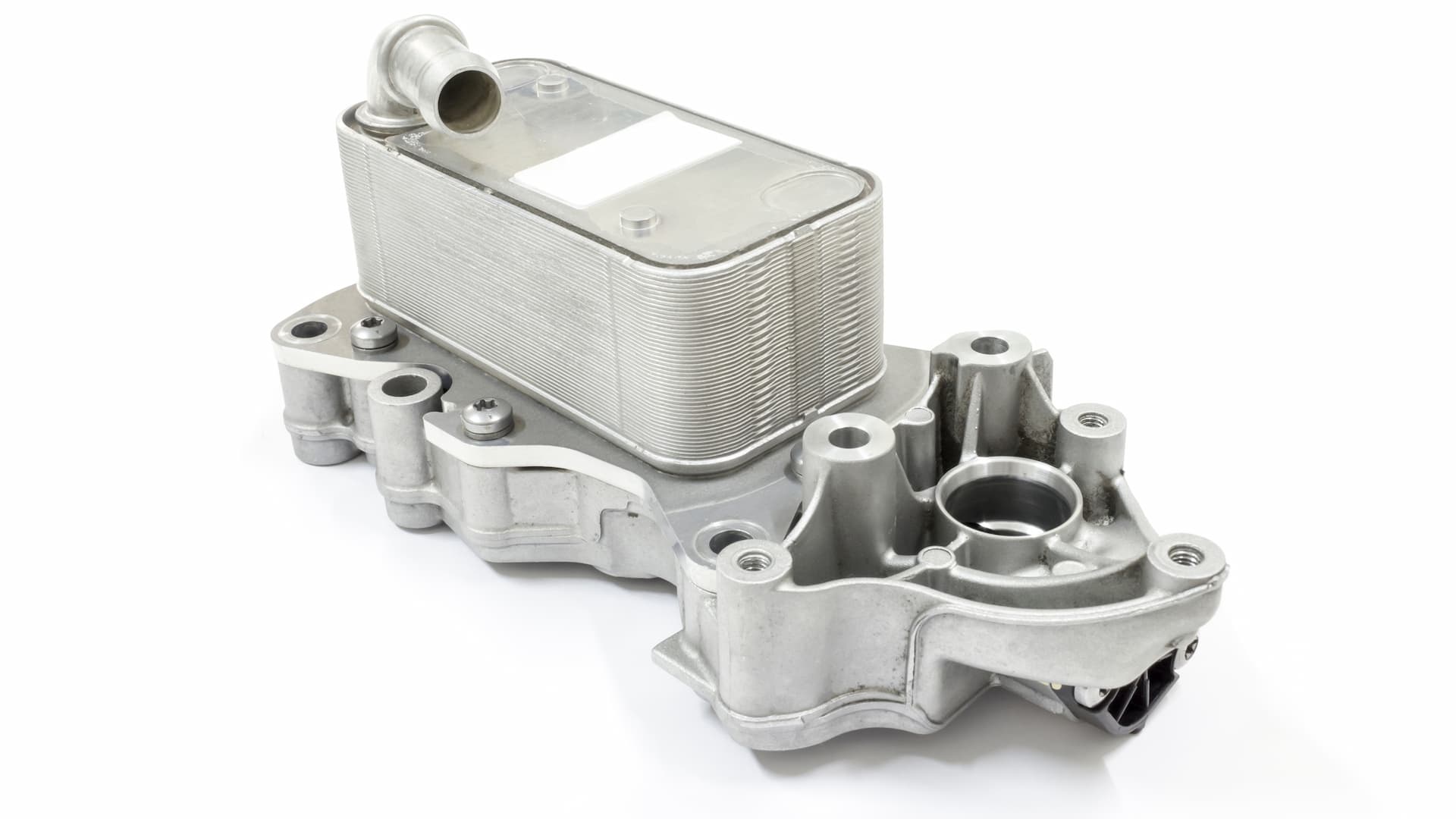
An oil cooler keeps your engine oil from overheating. And when the oil cooler loses its cool, your engine will feel the heat.
Wondering how much it’ll cost to fix the issue?
Well, you may have to shell out around $660 to $780 to replace the oil cooler.
Ignore it, and you risk overheating, poor lubrication, and serious engine damage — repairs that can get expensive fast.
Let’s take a closer look at the oil cooler replacement cost, common warning signs, and why fixing it early is the smart move.
This Article Contains:
- How Much Does an Oil Cooler Replacement Cost?
- 5 Surefire Signs You Need an Oil Cooler Replacement
- Can You Drive with a Failing Oil Cooler?
- How Long Do Oil Coolers Last?
- How to Replace an Oil Cooler: A General Know-How
How Much Does an Oil Cooler Replacement Cost?
Let’s break down the average cost of fixing a faulty oil cooler.
A. Range
While exact costs can vary, you can generally expect to pay around $660 to $780 for an engine oil cooler replacement.
This includes:
- Parts: $430 to $450
- Labor: $230 to $335
B. Factors Affecting Cost
The cost of replacing an engine oil cooler depends on the vehicle model and local labor rates.
Other factors influencing the price include:
- Accessibility: In some vehicles, the engine oil cooler is easy to access, typically mounted near the radiator or beside the oil filter, making replacement quick. In others, it may be located under the intake manifold or behind components like the radiator. This makes access difficult and increases both labor time and cost.
- Type of part: Standard oil coolers are standalone components, making them simpler to manufacture and replace, so they’re usually more affordable. Integrated oil cooler assemblies are built into components, like the oil filter housing or engine block, making them complex. As a result, they require replacing the entire unit, which can drive up both parts and labor costs.
- Parts quality: Original equipment manufacturer (OEM) engine oil coolers are often expensive but ensure a precise fit. Meanwhile, aftermarket parts may be more affordable but vary in quality.
- Additional repairs: In some cases, you may need other related repairs, such as replacing hoses, seals, gaskets, or even the radiator, which can increase overall costs. For instance, a radiator replacement alone can add $1000+ to the total.
That’s why it’s smart to have a qualified auto repair expert inspect your vehicle as soon as you notice any symptoms of oil cooler trouble.
5 Surefire Signs You Need an Oil Cooler Replacement
Some common red flags of a failing oil cooler include:
- Warning lights: A failing oil cooler may trigger dashboard alerts such as the check engine light, oil pressure warning, or temperature warning, indicating issues in the engine or cooling system.
- Oil leaks: A damaged oil cooler or worn seals, like the adapter O-ring, can cause oil to leak, often seen as puddles under the vehicle. Low oil levels can reduce lubrication, leading to overheating or even engine failure if not addressed quickly.
- Engine overheating: In oil-to-water systems, a faulty oil cooler can leak coolant, lowering levels and causing the engine to overheat. Prolonged overheating may damage components such as pistons, gaskets, and even the engine block.
- Strange noises and vibrations: Low oil or coolant levels reduce proper lubrication and cooling inside the engine. This increases friction between moving parts and generates excess heat. As a result, metal components create knocking, ticking, or rattling as they wear and move abnormally.
- Milky oil: Internal cracks in the oil cooler can allow oil and coolant to mix. This results in thick, discolored fluids, often seen as sludge in the engine coolant reservoir or milky oil. If left unchecked, it can severely damage the engine.
Now, let’s move on to the real question:
Can You Drive with a Failing Oil Cooler?
No, it’s not recommended to drive with a bad oil cooler. The oil cooler removes excess heat from engine oil to keep it at an optimal temperature.
A faulty oil cooler can lead to oil leaks, low coolant levels, or oil-coolant mixing, which may cause overheating and serious engine damage. To avoid costly repairs and safety risks, it’s best to have it inspected and replaced as soon as possible.
Curious about the typical lifespan of an oil cooler?
Let’s find out.
How Long Do Oil Coolers Last?
Most oil coolers last around 100,000 to 150,000 miles under normal driving conditions.
High-performance or heavy-duty vehicles may require earlier engine oil cooler replacement due to increased heat and pressure. Aggressive driving and rough road conditions, like potholes, can also shorten its lifespan.
However, proper car maintenance schedules, such as regular oil changes and routine system checks, can help extend its lifespan and prevent premature failure.
Before you roll up your sleeves to replace the oil cooler, it helps to understand the process first.
How to Replace an Oil Cooler: A General Know-How
Swapping out an oil cooler involves handling engine oil and coolant systems, which can be complex without the right tools and expertise.
Hiring a qualified mechanic ensures the job is done correctly and helps prevent leaks, contamination, or damage to surrounding components.
Here’s what they’ll do:
- Disconnect the negative terminal of the battery to prevent electrical issues.
- Jack up the car and secure it on jack stands for safe access.
- Drain the engine oil and engine coolant (if applicable).
- Remove any components blocking access, such as covers or hoses.
- Carefully detach the oil lines connected to the cooler.
- Unbolt and remove the faulty oil cooler unit.
- Install new O-rings or gaskets to prevent leaks.
- Fit and secure the new oil cooler in place.
- Reattach oil lines and any removed parts.
- Add fresh, clean oil and coolant as needed.
- Start the engine and check for leaks or abnormalities.
Get Quick Oil Cooler Replacement with AutoNation Mobile Service
The oil cooler helps regulate engine temperature and maintain proper lubrication. But when it fails, it can lead to leaks, overheating, and serious engine damage. Replacing it restores efficient cooling and protects critical engine components.
Can’t make it to a repair shop?
Well, you can skip the trip with AutoNation Mobile Service, where our mobile mechanics come to you.
Enjoy reliable repairs seven days a week, transparent upfront pricing, and a seamless online booking experience. For added peace of mind, every service is backed by a 12-month, 12,000-mile warranty.
Book an appointment today and keep your engine running cool and protected.