
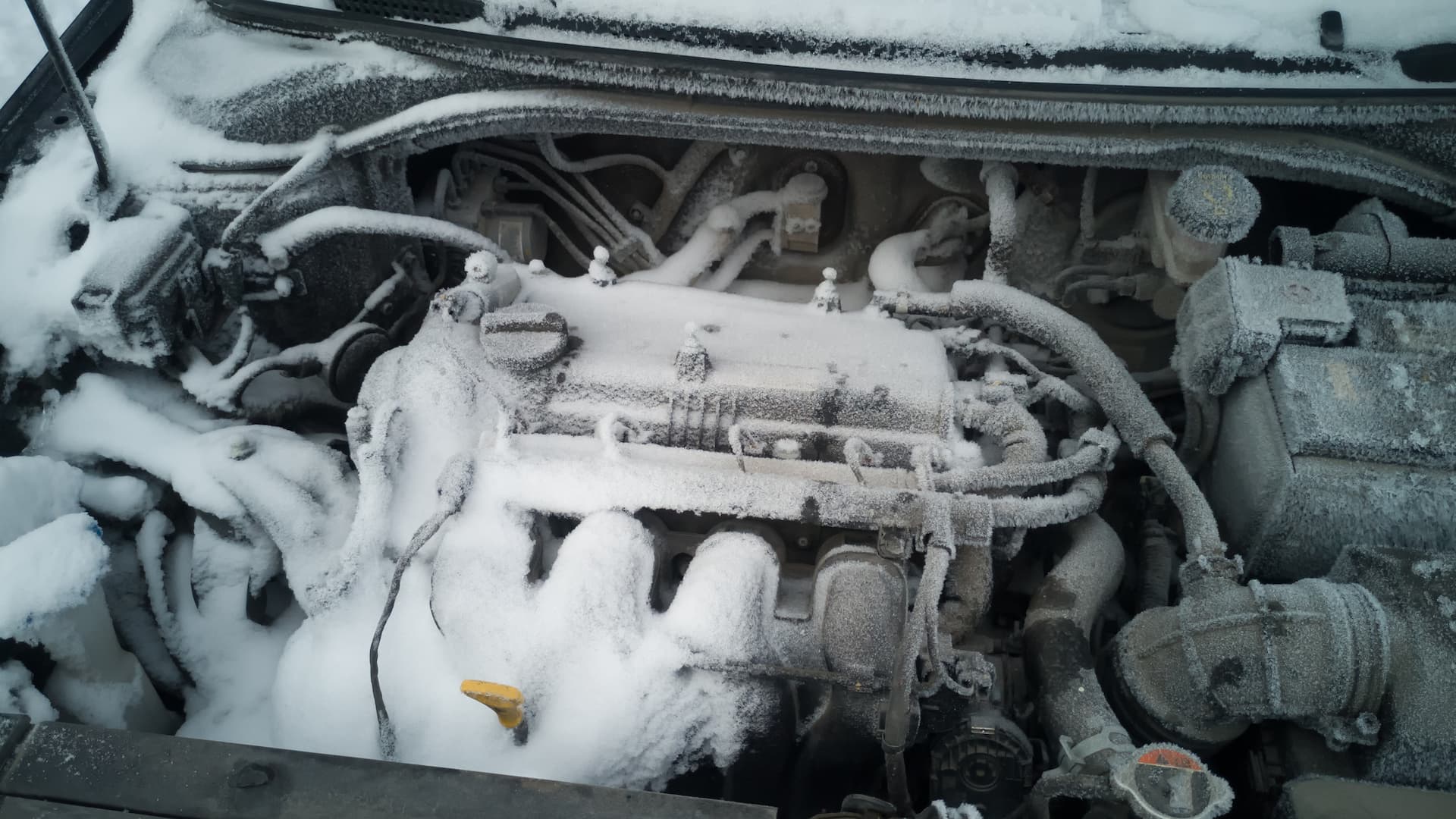
An engine block can freeze in extremely cold temperatures if the coolant isn’t properly maintained—leading to starting issues, coolant expansion, and even engine damage.
Since freezing can crack components and disrupt the cooling system, taking preventive steps before winter hits is essential.
In this guide, we’ll explain how to keep your engine block from freezing, what temperature it happens at, and how to protect your vehicle in cold weather.
This Article Contains:
- How to Keep Your Engine Block From Freezing in Winter
- At What Temperature Does the Engine Block Freeze?
- Frozen Coolant vs Low Battery: What’s Actually Causing Cold Start Issues?
- Is It Worth Driving Your Car When the Engine Block Has Frozen?
- 5 Other Winter Car Care Tips to Help You Drive Confidently in Cold Weather
Let’s jump right in!
How to Keep Your Engine Block From Freezing in Winter
Here’s what you can do to protect your engine block during the cold season:
- Use the Right Coolant Mixture
- Park in a Covered Space or Use an Insulated Cover
- Install a Block Heater
- Switch to Winter-Grade Oil
- Ensure the Battery Is in Good Condition
- Run the Engine Regularly
1. Use the Right Coolant Mixture
The engine’s coolant (a mixture of antifreeze and water) is your first defense against freezing. To ensure the engine block stays protected in cold weather, regularly check the coolant level and maintain the correct antifreeze-to-water mixture.
For example, using a 50/50 antifreeze-to-water mix protects most engine blocks down to -34°F (-37°C), while a 60/40 or 70/30 mix is better for extreme cold.
If you’re curious about how to prepare better for the freezing temperatures, explore our post on winter car care tips.
2. Park in a Covered Space
Consider parking your car in a garage or any other covered space to shield your engine from wind and frost.
If indoor parking isn’t an option, consider using an engine or full-car insulated cover to trap heat.
3. Install a Block Heater
Block heaters help warm the coolant and engine block before startup, reducing the risk of freezing.
For best results, plug in your block heater a few hours before driving, or use a timer to run it for a set period.
4. Switch to Winter-Grade Oil
Cold temperatures can thicken engine oil, making it more difficult for the engine to run. If the oil doesn’t circulate properly, metal parts can rub against each other, leading to grinding or knocking sounds.
Switching to a winter-grade or lower-viscosity oil (like 0W-20 or 5W-30, as recommended by the manufacturer) helps the oil flow more easily at low temperatures and ensures proper lubrication during cold starts.
5. Ensure the Battery Is in Good Condition
Cold temperatures reduce the battery’s effectiveness, making it difficult to crank the engine. So, check your battery’s charge level and inspect the terminals for corrosion regularly.
For extra protection in extremely cold climates, use a battery warmer, an insulated sleeve, or a trickle charger to keep the battery at an optimal temperature and charge.
6. Run the Engine Regularly
If your vehicle sits unused in freezing temperatures for extended periods, the engine block will be at a higher risk of freezing.
Run your engine for 15 to 20 minutes every few days to circulate the coolant and prevent fluids from freezing.
Which brings us to the next question:
At What Temperature Does the Engine Block Freeze?
An engine block itself doesn’t have a single fixed freezing temperature — it’s the coolant inside the engine that determines the freezing risk.
If you use pure water as a coolant, it may freeze at 32°F (0°C), which can stress the engine components. Meanwhile, a standard mixture of antifreeze and water typically freezes at about -34°F (-37°C) or lower.
But is freezing always the reason your car won’t start in cold weather?
Frozen Coolant vs Low Battery: What’s Actually Causing Cold Start Issues?
Not all cold-weather starting problems mean your engine block is frozen—sometimes, the issue is simply a weak battery.
Here’s how to tell the difference:
A. More likely a frozen coolant/engine block issue if:
- The engine won’t crank or feels seized
- You notice coolant leaks or cracked hoses
- The engine was left unused in extreme cold
- There’s a history of improper coolant mixture
B. More likely a battery issue if:
- You hear a clicking sound when turning the key
- Dashboard lights are dim or flickering
- The engine cranks slowly but doesn’t start
- Jump-starting temporarily fixes the problem
But even if you know what’s causing the issue, is it actually safe to drive your car in freezing conditions? Let’s find out.
Is It Worth Driving Your Car When the Engine Block Has Frozen?
No, driving with a frozen engine block can stress the cooling system and damage the coolant hoses.
To avoid damaging your vehicle, it’s best to thaw the engine gradually using an engine block heater. Once thawed, have a professional mechanic inspect the cooling system and engine for cracks or leaks before attempting to drive.
Beyond basic engine care, a few proactive steps can improve winter driving.
5 Other Winter Car Care Tips to Help You Drive Confidently in Cold Weather
Here are the best practices to make winter roads less stressful:
- Check tread depth to ensure your tires grip properly, and consider switching to winter tires for improved traction on icy roads.
- Use winter-grade washer fluid and clear ice or snow from your windshield to maintain proper visibility.
- Check the levels of oil and brake fluid, and top them up as needed to prevent issues in low temperatures.
- Schedule a pre-winter inspection to ensure your engine, battery, and key components are ready for cold conditions.
- Ensure you always carry blankets, a flashlight, and jumper cables in case of a breakdown.
Prep Your Engine for Winter with AutoNation Mobile Service
Freezing temperatures can put your engine block at risk, leading to starting issues or costly repairs. That’s why it’s important to take preventive steps, such as using the right coolant and running the engine regularly.
Want to make your life easier?
Schedule an inspection with AutoNation Mobile Service if you suspect a frozen engine block.
That way, you won’t have to worry about shop visits — our trained technicians will come to you. For your peace of mind, we also back our services with a 12-month, 12,000-mile warranty.
Book an appointment today so you can always start your engine with confidence, no matter how low the temperatures drop.