
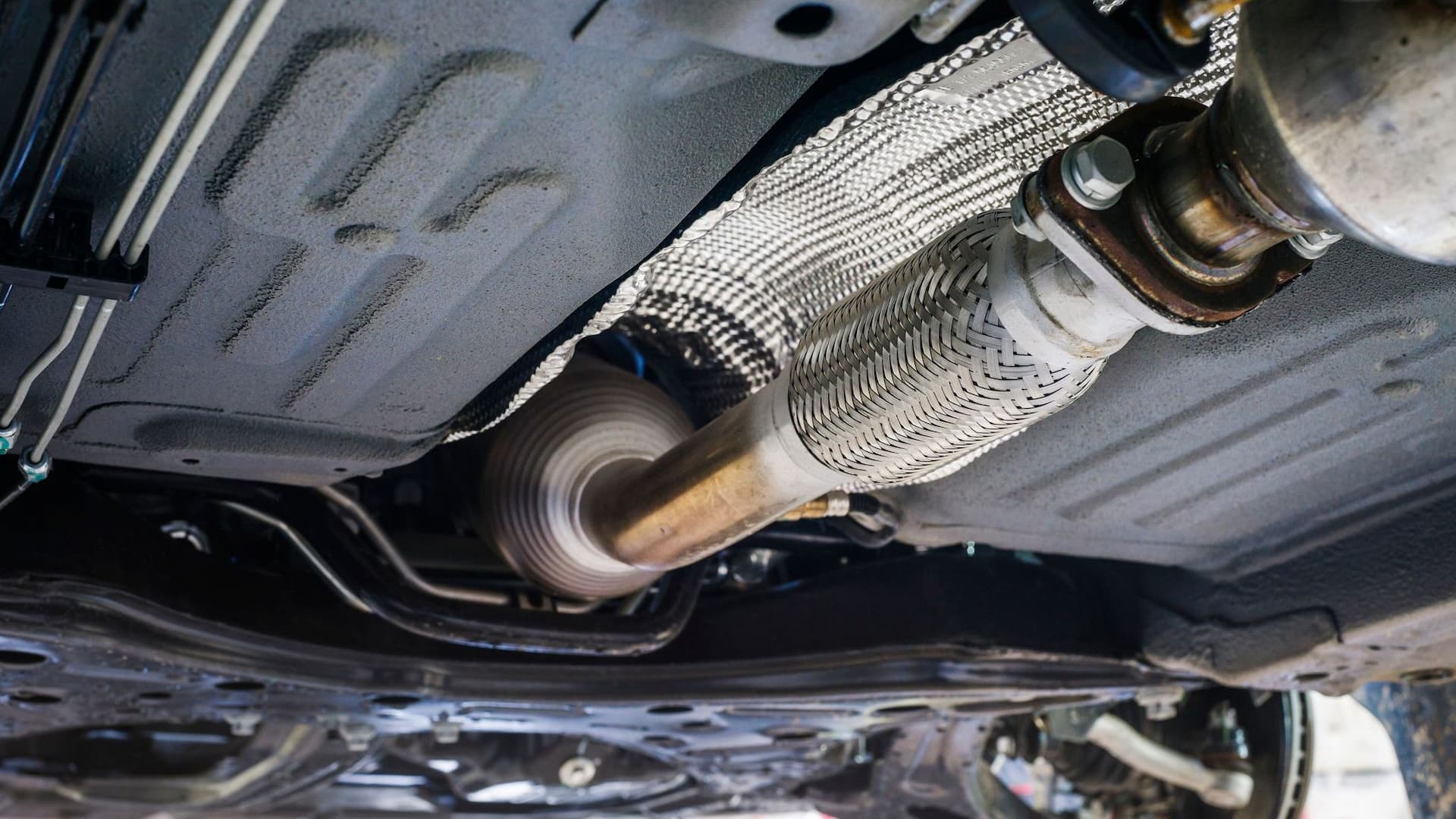
A flex pipe is designed to reduce stress on your vehicle’s exhaust system by handling engine movement and vibrations. If it fails, you could end up with harmful gases in your cabin and a loud car announcing its arrival from three blocks away.
Replacing it promptly can help prevent more expensive exhaust system repairs later.
Flex pipe replacement cost can range from $160 to $800.
Keep reading as we cover repair expenses, key pricing factors, symptoms of a bad flex pipe, and what to expect during replacement.
This Article Contains:
- How Much Does a Flex Pipe Replacement Cost?
- Can You Still Drive With a Broken Flex Pipe?
- What Are Signs of a Bad Flex Pipe? 4 Key Symptoms
- How Long Does a Flex Pipe Last?
- How to Replace a Damaged Flex Pipe
How Much Does a Flex Pipe Replacement Cost?
Here’s a breakdown of the expenses:
A. Range
The average cost for replacement is between $160 to $800.
This includes:
- Parts cost: $80 to $400
- Labor charge: $80 to $400
B. Factors Affecting Cost
These factors can influence your final bill:
- Vehicle make and model: Flex pipe replacement is usually cheaper for standard or economy vehicles than for luxury or high-performance models. The latter often use more expensive parts, specialized exhaust systems, and require higher labor costs for repairs.
- Type of flex pipes: Most flex pipes are made of steel alloy. Price can vary according to composition:
- Stainless steel flex pipes are usually the most expensive because they offer excellent durability and corrosion resistance.
- Forged steel flex pipes are typically more affordable but heavier and more prone to rust over time.
- Aluminized steel flex pipes are generally the most budget-friendly option and also help reduce weight.
- Location: The average cost for labor is usually higher for car owners living in major cities than in smaller towns or rural areas.
- OEM vs. aftermarket car parts: Original Equipment Manufacturer (OEM) parts usually cost more but are designed for an exact fit and reliable performance. Aftermarket parts are often cheaper, though quality and availability can vary.
- Related repairs: Your mechanic may also recommend replacing the catalytic converter. A failed flex pipe can cause excessive movement and vibration, potentially damaging the converter’s casing or internal components. This is an expensive repair and will cost an additional $450 to $4200.
Car owners may be tempted to keep driving with a damaged flex pipe to avoid repair costs.
But could that decision create even bigger issues?
Let’s find out.
Can You Still Drive With a Broken Flex Pipe?
No, car experts don’t recommend driving with a bad flex pipe.
A flex pipe failure can make driving noisier and may damage other exhaust components. If the flex pipe is hanging loose, it can drag against the road, create sparks, and potentially damage the underside of your vehicle.
Fixing it early can help prevent you from spending more money on repairs later.
But before scheduling a repair, you can confirm on your own whether the flex pipe is truly damaged.
What Are Signs of a Bad Flex Pipe? 4 Key Symptoms
Here are some tell-tale symptoms of a flex pipe fault:
- Loud exhaust noises: A damaged flex pipe can make your vehicle much louder than usual. You may hear rumbling, hissing, or tapping noises under the car, especially at higher speeds.
- Exhaust smells inside the car: A leaking flex pipe can allow exhaust fumes to enter the cabin. If you notice a strong gasoline or exhaust odor while driving, it could indicate an exhaust leak that should be repaired quickly.
- Reduced engine performance: Exhaust leaks can affect engine efficiency and performance. You may notice slower acceleration, reduced power, or lower fuel economy.
- Visible damage under the vehicle: In severe cases, the flex pipe itself may hang down underneath the vehicle. You may also hear scraping or dragging noises while driving.
Sometimes, age-related wear can cause a flex pipe to fail even before you notice any outward signs of damage.
How Long Does a Flex Pipe Last?
A flex pipe typically lasts between 5 and 10 years, depending on its material quality, driving conditions, and regular maintenance. Higher-quality stainless steel braided flex pipes usually last longer, while thinner or lower-quality flex pipes may wear out more quickly.
Once you’ve confirmed that the flex pipe needs changing, it’s time to contact a professional to carry out the repair.
How to Replace a Damaged Flex Pipe
Flex pipe replacement is a job best handled by an experienced mechanic with access to a vehicle lift, proper cutting tools, and welding equipment. Making cuts in the wrong location or failing to create a secure seal can result in exhaust leaks that allow fumes to enter the cabin. A professional mechanic has the equipment and expertise to ensure the repair is sound and leak-free.
Here’s how the mechanic will proceed:
- Safely raise the vehicle on a lift or jack stands to access the exhaust system underneath the car.
- Locate the flex pipe, which is usually found near the front of the exhaust system between the exhaust manifold and catalytic converter. It typically looks like a small, woven or braided metal section in the exhaust pipe.
- Inspect the flex pipe and surrounding exhaust components for cracks, rust, or other damage.
- Hold the replacement flex pipe in place and mark where the old section of pipe needs to be cut.
- Cut out the damaged flex pipe using an exhaust pipe cutter, reciprocating saw, or similar tool.
- Remove the damaged section and clean the edges of the remaining exhaust pipe if needed.
- Slide the new flex pipe into position, making sure it lines up properly with the existing exhaust system.
- Secure the replacement flex pipe using exhaust clamps or by welding it into place.
- Start the engine and check for exhaust leaks, rattling, or unusual noises before driving the vehicle.
Protect Your Exhaust System From Further Damage
A damaged flex pipe can turn your quiet commute into a noisy, fume-filled ride — and if ignored, it may cause costly exhaust system damage.
Instead of spending hours at a repair shop, let AutoNation Mobile Service come to you. We offer repairs right from your driveway, seven days a week, with upfront pricing.
Every repair also includes a 12-month | 12,000-mile warranty.
Schedule your appointment today.