
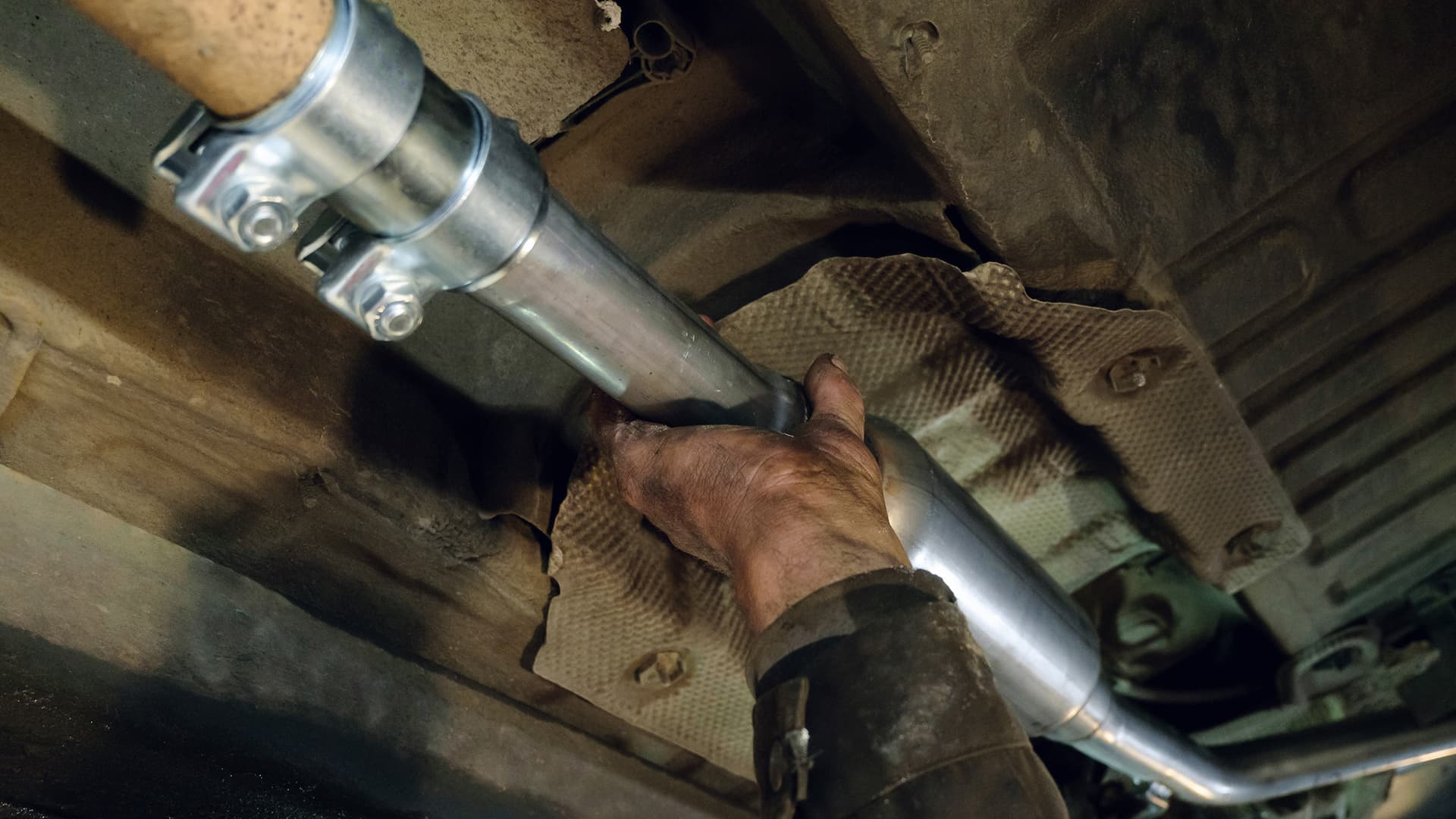
Noticing a strong exhaust smell inside your vehicle?
It’s often an early sign of exhaust pipe damage.
Exhaust pipe replacement cost typically ranges from $220 to $1,170, depending on your vehicle, the exhaust system design, labor cost, and whether additional exhaust repair is needed.
Ignore it, and the damage can spread to expensive exhaust components like the catalytic converter or exhaust manifold, leading to even bigger repair costs.
Keep reading to identify common warning signs, what affects the total cost, and when exhaust pipe replacement may be necessary.
This Article Contains:
- How Much Does Exhaust Pipe Replacement Cost?
- Is It Worth Replacing a Failing Exhaust Pipe?
- 11 Critical Signs Your Exhaust Pipe Needs Replacement
- How Long Do Exhaust Pipes Last?
- Can You Replace an Exhaust Pipe Yourself?
How Much Does Exhaust Pipe Replacement Cost?
Here’s how much you’ll pay to get your exhaust pipe replaced:
A. Range
The average cost for exhaust pipe replacement falls between $220 and $1,170.
This price range includes:
- Parts: $100 to $1,000
- Labor cost: $120 to $170
NOTE: In some cases, only a flex pipe or a section of the exhaust pipe may need to be replaced. However, severe rust or a damaged exhaust system may require a more extensive exhaust system replacement, increasing the total cost.
B. Factors Affecting Cost
Several factors can affect the total cost of exhaust pipe replacement and other exhaust repair services. These include:
- Type of vehicle: Economy cars often use simpler exhaust systems that are less expensive to repair. Larger vehicles, such as an SUV or pickup truck, may require larger pipes, additional exhaust components, or more labor-intensive exhaust work.
- Material quality: Steel exhaust pipe systems are the most affordable ($100-$300) but are more likely to rust over time. Stainless steel pipes offer better corrosion resistance and durability, while titanium exhaust pipes ($1000+) are lightweight, highly durable, and often chosen for their performance benefits, including improved horsepower.
- Brand and manufacturer: Some brands charge more because of higher-quality exhaust components, warranty coverage, or performance-focused exhaust replacement systems.
- Labor cost: The fee your mechanic charges may vary depending on vehicle design and the pipe’s location. Some vehicles have tightly packed exhaust systems that make the exhaust manifold, catalytic converter, or charge pipes harder to access, increasing labor time.
- Additional repairs: During inspection, technicians may also find damaged exhaust hangers, leaking gaskets, catalytic converter damage, or a need for muffler replacement that can increase the total repair cost.
Now you must be wondering….
Is It Worth Replacing a Failing Exhaust Pipe?
Yes, replacing a damaged exhaust pipe is necessary because exhaust leaks can create both health and performance problems.
Cracked pipes or visible exhaust leaks may allow harmful gas and exhaust fumes to enter the cabin. Because carbon monoxide is colorless and odorless, prolonged exposure can be dangerous and potentially life-threatening. Symptoms may include headaches, dizziness, nausea, or drowsiness while driving.
At the same time, excess oxygen entering the exhaust system through an exhaust leak can overheat the catalytic converter and damage nearby exhaust components. In some cases, severe damage may even lead to smoke or overheating, requiring expensive repairs.
Replacing the exhaust pipe early can help restore proper exhaust gas flow, improve driving comfort, and prevent the need for a complete exhaust system replacement later.
The good news is that exhaust problems usually give a few warning signs before they get worse.
11 Critical Signs Your Exhaust Pipe Needs Replacement
Exhaust pipe problems usually become more noticeable over time. Here are some common warning signs that indicate exhaust replacement is needed:
- Strong exhaust smell: Exhaust leaks can allow harmful gases and carbon monoxide to enter the cabin. If you notice a strong exhaust smell inside the vehicle, lower the windows, avoid driving, and have the exhaust system inspected immediately.
- Dragging noises or sparks underneath the vehicle: A loose or broken exhaust pipe may scrape against the road while driving.
- Visible rust, cracks, or holes: Corrosion and physical damage are among the most common causes of damaged exhaust systems.
- Failed emissions or smog test: Exhaust leaks can increase emissions and affect exhaust gas readings.
- Unusual tailpipe noises: Restricted exhaust flow can cause irregular tailpipe noises or vibration.
- Burning smell: Excess heat from a clogged exhaust system or catalytic converter may create a burning odor.
- Excessively loud engine noise: A damaged exhaust pipe or failing muffler can make the vehicle significantly louder than normal.
- Reduced engine power or slow acceleration: Damaged exhaust components may reduce horsepower and overall engine performance.
- Poor fuel efficiency: Exhaust problems may force your car’s engine to work harder, burning more fuel.
- Hissing, tapping, or rattling noises: Loose exhaust hangers, leaking gaskets, or damaged pipe sections often create unusual sounds.
- Illuminated check engine light: Leaks or exhaust manifold problems may trigger warning lights and sensor faults.
Wondering when’s the right time to replace your pipes?
Find out next.
How Long Do Exhaust Pipes Last?
Exhaust pipes typically last between 5 and 10 years, though lifespan depends heavily on climate, driving conditions, and maintenance.
Several factors can shorten exhaust pipe lifespan:
- Heat and condensation: Moisture buildup inside the exhaust system can lead to rust and pipe damage.
- Road salt: Salt used during winter can quickly corrode metal exhaust components.
- Rain, snow, and humidity: Constant exposure to moisture increases the risk of rust and the need for exhaust repairs.
TIP: Replacing related maintenance items like air filters, oil filter components, or the cabin air filter will not directly prevent exhaust damage, but regular vehicle maintenance can help identify developing problems earlier.
Now, if you’re considering replacing the damaged pipes yourself, here’s why that might be a bad idea.
Can You Replace an Exhaust Pipe Yourself?
No, DIY exhaust pipe replacement isn’t recommended unless you have the proper tools and experience. Exhaust systems can be difficult to access, and improper replacement can lead to exhaust leaks, poor engine performance, or additional repair issues.
It’s usually best to leave exhaust work to a professional. However, if you’re curious about the process, here’s how exhaust pipe replacement typically works:
- Inspect the exhaust system: A mechanic checks the exhaust manifold, catalytic converter, muffler, flex pipe, and surrounding exhaust components for rust, cracks, smoke, or damage.
- Lift and secure the vehicle: They raise the vehicle safely to access the pipe and exhaust system underneath.
- Remove the damaged exhaust pipe: Next, they loosen rusted bolts, clamps, exhaust hangers, and gaskets before disconnecting the old pipe.
- Inspect surrounding components: The mechanic also checks nearby exhaust components for additional damage or replacement needs.
- Install the new exhaust system or replacement pipe: They properly align the replacement pipe and secure it with new hardware.
- Test for exhaust leaks and engine noise: They start the vehicle and check for visible exhaust leaks, rattling, or unusual exhaust gas smells.
- Perform a final test drive: Finally, they drive the vehicle to confirm proper exhaust system function and overall performance.
Get Professional Exhaust Repair with AutoNation Mobile Service
Addressing exhaust repair needs early can help prevent costly repairs later, especially if nearby components such as the catalytic converter or exhaust manifold are also affected.
AutoNation Mobile Service provides convenient exhaust repair and replacement services performed by experienced technicians.
We offer upfront pricing and a 12-month|12,000-mile warranty on parts and labor, so you can get professional vehicle repairs without leaving your driveway.
Why wait?
Book a service today.