
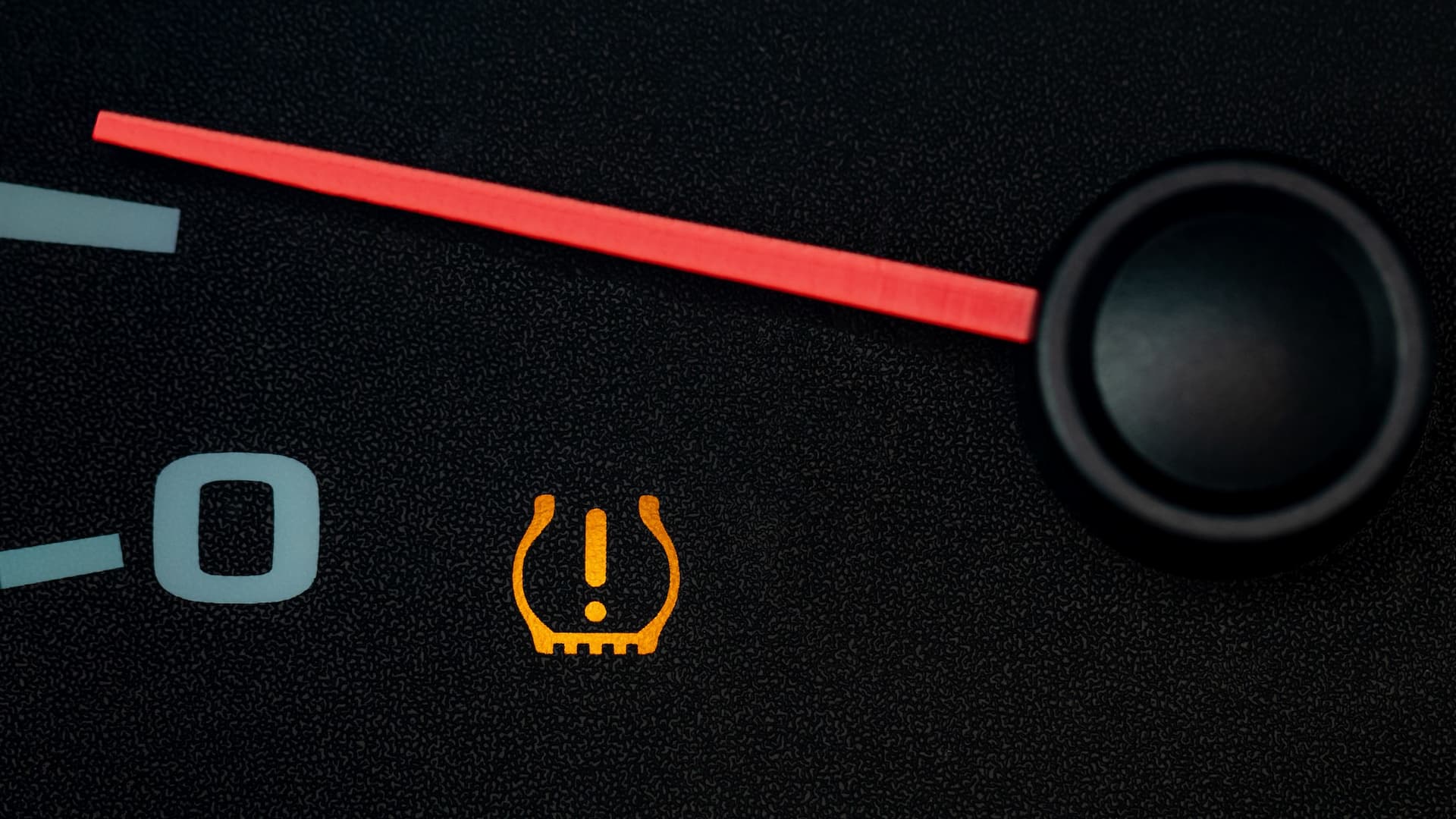
A yellow horseshoe-shaped warning light with an exclamation mark indicates that your tire pressure monitoring system (TPMS) has detected low tire pressure or a system fault.
In most cases, it means you have one or more underinflated tires. If the light flashes for 60 to 90 seconds before staying solid, it indicates a fault with the TPMS rather than low pressure.
Here’s what a mechanic will do to fix the issue:
- Inflate all tires to the manufacturer’s recommended tire pressure and verify the warning light resets.
- Drive the vehicle (if required) to allow the TPMS to detect the corrected tire pressures.
- Reset the TPMS using the reset button or the vehicle’s dashboard or infotainment menu, if applicable.
- Check the spare tire (if equipped with a TPMS sensor) and inflate it to the recommended pressure.
- Scan the TPMS for fault codes and relearn or recalibrate the sensors if the warning light remains on.
If you’d rather leave the diagnosis to a professional, an AutoNation Mobile Service technician can inspect your tires and make any necessary repairs in your driveway.
Continue reading to learn what you should do when the tire pressure light comes on, whether it’s safe to drive with one, and how to reset the light.
This Article Contains:
- What to Do When Your Tire Pressure Light Comes On?
- How to Reset the Tire Pressure Light
- Can You Drive with the Tire Pressure Light On?
- Why Is Your Tire Pressure Monitor Light On?
- Should You Replace the TPMS When You Get New Tires?
- How Can You Prevent the Tire Pressure Warning Light?
What to Do When Your Tire Pressure Light Comes On?
The tire pressure warning light indicates that your vehicle has detected an issue with your tires or the tire pressure monitoring system. While it often indicates low pressure, it can also signal a TPMS fault, such as a failed tire pressure sensor.
On most vehicles, the warning light appears as a yellow icon with an exclamation point inside a horseshoe-shaped symbol, representing the cross-section of a tire. Some vehicles may instead display the letters “TPMS.”
Although checking your tire pressure is a good first step, it’s best to have the whole system inspected by a qualified mechanic. They can accurately diagnose the underlying issue and ensure the TPMS is functioning properly.
Here’s what they’ll do in each situation:
1. Tire Pressure Light Blinking, Then Staying Solid
If the tire pressure light flashes for about 60 to 90 seconds and then stays solid, the TPMS has detected a system fault. This is commonly caused by a weak or dead TPMS sensor battery, a damaged wheel speed sensor, or a communication issue with the TPMS module.
The fix: A mechanic will check the tire pressure using a tire gauge, then scan the TPMS for fault codes. They’ll test the TPMS sensor battery, TPMS sensors, and TPMS control module, then reset or replace any faulty components as needed.
2. Tire Pressure Light Flashing Intermittently
If the tire pressure warning light flashes on and off while driving, it typically indicates an intermittent TPMS issue.
This can be due to an intermittently failing TPMS sensor, poor sensor signal, wiring issues, or temporary communication loss between the wheel speed sensor and the TPMS control module.
In some cases, changing temperatures can cause tire pressure to fluctuate enough for the warning light to turn on and off.
The fix: They’ll check tire pressure, scan the TPMS for fault codes, and monitor each sensor’s signal while the vehicle is stationary or in motion. They’ll also inspect the TPMS receiver and related wiring if necessary, and reset, reprogram, or replace any malfunctioning components as needed.
3. Solid Tire Pressure Light
A solid tire pressure warning light usually means you have one or more underinflated tires. It may also be caused by a slow leak, puncture, valve stem leak, damaged wheel, or cold weather, which can temporarily reduce tire pressure.
On some vehicles, a solid warning light may also indicate overinflated tires, although this is less common.
The fix: A mechanic will inspect the tires for leaks or damage, adjust the tire pressure to the manufacturer’s specifications, repair any punctures if possible, and reset the TPMS if required. If the warning light remains on, they’ll inspect the TPMS for a faulty sensor or other system fault.
Repairing the issue doesn’t always make the TPMS light disappear immediately. In most cases, you’ll need to reset the system after the problem is fixed.
How to Reset the Tire Pressure Light
In many vehicles, the tire pressure warning light resets automatically once all tires are inflated to the manufacturer’s recommended pressure.
On some vehicles, you’ll need to drive the vehicle for about 10 minutes at 50 mph or higher before the light turns off. If the warning light remains on, the TPMS may need to be manually reset or inspected for an underlying fault.
Here’s how a mechanic will reset the tire pressure light, depending on the vehicle’s manufacturer and TPMS design:
- Use the TPMS reset button: Turn the ignition to the ON position (without starting the engine), press and hold the TPMS reset button until the tire pressure light blinks three times. Start the engine and allow the system to recalibrate. The button is usually located beneath the steering wheel or inside the glove box.
- Use the dashboard or infotainment menu: If supported by the vehicle, the mechanic will navigate to Settings > Vehicle (or Service) > TPMS Calibration or Reset using the steering wheel controls or touchscreen. They’ll then follow the on-screen prompts to reset the system.
- Check the spare tire: The mechanic will ensure it’s inflated to the recommended pressure on vehicles with a TPMS-equipped full-size spare tire. That’s because a spare with low tire pressure can keep the warning light on.
- Scan and relearn the TPMS: If the light remains on, the mechanic will use a TPMS scan tool to diagnose faults and relearn the sensors if necessary.
NOTE: A TPMS reset won’t fix a faulty sensor. If the warning light stays on or flashes after resetting, there may be a TPMS sensor or system fault that requires repair or replacement.
If you’re planning to drive, find out why ignoring the tire pressure light can put your safety at risk.
Can You Drive with the Tire Pressure Light On?
No, it’s not safe to drive with the tire pressure warning light on.
Driving with incorrect tire pressure can reduce traction and handling, increase tire wear, and raise the risk of a tire blowout. This can compromise your safety and that of other road users.
If you notice a flashing TPMS light, the TPMS has likely detected a fault in the system. While you can usually continue driving with properly inflated tires, the system may no longer warn you of future pressure loss. This makes it important to have the issue repaired ASAP to maintain your vehicle’s safety.
It’s best to have your car checked out by a professional before you drive further.
Feeling the pressure?
Your TPMS certainly is. Keep reading to understand why the TPMS might have come on.
Why Is Your Tire Pressure Monitor Light On?
A few reasons behind your TPMS light are:
- Flat tire: A puncture, tear, or other tire damage that causes a sudden loss of air pressure will trigger the TPMS light.
- Natural air loss: Tires gradually lose air over time. If the pressure drops below the recommended tire pressure, the TPMS will illuminate the warning light.
- Cold weather: A drop in outside temperature reduces tire pressure, which can cause the tire pressure warning light to come on even if there isn’t a puncture.
- Slow leak: A nail, screw, or other object lodged in the tire can cause a gradual loss of air, eventually triggering the TPMS warning light.
- Leaking valve stem or tire bead: A damaged valve stem or an improper seal between the tire and wheel can cause air to escape. This leads to low tire pressure and activates the warning light.
Some TPMS problems are also caused by aging sensors, which raises an important question:
Should You Replace the TPMS When You Get New Tires?
No, not necessarily. If your TPMS sensors are functioning properly, they can usually be reused when new tires are installed. On modern vehicles, these sensors are designed to last for several years with routine use.
However, if a sensor is damaged, has a depleted battery, or is nearing the end of its typical 5- to 10-year lifespan, consider replacing it during tire installation. Doing so can help you avoid paying for additional labor later.
The best warning light is the one you never see, and a few simple steps can keep it that way.
How Can You Prevent the Tire Pressure Warning Light?
Follow these maintenance tips to help avoid TPMS warning light issues:
- Check your tire pressure with a tire pressure gauge when the tires are cold. Tire pressure changes with temperature, so measuring it before driving provides the most accurate reading.
- Don’t ignore seasonal temperature changes. Cold weather can lower tire pressure, so check and adjust it more frequently during the winter months.
- Inspect the valve stems and valve caps regularly. Replace damaged valve stems or missing valve caps to help prevent slow air leaks.
- Rotate and maintain your tires according to the recommended schedule. Regular tire rotations promote even tread wear and help identify potential tire issues early.
- Drive carefully over potholes and rough roads. Sudden impacts can damage tires, wheels, or valve stems, causing pressure loss and illuminating the TPMS warning light.
- Service the TPMS whenever you replace your tires. Have the TPMS sensors, seals, valve stems, and service kits inspected during tire installation to help ensure the system continues to function properly.
Get Your Tire Pressure Light Fixed with AutoNation Mobile Service
Whether you drive an older or modern vehicle equipped with an advanced TPMS, addressing warning lights as soon as they appear will keep your tires in good condition.
If your tire pressure light isn’t working properly, trust AutoNation Mobile Service for fast, convenient repairs. We offer mobile service seven days a week, upfront pricing, easy online booking, and a 12-month, 12,000-mile warranty on every repair.
Book an appointment, and we’ll put the pressure back where it belongs — in your tires.