The Forward Collision Warning (FCW) system is an advanced driver assistance feature designed to help reduce the risk of front-end collisions or crashes. Using sensors or radar, it monitors the road ahead and alerts you if it detects that you’re approaching another vehicle too quickly.
To get the most out of this safety feature, it’s important to understand how the system works,
Read on for a deep dive into the forward collision warning system — how it functions, how to respond to its alerts, and its limitations.
This Article Contains:
- What is the Forward Collision Warning System in Vehicles?
- How Does the Forward Collision Warning System Work?
- What to Do When the Forward Collision Alert Comes On
- Is the Forward Collision Warning System Worth It?
- Will the Forward Collision Warning System Stop Your Car in an Emergency?
- Can Weather or Road Conditions Affect the Forward Collision Warning System?
- Can You Temporarily Disable the Forward Collision Warning System?
- What Are Some Other Important Driver Assistance Technologies?
What is the Forward Collision Warning System in Vehicles?
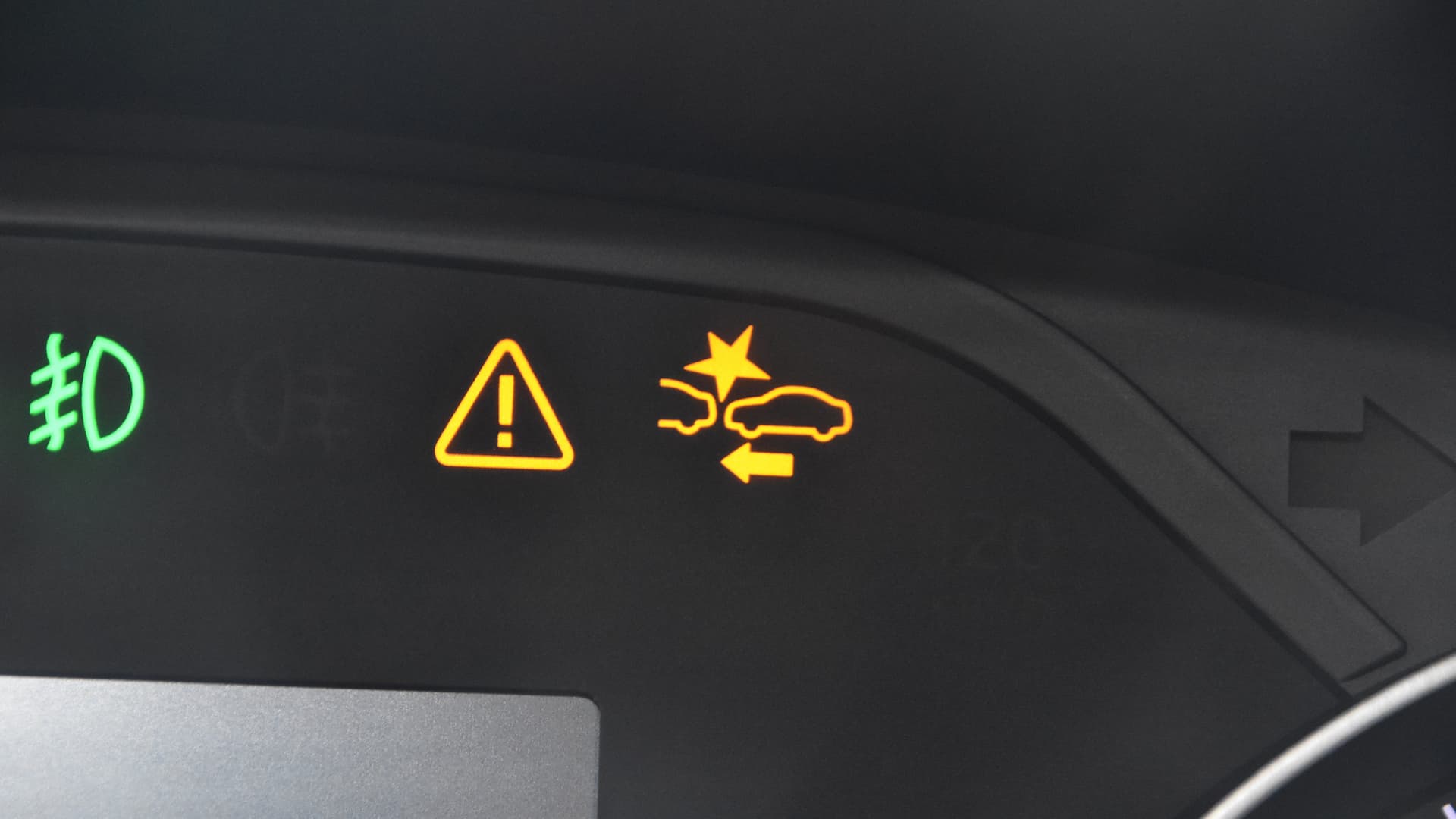
The FCW system continuously monitors the vehicle’s path ahead and warns you if you’re approaching another vehicle too quickly. Some advanced systems may also detect obstacles such as pedestrians, cyclists, or large animals.
Depending on the vehicle model, you may notice:
- A flashing red or amber warning light
- A car collision icon on the instrument cluster or head-up display
- An audible beep or chime
- Steering wheel or seat vibration
The goal is to warn you early, giving you enough time to brake or steer to avoid a frontal collision.
Wondering what triggers the FCW feature to warn you?
Let’s find out.
How Does the Forward Collision Warning System Work?
This system uses a combination of forward-facing cameras and radar sensors, mounted near the windshield and front grille or bumper, to detect vehicles in your path. The radar measures how far away these objects are and your closing speed, while the camera helps identify what’s in front of the vehicle.
A dedicated forward crash warning or Advanced Driver Assistance Systems (ADAS) control module processes the information collected by the cameras and radar sensors. It’ll analyze your vehicle’s speed, the distance to objects ahead, and your closing speed to determine the risk of a frontal collision.
If it detects that you’re closing the distance too quickly and a potential crash can happen, it’ll trigger collision warnings to alert you. These early warnings can give you valuable time to brake or steer away and avoid the impending collision.
Although a forward collision warning may be startling, knowing what to do next can make all the difference.
What to Do When the Forward Collision Alert Comes On
If the forward collision warning appears while you’re driving:
- Stay calm and don’t make sudden movements that could cause you to lose control of your vehicle.
- Apply the brakes depending on how close you are to the object ahead.
- Steer only if it’s safe. If braking alone won’t avoid the impending collision and there’s a clear, safe path, steer around the obstacle.
- Increase your following distance once the obstacle has passed.
NOTE: This advice applies to an FCW alert, which appears when a potential collision is detected. If you instead see a message such as ‘FCW Unavailable,’ or ‘Front Assist Not Available,’ the issue is with the FCW system itself. Consult a professional to have it diagnosed and repaired.
But do you really need a forward collision avoidance system in your vehicle?
Keep reading to know more.
Is the Forward Collision Warning System Worth It?
Yes, an FCW alert system is worth it because it provides an extra layer of safety on the road.
Early warnings of a potential collision can help reduce the risk of an accident and improve safety for everyone on the road.
While it isn’t a substitute for attentive driving, an FCW system can enhance driver confidence and prove helpful in heavy traffic or moments of distraction.
NOTE: The Insurance Institute for Highway Safety (IIHS) conducts standardized tests to measure how effectively a vehicle’s FCW system detects potential front-to-rear-end crashes. Strong FCW performance can help vehicles qualify for Insurance Institute for Highway Safety awards, such as the “Top Safety Pick”.
It’s also important to understand the limitations of the FCW system in an emergency.
Will the Forward Collision Warning System Stop Your Car in an Emergency?
Not always. In most vehicles, the FCW only provides warnings, leaving it up to the driver to brake or steer to avoid a frontal collision.
However, many newer vehicles pair FCW with Automatic Emergency Braking (AEB) as part of a forward collision avoidance assist or pre-collision assist package. If the driver doesn’t respond to the warning in time, automatic braking helps reduce the severity of the collision or, in some cases, avoid it altogether.
Check your owner’s manual to learn how your vehicle’s forward collision warning system works and whether it includes automatic emergency braking.
To get the most out of your collision avoidance system, knowing how road conditions can affect its performance is a good idea.
Can Weather or Road Conditions Affect the Forward Collision Warning System?
While FCW systems are highly effective, they aren’t perfect and may not always detect potential hazards accurately.
Their performance can be affected by heavy rain, fog, snow, or direct sunlight, which can reduce camera visibility or interfere with radar signals. Dirt, mud, ice, or snow covering the windshield camera or front radar sensor can also prevent the system from detecting objects correctly.
Sometimes, a curved road, steep hills, poor lane markings, or stationary objects may cause the system to issue false collision warnings.
A damaged or improperly calibrated camera or radar sensor (after a windshield replacement or front-end collision) can also affect the system’s accuracy.
If you don’t want to use the FCW alert all the time, you might be wondering whether you can turn it off.
Can You Temporarily Disable the Forward Collision Warning System?
Yes, most vehicles allow you to temporarily disable the forward collision warning through the vehicle’s settings menu. However, it’s not recommended to disable this feature, as it provides an important layer of safety by alerting you to a potential crash.
In some vehicles, the system automatically turns back on the next time you start the engine. This safety feature typically becomes active once the vehicle is traveling above 10 mph (exact speed may vary by manufacturer).
Modern vehicles offer several other driver-assistance technologies that work alongside FCW to help prevent an accident.
What Are Some Other Important Driver Assistance Technologies?
Apart from the FCW, there are some other safety features that detect potential hazards and reduce the risk of collisions:
- Adaptive Cruise Control (ACC): This system maintains a preset speed and automatically adjusts it to keep a safe following distance from the vehicle ahead. This is especially helpful while cruising at highway speeds.
- Lane Departure Warning (LDW): The lane warning system alerts you if your vehicle begins to drift out of its lane without using the turn signal.
- Lane Keeping Assist (LKA): This safety feature provides gentle steering assistance to help keep your vehicle centered in its lane.
- Blind Spot Monitoring (BSM): The blind spot warning system alerts you when a vehicle is traveling in your blind spot, helping prevent a side crash.
- Parking Assist Systems: These use cameras and sensors to help you park by providing guidance or, in some vehicles, automatically steering into a parking space.
Keep Your Vehicle’s Safety Systems in Top Shape
Your automotive collision avoidance system is designed to give you added confidence on the road. If you notice a warning light or system issue, have it checked promptly.
If you don’t have time to visit a repair shop, AutoNation Mobile Service makes it easy. Our experienced technicians are available seven days a week and can perform fixes right in your driveway. You’ll also get upfront pricing, so you know exactly what to expect.
All services are backed by a 12-month, 12,000-mile warranty for added peace of mind.
Book your appointment today for expert car care.