
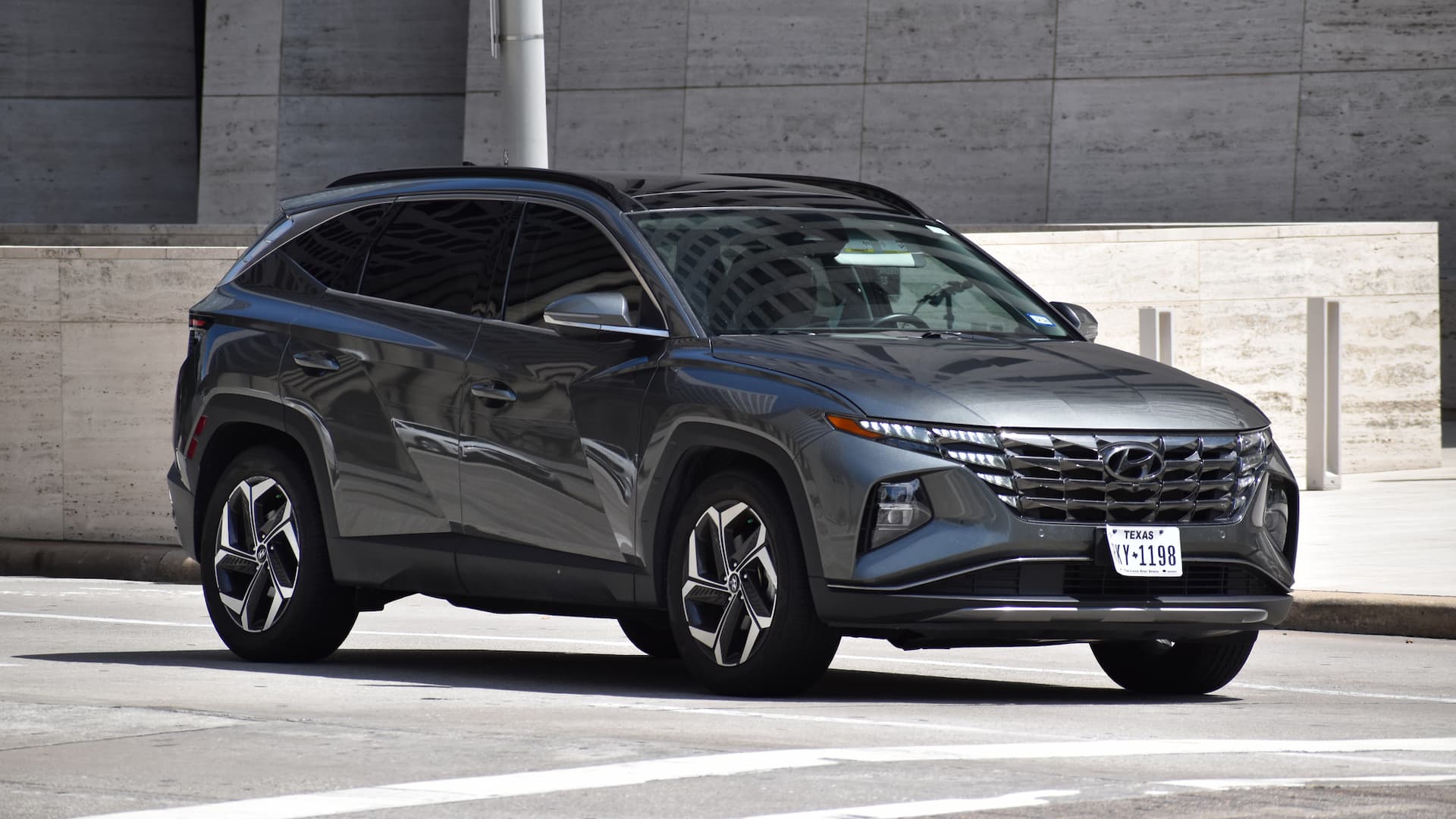
The Hyundai Tucson is a compact SUV known for its dependability, modern features, and competitive pricing. It’s often chosen by drivers who want a balance of comfort, technology, and everyday usability.
When evaluating the Hyundai Tucson reliability, newer model years show strong performance across key systems. This makes the Tucson a reliable SUV for daily commuting, highway driving, and long-term ownership in the United States.
Hyundai Tucson’s standing in reliability indexes:
- The 2026 Hyundai Tucson received a J.D. Power Quality & Reliability score of 83/100.
- According to Edmunds, the 2026 Hyundai Tucson has an overall expert rating of 7.8/10, highlighting comfort, infotainment, and usability. The Tucson Hybrid model scores even higher, with an Edmunds rating of 8.8/10.
Common issues impacting Hyundai Tucson reliability:
- Transmission hesitation or shifting concerns
- Engine failure and fuel system issues
- Electrical and infotainment glitches
- Clutch wear in manual Hyundai models
- Interior noise and build quality concerns
- Paint and trim wear
- Rear parking sensors or warning light issues
The Tucson has also performed well in safety evaluations and is often recognized as a ‘Top Safety Pick’, for its strong highway safety and overall safety for drivers and passengers.
Read on to learn more about the reliability ratings, common problems, repair costs, and warranties.
This Article Contains:
- Hyundai Tucson Reliability Rating Overview
- 7 Common Problem Areas of the Hyundai Tucson That Impact Reliability
- What’s the Average Annual Repair Cost of Owning a Hyundai Tucson?
- Which Hyundai Tucson Models Are Worth Buying (& Years to Avoid)?
- Hyundai Tucson vs Toyota RAV4: Which Is a More Reliable SUV?
- What You Need to Know About Hyundai Tucson Warranties
Hyundai Tucson Reliability Rating Overview
Here’s a look at the Hyundai Tucson’s ranking in reliability studies:
1. J.D. Power
J.D. Power evaluates reliability based on verified Hyundai Tucson owner feedback regarding defects, malfunctions, and usability issues.
The 2026 Hyundai Tucson received a reliability score of 83/100, placing it in the “Great” category.
These scores indicate:
- Fewer reported issues than average
- Consistent performance across major systems
- Strong dependability for daily driving
This reliability rating reflects Tucson’s position as a dependable compact SUV.
2. Edmunds
According to Edmunds, the 2026 Hyundai Tucson received a rating of 7.8 out of 10, reflecting strong comfort, usability, and interior quality. The Tucson Hybrid model performs even better, scoring 8.8/10, particularly for its power and fuel efficiency.
These ratings are based on:
- A user-friendly infotainment system with Android Auto, Apple CarPlay, and navigation systems
- Dual-zone climate control that improves comfort for front and rear seats
- A smooth driving experience across different conditions
Together, these factors support Tucson’s reputation as a reliable car in its class. However, like any car, it can still experience problems over time.
Let’s take a look at them.
7 Common Problem Areas of the Hyundai Tucson That Impact Reliability
While the Hyundai Tucson is generally dependable, some common problems have been reported across specific vehicle model years.
- Transmission issues (2016–2018 models): Some Tucson models with dual-clutch automatic transmissions may experience hesitation or rough shifting at low speeds.
- Engine and fuel system concerns (2017–2019 models): Car owners of these Tucson model years have reported fuel injector issues and, in rare cases, engine failure if maintenance is neglected.
- Electrical and infotainment system glitches (2020–2022 models): Touchscreen lag, connectivity issues, and infotainment system resets have been reported, affecting usability.
- Clutch wear (manual vehicle model): Manual Tucson models may experience faster clutch wear depending on driving conditions.
- Interior quality and cabin noise (2019–2021 models): Some Tucson owners report rattles, especially near the rear seats, along with increased highway noise.
- Paint and trim wear (older models): Color fading and trim wear may occur over time, particularly in older Tucson models. While this isn’t a serious problem, it can impact the vehicle’s resale value.
- Sensor and warning light issues: Some vehicles may display warning lights due to failing rear parking sensors, which usually require diagnostic repair at dealerships.
Most of these common issues are manageable and don’t typically lead to costly repairs when addressed early.
What’s the Average Annual Repair Cost of Owning a Hyundai Tucson?
The Hyundai Tucson is relatively affordable to maintain compared to other compact SUVs.
On average, repair costs are about $430 per year, which is lower than the industry average of around $650.
Ownership data shows:
- Tucson drivers visit their Hyundai dealer 0.3 times per year for unscheduled repairs.
- The probability of major repairs is around 10% compared to 11% for compact SUVs.
Most repairs are minor, helping keep overall maintenance predictable for Tucson owners. This makes the vehicle a practical option for long-term ownership without frequent costly repairs.
However, reliability can vary across model years, trim levels, and maintenance histories, causing some Tucson models to perform more consistently than others.
Which Hyundai Tucson Models Are Worth Buying (& Years to Avoid)?
Here’s a closer look at the most and least reliable Tucson model years:
1. Reliable Models
If you’re looking to purchase the best compact SUV, consider these Tucson model years:
- 2019–2021 models: These Hyundai models offer improved powertrains, better infotainment functionality, and consistent performance.
- 2022 and newer models: The redesign introduced better fuel efficiency, increased cargo space, and updated technology, including navigation systems and climate controls. More recent models, such as the 2025 Hyundai Tucson, have earned “Top Safety Pick” recognition, reflecting strong highway safety performance in crash testing.
2. Years to be Cautious About
While the Hyundai Tucson has strong reliability, here are some models you should avoid:
- 2016 (redesign year): This model year introduced a dual-clutch transmission, which led to reported transmission issues and frequent unscheduled repairs.
- Earlier models (pre-2015): According to Tucson drivers, older model years frequently experience wear-related issues and reduced fuel efficiency.
NOTE: Since January 2026, Hyundai has issued recalls for certain vehicles, including the Tucson Hybrid (2025–2026), Hyundai Palisade, and Santa Fe, due to airbag deployment concerns and electrical faults. If you own or plan to own these cars, check your vehicle’s recall status or contact your dealership.
3. Models with Mixed Reliability
The 2013–2015 model years have received mixed reviews from Tucson owners. These vehicles may experience:
- Minor electrical issues
- Fuel economy problems
- Interior wear
- Clutch-related concerns
Next, let’s see how the Hyundai Tucson fares against its top competitor in the compact SUV segment.
Hyundai Tucson vs Toyota RAV4: Which Is a More Reliable SUV?
The Hyundai Tucson and the Toyota RAV4 are both considered among the best compact SUV options available today.
The Toyota RAV4 is known for long-term durability, supported by a J.D. Power reliability score of around 79/100. At the same time, the Tucson focuses more on modern design, advanced infotainment systems, and interior comfort, earning a score of 83/100.
Other competitors, such as the Honda CR-V, Mazda CX-5, and Volkswagen Tiguan, offer similar capabilities in this segment. Ownership costs are also similar, with both the RAV4 and Tucson averaging around $430 per year in maintenance and repair costs.
For most car owners, both are reliable vehicles, but the choice depends on priorities such as comfort, features, and overall driving experience.
Beyond reliability, warranty coverage is another key factor that can influence long-term ownership.
What You Need to Know About Hyundai Tucson Warranties
Hyundai offers one of the most comprehensive automotive warranties available, providing added peace of mind:
- New Vehicle Limited Warranty (5 years/60,000 miles): Covers most components, including paint, infotainment systems, navigation systems, climate controls, and electrical systems.
- Powertrain Limited Warranty (10 years/100,000 miles): Hyundai’s extensive powertrain warranty covers repairs and replacements for components such as the engine, transmission, and drivetrain.
- Rust-Through Coverage (7 years/unlimited miles): Hyundai also provides corrosion protection that covers rust-through or perforation of body panels. This helps protect the vehicle’s exterior over time, especially in areas with harsh weather or road conditions.
- Hybrid Battery Warranty (10 years/100,000 miles): For hybrid and plug-in hybrid Tucson models (PHEVs), the battery is covered for up to 10 years or 100,000 miles, depending on the model year. This extended coverage helps support the long-term reliability of hybrid system components and reduces the risk of costly repairs.
- Roadside Assistance (5 years/unlimited miles): Hyundai provides 24-hour roadside assistance from the date the Hyundai vehicle is first put into service. It includes towing, battery jump-starts, and emergency fuel delivery. This coverage is included as part of Hyundai’s overall warranty program offered by Hyundai Motor America.
Get Reliable Vehicle Maintenance with AutoNation Mobile Service
The Hyundai Tucson is a reliable car, but maintaining its reliability depends on consistent maintenance and timely repairs. As a Hyundai Tucson owner, routine servicing, early diagnostics, and prompt issue resolution can help you prevent costly repairs over time.
AutoNation Mobile Service provides convenient maintenance and automotive repair services for your Hyundai vehicle right in your driveway.
We offer an upfront quote and a 12-month/12,000-mile warranty, giving you a practical alternative to visiting a Hyundai dealer.
So why wait in long queues?
Book your mobile service today.