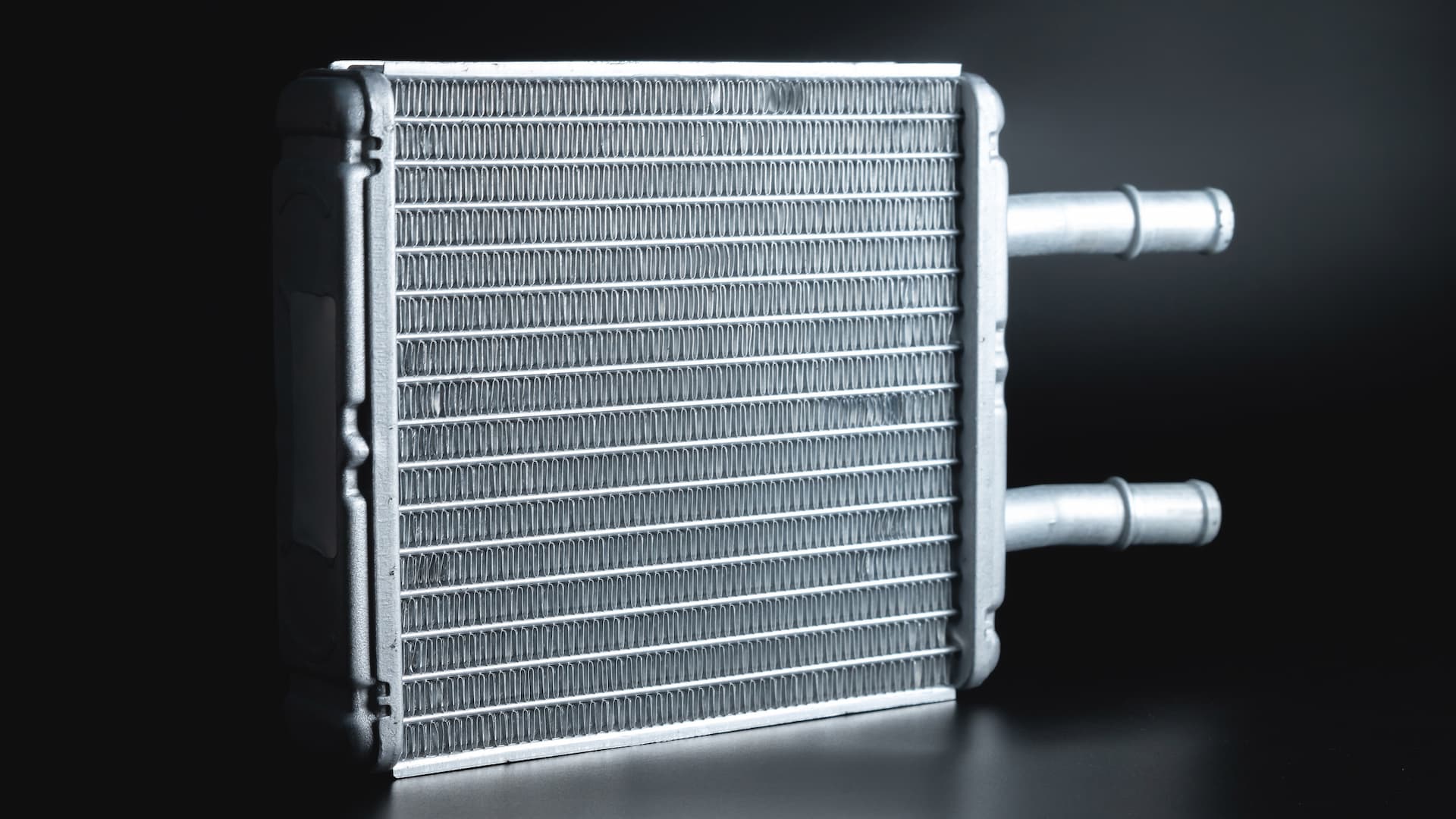
Replacing a heater core isn’t your average weekend DIY project. Even with a repair manual, it’s a complex job that requires a solid understanding of your vehicle’s heating and AC system.
If that sounds daunting, you’re not alone!
Many car owners prefer to leave this repair to a professional mechanic who can handle it efficiently and safely.
In this post, we’ll explain how to replace a heater core, step by step, so you’ll know exactly what to expect. We’ll also discuss whether it’s possible to fix a faulty heater core without replacing it.
This Article Contains:
- How to Replace a Heater Core (A Step-By-Step Guide)
- Can You Fix a Failed Heater Core Without Replacing It?
- 5 Tell-Tale Signs to Replace the Heater Core
- How Much Does It Cost to Replace a Heater Core?
How to Replace a Heater Core (A Step-By-Step Guide)
First, your mechanic will gather the following tools:
- Impact wrench
- Breaker bar
- Sockets
- Saw
- Large screwdriver
- Small flat tip screwdriver
- Wire cutter
Next, here’s how they’ll proceed to replace your car heater core:
Step 1: Prep the Vehicle
Your mechanic will disconnect the negative battery terminal to prevent electrical shorts or airbag deployment. Then, they’ll drain the coolant to avoid major spills during heater core removal.
Step 2: Remove the Glove Box (if applicable)
If the glove box blocks access to ductwork or wiring, they’ll remove it.
Step 3: Take Out the Dashboard
They’ll take out the entire dash along with the rearview mirror to create enough clearance for safely moving the dashboard in and out.
Step 4: Detach Top Vent Ducts
The mechanic will take out the top vent ducts to access the passenger-side metal support. Additionally, they’ll loosen any tack-welded nuts using a chisel and breaker bar.
Step 5: Remove the Center Console
Next, they’ll take out the center console to access the lower metal support bracket.
Step 6: Remove Air Duct Pieces
Now, your mechanic will remove the lower and upper plastic duct pieces blocking access to the HVAC (Heating, Ventilation, and Air Conditioning) box and heater core.
The lower duct has one screw and should come off easily.
The upper duct has three screws and may be zip-tied to a wire. The mechanic will remove each screw and cut the zip-tie before pulling out the duct.
Step 7: Loosen HVAC Box Cover
The HVAC box cover is held in place by several black and gold screws. The mechanic will remove these fasteners to open the cover and reveal the heater core inside. If you drive an older vehicle, it may also have a dedicated heater core cover that they’ll remove.
Step 8: Collect Leaking Coolant
Place a container below the heater core pipe connections to catch any remaining engine coolant.
Step 9: Disconnect Heater Hose Clamps
Two clamps secure the heater hose. The mechanic will loosen them with a screwdriver or pliers and slide them back along the hose, then remove the hose from the fitting. They’ll keep the hose clamps safely for reuse.
Step 10: Clear Vacuum Components and Wiring
The mechanic will gently move vacuum actuators and wire looms, blocking access. They’ll also disconnect or shift any electrical connector and unclip plastic wiring straps to create clearance for the removal process.
Step 11: Disconnect the Heater Core Lines
If the quick-connect fittings are difficult to release, the mechanic will cut and feed the heater core lines into the engine bay for easier access.
Step 12: Remove the Old Heater Core
They’ll pull out the old heater core carefully.
Step 13: Install the New Heater Core
Then, they’ll install the new heater core and reattach the quick-connect heater hose. Next, reconnect any electrical connector, wiring, or vacuum component that was removed earlier.
Step 14: Reassemble the Interior
The mechanic will reinstall all components in reverse order, including the ducts, HVAC cover, brackets, center console, and the entire dash. If necessary, they might also replace zip-ties and straps.
Step 15: Final Check
Finally, they’ll top off the engine coolant, reconnect the battery, start the engine, and verify that hot coolant flows properly through the new core.
NOTE: It’s a good idea to ask your mechanic to check the thermostat whenever you’re dealing with heater core issues. The thermostat regulates engine temperature by controlling coolant flow, while the heater core uses that hot coolant to produce warm air for your cabin.
Now that you know the replacement steps, let’s explore if it’s possible to sometimes repair a heater core without replacing it.
Can You Fix a Failed Heater Core Without Replacing It?
Yes, if it’s a minor issue, a faulty heater core doesn’t always require a complete replacement. For example, a professional mechanic can easily repair a small leak without removing the bad heater core.
One common method is adding a sealant to the radiator when the engine is cold.
As the radiator sealant circulates and reaches the leak, it reacts with heat or air at the opening. This triggers a chemical reaction, forming a seal over the opening. This stops the leak without harming the rest of the cooling system.
But how do you know if you have a leaking heater core?
5 Tell-Tale Signs to Replace the Heater Core
Get in touch with a repair shop or mobile mechanic when you spot these warnings:
1. Cabin Heater Doesn’t Work
If your heater isn’t blowing hot air like it used to, a clogged heater core might be the cause. This happens when debris and corrosion build up in the core’s fins over time, blocking the flow of hot coolant. Without enough hot coolant circulating, the blower can’t push hot air into the cabin.
A mechanic will flush the heater core to clear the blockage, and if that doesn’t restore heat, they’ll replace it.
NOTE: To help prevent these clogs in the first place, always use distilled water, instead of tap water, in your coolant mix. Distilled water reduces mineral deposits and lowers the risk of corrosion inside the heater core.
2. Windshield Won’t Defrost
In defrost mode, your HVAC system uses the blower fan to push dry, warm air onto the inside of the windshield to melt frost. If it’s only blowing cold air, the frost won’t melt, and the heater core might be to blame.
The mechanic will confirm if the cold air is coming out of the defrost vent. If not, it could be a blend door or vent issue.
3. Smell of Coolant
Coolant has a sweet, fruity scent. If you smell it inside your car, it could mean you have a leaking heater core that is blowing fumes into the cabin.
Depending upon the severity of the leakage, the mechanic will either seal the leak or replace the faulty unit with a new core.
4. Leaking Coolant
A large heater core leak may result in coolant dripping onto your car’s floor, often under the dash. It can lead to puddles, bad smells, and excess window fog.
The mechanic will first check if the liquid smells like antifreeze to confirm the heater core is leaking. If it’s odorless, it’s likely water from the AC system.
5. Engine Overheating
Since the heater core is part of the cooling system, a leak can cause coolant loss, eventually leading to excessive heat in the engine.
Most engines run between 195°F and 220°F. However, if your gauge rises above the midpoint, have a mechanic check the coolant level promptly. If it’s low, they’ll top it off and monitor the coolant level. A steady drop, even after a top-up, means there’s possibly a leak in the heater core.
Now, if your heater core is beyond repair, it leads us to the next important question:
How Much Does It Cost to Replace a Heater Core?
Typically, a heater core replacement costs anywhere between $1,300 and $1,850.
This includes:
- Cost of parts: $460 and $600
- Cost of labor: $840 and $1,250
Restore Heat and Comfort to Your Cabin with AutoNation Mobile Service
Your car heater core is essential for keeping your cabin warm and your windows clear in cold weather. Fixing or replacing a bad heater core prevents discomfort, improves your vehicle’s energy efficiency, and protects the rest of the cooling system from costly damage.
However, a heater core replacement involves dismantling major parts of your car’s interior and working around delicate wiring. One small mistake can lead to leaks, electrical issues, or costly rework.
That’s why it’s best to leave this job to the pros at AutoNation Mobile Service.
Our experienced mobile mechanics come equipped with all the necessary tools and bring the repair shop right to your driveway. Every repair job is also backed by a 12-month | 12,000-mile warranty.
Schedule your heater core replacement today and enjoy a warm, comfortable ride all season long.