
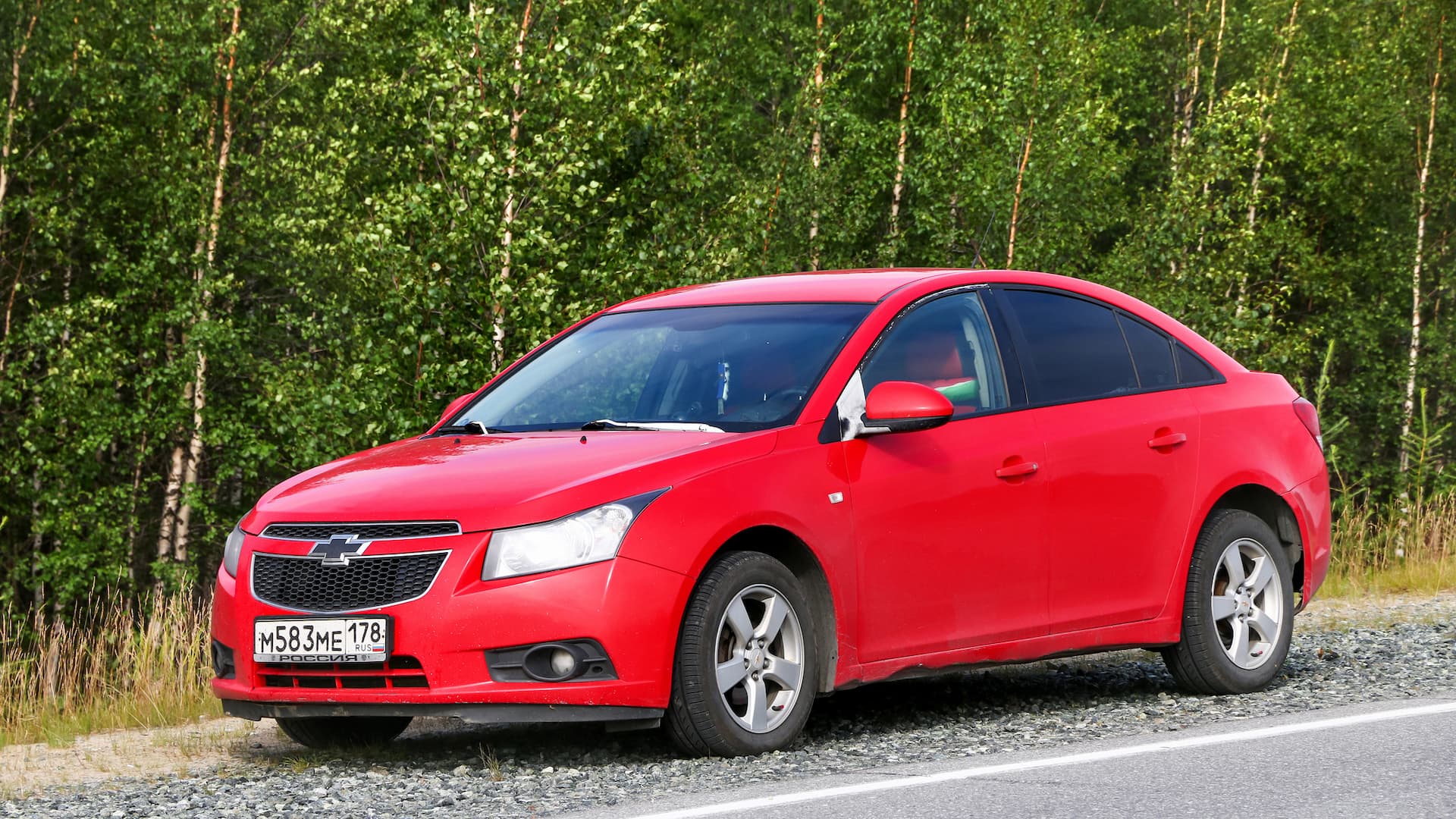
The Chevrolet Cruze, or Chevy Cruze, is known for its comfortable driving experience, practical features, and dependability. It competes directly with the Toyota Corolla and Honda Civic in the compact sedan segment. The Cruze lineup expanded for the 2017 model year with the introduction of a hatchback variant.
However, Cruze was discontinued in the US in 2019 (and globally in 2023) and is now only available in the used car market.
Industry Rankings:
- The Cruze earned a J.D. Power overall consumer rating of 86/100 in 2019.
- It received an expert rating of 4.5/5 for technology, and an overall consumer rating of 4.1/5 from Edmunds in 2019.
Best Cruze Years:
- 2015: A dependable first-generation model with fewer complaints, recalls, no major transmission issues, and solid fuel efficiency.
- 2017-2018: Refined second-generation Cruze models with a 1.4-liter turbocharged engine, and updated tech like Apple CarPlay/Android Auto.
- 2019: Compact car with a strong reliability rating, modern tech, spacious interiors, and excellent fuel economy.
Worst Cruze Years:
- 2011: Major engine issues, transmission failures, brake problems, and multiple safety-related recalls.
- 2012: Frequent engine overheating, transmission faults, and brake complaints.
- 2014: Engine and electrical issues; coolant leaks, overheating, and multiple recalls.
Chevy Cruze Advantages:
- Smooth, easy city driving
- Strong engine performance
- Spacious cabin
- Good fuel efficiency
Chevy Cruze Problems:
- Engine problem like stalling
- Cracked pistons
- Electrical problems
- Transmission and shifting issues
- Steering issues
- Cooling system faults like
- Coolant leaks
We’ll break down Chevy Cruze reliability — best years, risky trims, ownership costs, common problem areas, and warranty coverage.
This Article Contains:
- What Industry Rankings and Reviews Say About Chevy Cruze Reliability
- 3 Reliable Chevy Cruze Model Years
- 3 Chevy Cruze Model Years to Avoid
- What Are the Ownership and Maintenance Costs of a Chevy Cruze?
- What Are the Advantages of Owning a Chevy Cruze?
- What Are the Problem Areas of a Chevy Cruze?
- How to Maintain Your Chevrolet Cruze
- Warranty and Coverage Options Offered by the Chevrolet Brand
What Industry Rankings and Reviews Say About Chevy Cruze Reliability
Although the Chevy Cruze was discontinued in the US in 2019, it remains popular in the pre-owned vehicle market and continues to attract buyers.
Here’s what industry experts and owners have to say about this vehicle:
A. J.D. Power Consumer Rating, 2019
This rating reflects real-world feedback from owners, including the quality of its build and how well it performs over time.
Here’s where the Chevy Cruze stands:
- Overall score: 86/100
- Quality and reliability: 87/100
- Driving experience: 83/100
B. Edmunds, 2019
These ratings combine expert evaluation and real owner feedback.
Here’s how the Chevy Cruze fares:
- Expert’s rating for technology: 4.5/5
- Consumer reliability score: 4.1/5
While the overall Chevrolet Cruze reliability ratings are solid, some model years perform better than others.
3 Reliable Chevy Cruze Model Years
These are some of the most dependable Chevy Cruze years:
- 2015: The 2015 Chevrolet Cruze stands out as one of the most reliable models from the first generation. It had significantly fewer complaints and recalls compared to earlier versions and didn’t suffer from any major transmission issues. It also offered good fuel efficiency.
- 2017–2018: The 2017 and 2018 Chevrolet Cruze models, equipped with a 1.4-liter turbocharged engine, are strong options from the second generation. These years benefited from modern features like Apple CarPlay and Android Auto, as well as fewer mechanical issues.
- 2019: The 2019 model is a second-generation Cruze that is widely regarded as a reliable car. This compact car combines modern technology, a spacious interior, and strong fuel economy with a good reliability rating. It also received a strong quality and reliability score from J.D. Power.
With the top model years in mind, it’s time to examine the more problematic trims.
3 Chevy Cruze Model Years to Avoid
Here are some model years you might want to steer clear of:
- 2011: This is one of the most problematic models, prone to major issues like blown head gaskets, engine overheating, and loss of power. It also suffered from transmission failures, serious brake problems, and multiple safety recalls.
- 2012: This Cruze year also suffered from engine overheating, head gasket failure, and transmission problems. Owners also reported brake malfunctions.
- 2014: This model year had widespread engine and electrical issues, such as coolant leaks, overheating, and sudden shutdowns.
Now that we’ve covered the years to avoid, let’s look at the real cost of owning a Chevy Cruze.
What Are the Ownership and Maintenance Costs of a Chevy Cruze?
On average, the annual maintenance cum repairs cost for a Chevy Cruze is around $540. While this is slightly higher than the average cost for compact cars ($520), it remains lower than the industry-wide average of $650 across all vehicle types.
Chevy Cruze owners visit repair shops for unscheduled fixes about 0.4 times per year. This is roughly in line with both compact cars (0.3 times) and the overall vehicle average (0.4 times).
About 12% of repairs are considered major issues, which is similar to industry averages (11% for compact cars and 12% overall).
In addition to affordable maintenance costs for a car owner, this compact sedan offers multiple benefits.
What Are the Advantages of Owning a Chevy Cruze?
Chevy Cruze is considered a good car for several reasons:
- Comfortable driving experience: The Chevrolet Cruze offers excellent driveability with smooth, linear acceleration, making it especially comfortable for city driving.
- Good engine performance: The upgraded 2.0L turbo engines deliver strong performance and responsive acceleration, making the Cruze one of the most powerful cars in its segment.
- Premium interiors: The Cruze features a well-designed cabin with a partially powered driver seat and improved rear-seat cushioning. It also has a quiet interior, with minimal noise, providing a refined driving experience.
NOTE: While the Cruze is good for daily commuting, families may prefer the added spaciousness of other Chevy models, such as the Chevrolet Equinox or Chevrolet Malibu. - Balanced fuel efficiency: Despite powerful turbo engines, the Cruze delivers decent mileage (40-41 mpg or miles per gallon for the manual variant).
That said, like any vehicle, the Chevy Cruze has its share of drawbacks.
What Are the Problem Areas of a Chevy Cruze?
Some known Chevy Cruze problems include:
- Engine issues: Some Chevrolet Cruze models have reported engine problems, including stalling and power loss. The engine problem is often linked to faulty components such as alternators, sensors, or the fuel system.
- Cracked piston: A cracked piston in some Chevy Cruze models can lead to rough idling, reduced acceleration, and poor overall engine performance.
- Electrical problems: Electrical issues are one of the most common problems reported by Cruze owners. These include hard starts, malfunctioning infotainment systems, or an unexpected check engine light.
- Transmission and shifting issues: Some Chevy Cruze models experience harsh shifting, slipping gears, or delayed gear changes. In more serious cases, complete transmission failure has also been reported.
- Steering problems: Certain model years have reported steering-related issues, including stiffness or jerking at higher speeds.
- Coolant leaks: Radiator fluid leaks are among the most commonly reported issues. This common problem has often led to overheating and serious mechanical issues.
- Cooling system issues: The Cruze has also been known to have water pump-related issues that can cause the engine to overheat and lead to head gasket damage.
IMPORTANT: Always test drive a used Chevy Cruze before buying to check its condition, performance, and overall comfort.
Fortunately, you can take steps to reduce these common problems and avoid costly repairs.
How to Maintain Your Chevrolet Cruze
Follow these regular maintenance tips to enhance Chevrolet Cruze reliability:
- Change your engine oil (including the filter) every 7,500 miles. Regular oil changes can help your engine stay cool under pressure.
- Replace the engine air filter roughly every 45,000 miles to keep airflow strong and fuel use efficient. The cabin filter needs attention sooner — about every 22,500 miles.
- Refresh the coolant every 5 years or 150,000 miles to avoid overheating and protect key engine parts from corrosion.
- Replace your spark plugs around 97,500 miles to improve combustion, prevent annoying misfires, and avoid potentially costly repairs.
- Change your brake fluid every 45,000 miles to maintain a reliable braking response.
NOTE: Pay attention to warning signs, such as an active check engine light, as early diagnosis can prevent minor issues from turning into costly repairs.
Regular maintenance is key, but warranty coverage adds another layer of protection for your Chevy Cruze.
Warranty and Coverage Options Offered by the Chevrolet Brand
A Chevy car owner will enjoy the following warranty benefits:
- New-car limited warranty: Originally, every brand-new Chevrolet came with a 3-year/36,000-mile bumper-to-bumper warranty.
- Extended warranty: This stretches your bumper-to-bumper protection to up to 5 years or 60,000 miles.
- CPO (Certified Pre-Owned) warranty: You get a 12-month/12,000-mile bumper-to-bumper limited warranty, which begins after the original new car warranty expires.
NOTE: Since the Chevrolet Cruze is no longer in production, you won’t find new models with factory warranties.
Keep Your Chevy Cruze Running at Its Best
The Chevy Cruze is a good car that will treat you well — if you treat it right.
If time’s tight, AutoNation Mobile Service makes car care easy with convenient at-home auto service available seven days a week. We also offer upfront pricing and a 12-month | 12,000-mile warranty on all repairs for your peace of mind.
Book your service today for reliable, hassle-free automotive care.