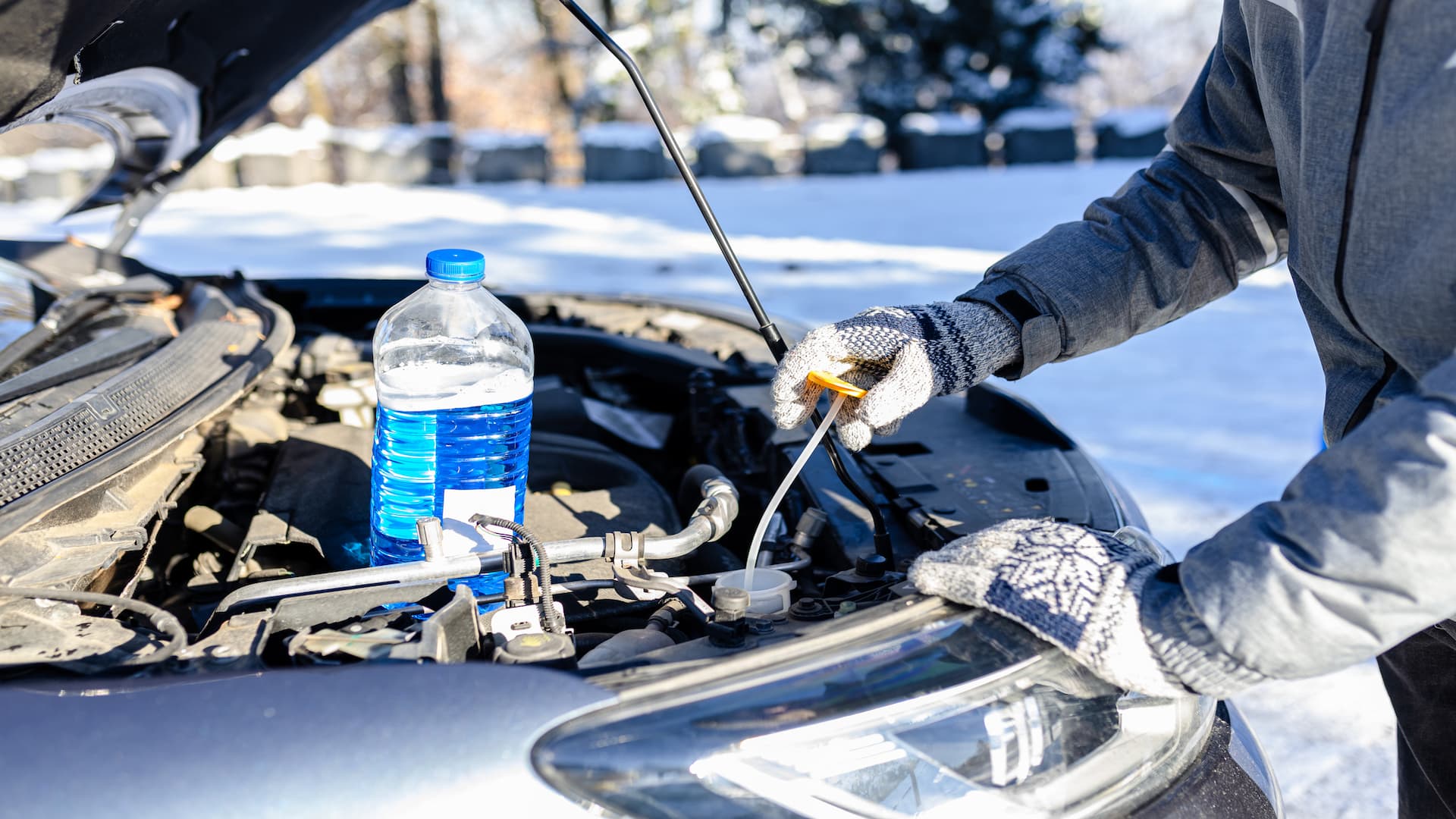
Most windshield washer fluids cost $1 to $10 per gallon.
However, prices can vary based on brand, additives, and cold-weather protection.
It’s a small expense, but running low can leave you with streaks, smeared glass, and poor visibility on the road.
Let’s break down how much windshield wiper fluid costs, the factors that impact pricing, and signs that you need a refill or change.
This Article Contains:
- How Much Does Windshield Wiper Fluid Cost?
- Is It Worth Investing in a Specialized Washer Fluid (Instead of Plain Water)?
- Signs You Need to Refill or Replace Your Windshield Washer Fluid
- How Long Does Windshield Washer Fluid Last?
- How to Refill Windshield Washer Fluid
How Much Does Windshield Wiper Fluid Cost?
Windshield washer fluid comes in several blends, and each falls into its own price range:
A. Range
Most windshield wiper washer fluids fall in the $1 to $10 per-gallon range. Here’s how the costs vary based on the type of fluid:
- Standard all-season fluid: $3 to $5 per gallon
- Summer bug wash: $2 to $4 per gallon
- Winter/de-icer blend: $5 to $8 per gallon
- Hydrophobic/rain-repelling blends: $7 to $10 per gallon
- Concentrate tablets or liquids: $0.10 to $1 per gallon equivalent
B. Factors Affecting Cost
The pricing of wiper fluid varies based on several conditions:
- Temperature rating: Winter-ready formulas designed for freezing conditions (-20°F or lower) cost more because they contain higher levels of methanol or de-icing additives.
- Additives: Fluids with extra cleaning power — like bug remover, water-beading agents, or anti-freeze ingredients — usually sit at the higher end of the price range.
- Packaging type: Pre-mixed gallons are convenient but cost more per use. Concentrate tablets or jugs are cheaper per gallon but require proper dilution.
- Retailer and store pricing differences: Budget chains offer basic products for as low as $1 to $3, while specialty auto stores price premium formulas at a higher rate.
- Regional availability: Regions with colder climates may see higher demand and price.
- OEM vs. aftermarket: OEM (original equipment manufacturer) washer fluids, often recommended for luxury or high-end vehicle systems, may cost more due to brand markup and compatibility claims.
- Bulk vs commercial purchases: Fleet-use drums, 5-gallon pails, or concentrated formulas can bring the price down dramatically — often to $1 to $3 per gallon — making them a cost-efficient choice for trucking businesses or workshops handling high volumes.
Cost differences tell you what each blend might run you at the store, but performance is what determines whether that money is well-spent.
Is It Worth Investing in a Specialized Washer Fluid (Instead of Plain Water)?
Yes, it is.
Using plain water for your wipers may seem fine, but it lacks the needed ingredients to keep your windshield clean and maintain visibility. Washer fluid is made to handle conditions that water can’t, like freezing weather, dust, bugs, and sudden rain, making it worth the upgrade.
Here’s when specialized washer fluid makes a real difference:
- Premium blends resist freezing, repel water, and reduce streaks, providing clearer visibility during snow, heavy rain, or fast-changing weather.
- Water or cheaper formulas may leave residue or freeze faster, meaning you’ll use more fluid and may still struggle with smears or leftover debris.
- In colder regions, spending an extra $2 to $3 can prevent frozen pumps or cracked reservoirs, which cost far more to repair.
- For mild climates, standard all-season fluid is usually sufficient, but it still outperforms plain water and protects the system from mineral buildup.
Once you know why the right washer fluid matters, the next step is knowing when to top it off or replace it.
Signs You Need to Refill or Replace Your Windshield Washer Fluid
Your vehicle will usually signal one of two things: it needs more fluid, or it needs the old mix swapped out.
Here’s how to spot the difference:
A. Refill Your Washer Fluid When:
- Spray output becomes weak, uneven, or stops — usually the first indicator that your fluid level is low.
- A washer fluid warning light appears on the dashboard (in newer cars and trucks).
- The fluid looks slushy or slightly dirty, suggesting it’s running out or picking up minor debris from the reservoir.
B. Replace the Washer Fluid When:
- The fluid looks cloudy, discolored, gritty, or contaminated, which reduces cleaning power and can clog jets over time.
- You’re switching between summer and winter blends to avoid mixing formulas with different temperature ratings.
With the warnings out of the way, it’s worth looking at how long washer fluid usually lasts.
How Long Does Windshield Washer Fluid Last?
Once you’ve refilled your reservoir, the lifespan of washer fluid depends on your driving habits, weather, and how clean your windshields stay.
Here’s a quick breakdown so you know what to expect before your next maintenance stop:
A. Usage lifespan
A complete refill can last a few weeks to a few months, depending on how often you drive and the conditions you’re driving through. In snowy, rainy, muddy, or bug-heavy regions, it’s normal to go through a gallon every few weeks.
B. Shelf life
Washer fluid itself has an extremely long shelf life because it’s mostly water, methanol, and detergents. Sealed washer fluid can last almost indefinitely, but many manufacturers recommend using it within 2 to 3 years for best performance.
Once opened, degradation typically occurs due to contamination, freezing, or evaporation, and not chemical breakdown.
It’s best to store extra bottles of fluid in a cool, dry place, tightly sealed and away from direct sunlight.
PRO TIP: Keep one spare gallon in your garage. It makes mid-season top-offs easier and avoids last-minute store trips when conditions get messy.
Whenever your reservoir starts to run low, the next step is to get it properly refilled.
How to Refill Windshield Washer Fluid
Refilling typically takes 5 to 10 minutes, including checking the reservoir and topping it off.
Although it may seem simple, you shouldn’t attempt it unless you’re familiar with the process. Spills, dilution errors, or mixing the wrong formulation can reduce cleaning performance or cause freezing damage.
A professional mechanic can handle the refill for you. Here are the steps they’ll typically follow:
- Park the car on a flat, even surface so the reservoir sits level.
- Open the hood and locate the windshield washer reservoir (marked with a windshield/water/spray symbol).
- Check the fluid level and confirm whether the reservoir needs a top-off.
- Pour the new washer fluid slowly until it’s just below the fill line.
- Secure the cap, close the hood, and test the jets to ensure smooth spray.
For a deeper walkthrough of the process, take a look at our full guide on how to change windshield wiper fluid.
Stay Road-Ready with a Washer Fluid Service
Winter wiper fluids fit almost any budget, and for the price of a quick top-off, you can maintain sharp visibility and keep your wipers working optimally.
If you’d rather avoid the mess — or you just want a quick, professional top-off during your regular maintenance — AutoNation Mobile Service brings certified technicians right to your driveway.
With us, you get upfront pricing, easy online booking, and a 12-month|12,000-mile warranty on all repairs.
Get a free quote online and book an appointment for a quick windshield washer fluid refill.