
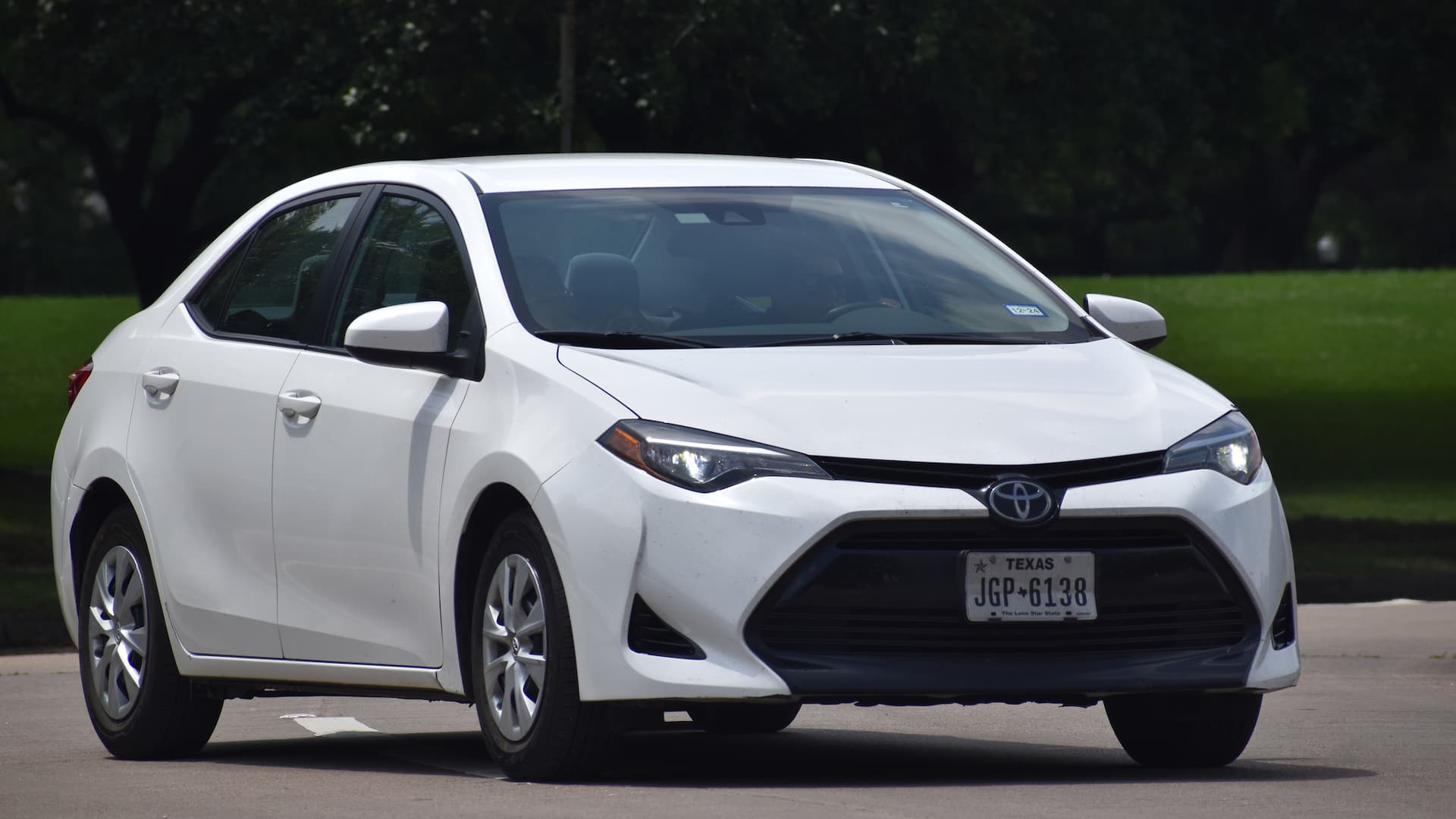
The Toyota Corolla has built a strong reputation as a reliable vehicle, known for consistent performance, long lifespan, and relatively low ownership costs. For many drivers, this compact car is a practical choice for daily use and long-term ownership.
Toyota Corolla’s standing in reliability indexes:
- The 2026 Toyota Corolla received a Quality & Reliability score of 81/100 from J.D. Power, placing it in the “Great” category.
- The Corolla also ranks #4 in the compact sedan vehicle category in J.D. Power segment rankings, reflecting strong model-level dependability.
- According to Consumer Reports, the Toyota Corolla has above-average predicted reliability.
These results indicate that the Corolla is a reliable car that delivers stable long-term performance with relatively low ownership risk.
Problems impacting Toyota Corolla reliability:
- Transmission hesitation, or rough shifting in CVT-equipped models
- Excessive oil consumption in certain older model years
- Sensor-related check engine light issues
- Interior material wears out over time
- Faster brake wear depending on driving conditions
- Paint chipping or exterior wear in older vehicles
- Age-related component wear, such as water pumps or ignition coils
Read on for a deeper look at Toyota Corolla reliability, average annual maintenance costs, the most dependable models to consider, and more.
This Article Contains:
- Toyota Corolla’s Reliability Rating Overview
- 7 Common Problem Areas of the Toyota Corolla That Impact Reliability
- What Are the Annual Maintenance Costs of the Toyota Corolla?
- How Long Does a Toyota Corolla Last?
- Which Toyota Corolla Models Are Worth Buying (& Years to Avoid)
- What You Need to Know About Toyota Corolla Warranties
Toyota Corolla’s Reliability Rating Overview
1. J.D. Power
J.D. Power evaluates reliability using owner-reported data, which provides a clear view of how vehicles perform in real-world conditions.
The 2026 Toyota Corolla received a Quality & Reliability score of 81/100, placing it in the “Great” category. It also earned a 79/100 score for overall driving experience, reflecting a balanced ownership experience.
These ratings indicate:
- Fewer reported issues compared to segment averages
- Strong performance across mechanical and electrical systems
- Consistent reliability across multiple model years
The Corolla also ranks #4 in J.D. Power’s compact car rankings, reinforcing its position as a dependable sedan for daily driving.
2. Consumer Reports
Consumer Reports focuses on long-term reliability using owner-reported data across multiple systems, including the engine, transmission, and electronics.
Recent Corolla models have earned above-average predicted new-car reliability scores. These scores estimate future performance based on reported issues and ownership data from similar models over the past three years.
The 2025 model also received a “Recommended” rating and a score of 84/100.
This reflects:
- Strong engine and transmission durability
- Fewer major repairs over time
- Consistent performance across vehicle models
These ratings confirm that the Corolla is a smart safety pick and performs well in the long run.
However, knowing the types of issues that can occur helps provide a clearer picture.
7 Common Problem Areas of the Toyota Corolla That Impact Reliability
While the Corolla is a reliable car known for its dependability, owners have reported some recurring issues across certain models:
- Transmission hesitation or rough shifting: Some Toyota model years equipped with CVT transmissions may experience delayed acceleration or rough shifting when merging. This is often related to transmission behavior rather than a serious mechanical fault, which causes a complete transmission failure.
- Excessive oil consumption (older models): Certain model years may consume oil faster than expected, particularly at higher mileage. Regularly monitoring oil levels helps prevent long-term engine wear and maintain fuel efficiency.
- Sensor-related warning lights: Faulty sensors, such as oxygen or mass airflow sensors, can trigger the check engine light. These issues are typically minor but require proper diagnosis.
- Interior wear and tear: Seats, trim, and dashboard materials show wear over time, especially in high-mileage vehicles. Owners have also reported that the headlights can become cloudy or oxidized over time, reducing visibility.
- Brake wear: Brake components may wear faster in stop-and-go driving conditions. Routine inspections help maintain performance and ensure highway safety during daily driving.
- Paint and exterior wear: Some older models may experience paint chipping or fading. While this issue doesn’t affect reliability, it may impact appearance and resale value.
- Age-related component wear: As mileage increases, components such as the water pump and ignition coils may need to be replaced. These are normal wear items rather than major failures.
Despite these issues, maintenance is usually predictable and manageable. This, along with the Corolla’s fuel efficiency, is one reason it maintains relatively low repair costs.
What Are the Annual Maintenance Costs of the Toyota Corolla?
On average, drivers spend about $360 per year on Toyota Corolla maintenance and repairs. This is lower than the average for compact cars (around $530) and well below the overall industry average of $650.
Corolla owners also tend to visit repair shops for unscheduled issues about 0.3 times per year, which is slightly lower than the overall average (0.4). In addition, the probability of a severe repair is around 7%, compared to 11–12% for many other vehicles.
Lower repair costs are also closely tied to how long the vehicle lasts, which is another area where the Corolla stands out.
How Long Does a Toyota Corolla Last?
The Toyota Corolla is a reliable vehicle known for its longevity. With proper maintenance, many models can last between 200,000 and 300,000 miles.
This lifespan depends on service consistency, driving habits, and how quickly you address any issues that may arise. Vehicles that receive regular oil changes, inspections, and timely repairs tend to last significantly longer.
That said, reliability can still vary by model year.
Which Toyota Corolla Models Are Worth Buying (& Years to Avoid)
Reliability differences between Toyota model years are usually tied to design changes, engine updates, and reported issues over time.
1. Reliable Models
These are some Corolla model years that have proven to be more dependable than others:
- The 2014 – 2019 Corolla models are considered among the most dependable. These years benefited from improved engine performance, updated design, safety features, and fewer widespread issues compared to the earlier generation. They also tend to perform well at higher mileage when properly maintained.
- The 2020 and newer models build on that reliability with updated highway safety features, improved ride quality, and refinements to the CVT system. Early ownership data shows fewer complaints, making them a strong safety pick for both used and new car buyers.
2. Years to Avoid
The 2009–2011 Corolla generation is more likely to experience excessive oil consumption, transmission failure, and engine-related issues. While not all vehicles from these years are problematic, they tend to have more owner-reported complaints than later models.
3. Models with Mixed Reliability
The 2012–2013 models fall between two Corolla generation updates and generally perform well, though some vehicle models may still carry over minor issues from the previous generation. The reliability of these years often depends more heavily on maintenance history.
Next, let’s take a look at the warranty coverage options available to Corolla owners.
What You Need to Know About Toyota Corolla Warranties
Toyota vehicles are backed by a range of warranty coverages that help protect against potential issues during the early stages of ownership:
- Basic limited warranty: Covers most components for 3 years or 36,000 miles, including electrical systems and general vehicle components.
- Powertrain warranty: Extends coverage for key systems, including the engine, transmission, FWD/RWD drivetrains, seatbelts, and airbags, for 5 years or 60,000 miles.
- Rust-through coverage: Covers corrosion that leads to perforation of sheet metal. Valid for 60 months with unlimited mileage.
- Corolla hybrid warranty: Covers Corolla hybrid models from the 2020 model year onward. The battery is typically covered for up to 10 years or 150,000 miles, whichever comes first.
- Roadside assistance: Included for a limited period, covering services such as towing and jump-starts.
Toyota Corolla Maintenance Made Easy with AutoNation Mobile Service
The Toyota Corolla is built to be dependable over the long term, but maintaining that reliability requires regular care. If your Corolla needs service, a professional inspection can help identify problems before they become more serious.
Fortunately, AutoNation Mobile Service offers convenient maintenance and repairs for Toyota vehicles right in your driveway. These can include:
- Compact sedans like the Toyota Corolla or Toyota Camry
- Versatile SUVs like the Toyota RAV4
- A mid-size pickup like the Toyota Tacoma
- Larger models such as the Toyota Highlander or Toyota 4Runner
With upfront pricing and a 12-month/12,000-mile warranty, we take care of your vehicle without the need for a repair shop visit.
Don’t wait, book an appointment today!