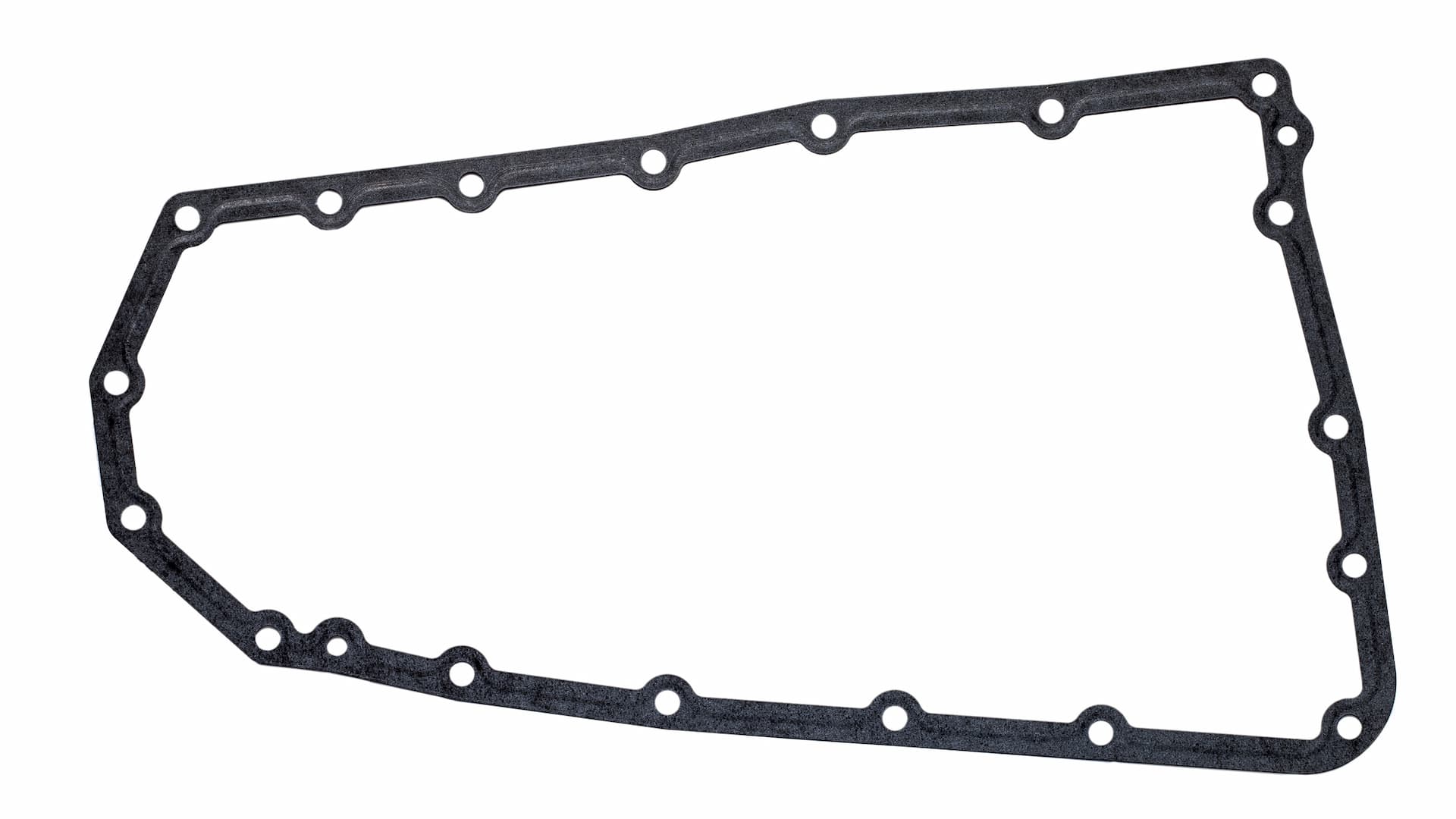
Wondering how to replace an oil pan gasket?
Before you grab your tools, it’s important to know this job isn’t usually a quick DIY.
On many cars, the oil pan is tough to reach. If the job’s done wrong, you could be dealing with another oil leak before long. That’s why many car owners leave it to a professional.
But if you want to know how they’ll go about it, we’ve got you covered!
This guide will explain the steps involved in replacing an oil pan gasket, the signs of a leak to watch out for, and the urgency of the repair.
Let’s get started.
This Article Contains
- How to Replace an Oil Pan Gasket (Step-by-Step Guide)
- How Much Does it Cost to Change Your Oil Pan Gasket?
- When Should You Replace Your Oil Pan Gasket?
- What Causes a Leaky Oil Pan Gasket?
- Can You Drive with a Leaky Oil Pan Gasket?
- What Other Maintenance Should You Do While Changing Your Oil Pan Gasket?
How to Replace an Oil Pan Gasket (Step-by-Step Guide)
Removing the oil pan to change the gasket on some cars is simple. On others, it may require removing parts (like exhaust pipe parts), dropping the subframe, or even lifting the engine.
That makes this a hard job to DIY, so it’s best left to a mechanic.
Before replacing the gasket, they’ll confirm the leak’s source. The mechanic will check if oil is leaking from anywhere else above or below the oil pan, such as from the:
- Timing cover gasket
- Oil filter
- Oil filter adapter
- Oil pump
- Drain plug
- The pan itself.
They may also use UV dye to trace the leak and verify it’s from the oil pan gasket.
Once confirmed, here’s how they’ll replace the gasket:
Step 1: Access the Oil Pan
The oil pan is located at the bottom of the engine block. Depending on the vehicle, the mechanic may jack up the car on a jack stand to remove exhaust components, underbody panels, or brackets to reach it. Alternatively, they’ll lift the engine out of the car or drop the subframe if necessary.
Step 2: Drain the Oil Pan
They’ll remove the oil pan drain plug, let the engine oil flow out into a drain pan until it slows to a drip, and replug it.
Step 3: Remove the Oil Pan
Your mechanic will remove each pan bolt, going in a crisscross pattern with a ratcheting socket wrench tool.
If the oil pan is stuck, they’ll use a separator tool and lightly tap it with a hammer to break the seal evenly.
Step 4: Apply the New Gasket
To replace the old gasket, the mechanic will:
- Remove the old gasket. If there isn’t one, the pan was likely sealed with adhesive — a cost-effective alternative that eliminates the need for a custom gasket matched to your pan’s hole pattern. In that case, they’ll scrape and clean the metal sealing surface of both the pan and housing with a razor or chisel.
- Clear out any remaining engine oil and debris, then use brake cleaner and compressed air to create a clean, dry sealing surface for the new gasket.
- Inspect the oil pan for warping or cracks in the metal and replace the pan if needed.
- For rubber, cork, or paper gaskets, the mechanic will align them with each bolt hole. They might put some sealant in the corners of the pan or circling each bolt hole for extra security. Alternatively, if the mechanic is using a gasket maker, they’ll apply an even amount in a line all around the pan rim.
Step 5: Reinstall the Oil Pan
They’ll put the oil pan back on and torque the bolts through each hole to the manufacturer’s recommendation in a crisscross pattern.
Step 6: Refill with Fresh Oil
Next, they’ll pour in fresh oil, start the engine, and let it idle for a few minutes to check for leaks around the pan.
Finally, they’ll shut off the engine, wait a few minutes, then recheck and top off the oil if needed.
Wondering how much a mechanic will charge to complete these steps?
Let’s find out.
How Much Does it Cost to Change Your Oil Pan Gasket?
The cost of oil pan gasket replacement depends on your car and how hard it is to reach the pan. If access is simple, you’ll pay around $415 to $525. However, expect a higher amount between $650 and $1,500+ if the gasket change involves removing parts, lifting the engine block, or dropping the subframe.
Another factor is the gasket material — E.g., rubber tends to be more expensive than cork, paper, or gasket maker.
Your final bill can also include other oil system maintenance needs, like a fluid or oil change. For example, you may need to pay for:
- A new oil pan: $50 to $400
- Fresh conventional oil and filter: $75 to $250
- Fresh synthetic oil and filter: $105 to $300
Fortunately, gasket changes aren’t needed often. Let’s go over how you’ll know when it’s time for a gasket replacement.
When Should You Replace Your Oil Pan Gasket?
Here are some clear signs that your oil pan gasket needs a swap:
- Visible oil around the rim of the pan (not from above or below)
- Low oil level
- Oil spots under the car
- Oil on the exhaust components. Some oil may blow backwards when you drive. The exhaust heat can even cause the oil to smoke, and you may notice a burning smell.
But why does this happen?
What Causes a Leaky Oil Pan Gasket?
Four common issues can cause an oil pan gasket to leak:
- Normal wear and tear: The gasket material ages, hardens, or breaks down, causing it to lose its seal.
- Gasket shifting or loosening: The gasket can come unstuck in certain areas, allowing oil to escape.
- Improper installation: Incorrect gasket type or material, poor sealant application, or failing to tighten an oil pan bolt to the manufacturer’s recommendation can all lead to leaks.
- Old or dirty oil: Sludge or debris buildup from poor oil maintenance can increase pressure and damage the gasket or even the pan itself.
With all this in mind, you may be curious about how urgent this problem is and whether you have to get it fixed right away.
Can You Drive with a Leaky Oil Pan Gasket?
You can drive for a short time with a minor oil pan gasket leak, but it’s not recommended.
If driving is unavoidable, check your oil often, top it up when needed, and keep a pint of oil in your car in case you lose more. Also, lay down some cardboard to prevent an oil-stained floor.
That said, it’s a good idea to consult a mechanic ASAP because:
- Low oil levels can lead to engine damage and failure, which can be a problem requiring more costly repairs down the line.
- Oil dripping on hot exhaust pipe parts causes smoking that’s unhealthy to inhale and can even be a fire and safety hazard.
- The cost of constant oil refills and the risk of serious damage will eventually outweigh the cost of a proper repair.
- Oil dripping on roads and parking spaces pollutes the environment.
Even better, while your mechanic has access to the oil system, it’s a good idea to tackle other maintenance jobs simultaneously.
What Other Maintenance Should You Do While Changing Your Oil Pan Gasket?
You might think that doing additional maintenance adds to your bill from the mechanic. In reality, it can save you cash by avoiding repeat labor in the near future.
So, when the oil pan is already accessible, it’s also smart to:
- Do a full oil change and oil filter replacement
- Check the oil filter adapter gasket
- Replace your oil level sensor
- Replace the valve cover gasket
- Clean the oil pump filter screen
- Check your other fluid systems (E.g., transmission fluid and transmission pan, coolant, etc.)
If removing the oil pan requires the engine to be lifted or the subframe dropped, it’s a good time to check:
- Engine mounts
- Transmission mounts
- Crackshaft bearings
- Rod bearings
- Front and rear main seal (crankshaft seals)
- Spark plugs
Oil Pan Gasket Repair — Right From Your Driveway
A damaged oil pan gasket can lead to costly repairs if ignored. The sooner you replace it, the better for your wallet, safety, and your engine’s health.
The hassle of getting to an auto shop often makes you put off the repair — we get it!
Fortunately, mechanics from AutoNation Mobile Service come to you.
The best part?
We provide upfront pricing, convenient online booking, and a 12-month, 12,000-mile warranty on all services.
Book today and have your oil leak fixed quickly, affordably, and at your home.