
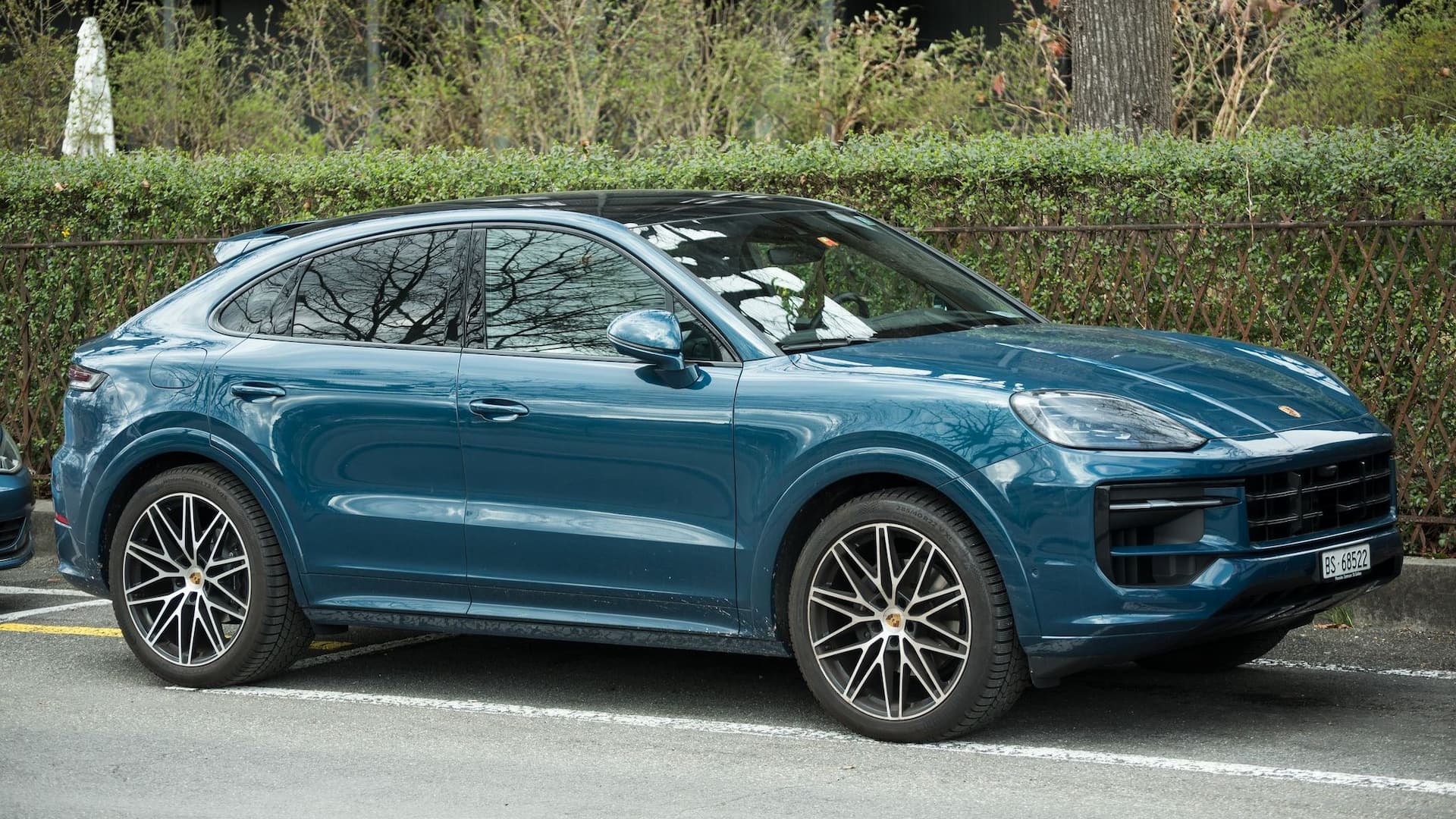
The Porsche Cayenne is a reliable luxury SUV by most independent measures. However, it comes with higher-than-average maintenance and repair costs that prospective vehicle owners should factor in from the start.
Porsche Cayenne Reliability: The Pros
- Porsche consistently ranks among the top brands in reliability surveys
- Complaint volumes are relatively low across most Cayenne model years
- Many common issues can be avoided with routine maintenance
Porsche Cayenne Reliability: The Cons
- The Cayenne SUV is significantly more expensive to maintain than comparable vehicles
- With high-mileage and age-related wear, an older Cayenne can face several costly repairs in a short window
- Newer Porsche vehicles have limited ownership data, making long-term reliability harder to assess.
For Porsche enthusiasts and first-time buyers alike, this guide will help you make an informed buying decision. We’ll explore the Cayenne’s reliability score, owner costs, and common problems. You’ll also learn about the differences in performance and reliability across the generations of this Porsche model.
This Article Contains:
- Porsche Cayenne Reliability Scores
- Average Annual Maintenance & Repair Cost for the Porsche Cayenne
- 5 Common Problems with the Porsche Cayenne
- The Best & Worst Porsche Cayenne Model Years
- How the Cayenne Compares to Other Porsche Vehicles
- 7 Expert Porsche Cayenne Maintenance Tips
- 2 FAQs About Owning a Porsche Cayenne
Porsche Cayenne Reliability Scores
The Porsche Cayenne is a midsize SUV known for being one of the most capable off-roaders in the luxury segment.
It’s available in variants like the:
- Entry-level Turbo V6
- High-output Turbo V8
- Sporty Cayenne GTS
- Economical PHEV (plug-in hybrid)
Depending on trim, buyers can expect anywhere from 340 to 650+ horsepower. Automotive enthusiasts enjoy its advanced infotainment, configurable drivetrain modes, and genuine off-road capability.
But is it dependable?
Independent scores give buyers an objective starting point for assessing reliability.
Here’s a breakdown:
1. J.D. Power
Porsche has generally ranked in the top 10 of J.D. Power’s IQS and VDS surveys. These measure problems per 100 vehicles at three months and three years of ownership, respectively.
Rankings occasionally dipped below 20th place in the early 2020s but have since improved and stabilized.
The J.D. Power reliability rating for the Porsche Cayenne itself, scored by consumers, tends to be strong in the early 80s (out of 100).
2. Consumer Reports
Consumer Reports ranks Porsche 3rd overall for reliability (and 2nd among luxury brands), but 28th for ownership and repair costs.
Additionally, newer Cayenne models generally show average or above-average reliability compared to other cars from the same model year.
These scores suggest that the Porsche Cayenne is usually a reliable car, but issues that arise can be costly to fix. Let’s explore the costs next.
Average Annual Maintenance & Repair Cost for the Porsche Cayenne
The average annual repair and maintenance cost for a Porsche Cayenne is around $1,200. That’s over $400 more than average for a midsize luxury SUV and nearly double the average for all vehicles.
And that’s not all.
The average midsize luxury SUV needs repairs about once every two years. The Porsche Cayenne needs repairs more than once a year on average.
Additionally, about 1 in 5 Porsche Cayenne repairs are “severe”, with repair costs above $1,900. That’s nearly double the severe repair rate for all midsize luxury SUVs.
So, independent evaluations mark the Cayenne as reliable, but Cayenne owners seem to spend a pretty penny on upkeep. A look into the common issues might help us understand this discrepancy.
5 Common Problems with the Porsche Cayenne
Here are five issues worth understanding so you know what to expect from owning a Cayenne:
1. Coolant Leaks
Plastic coolant pipes are a known issue on older 955 and 957 V8 Cayenne models. Heat exposure over time (typically around 60,000–80,000 miles) can cause the pipes to crack and result in a coolant leak.
Porsche addressed the flaw by releasing an aluminum replacement kit. So, any V8 owner or buyer should proactively carry out this update.
2. Oil Leaks
Oil leaks are common across all Cayenne models, with valve cover gaskets, oil cooler seals, and rear main seals being the usual culprits. Most are manageable with proper maintenance, regular oil changes, and early detection.
The exception is the 3.0 TDI diesel (2011–2016), where rear-of-engine leaks can require a full engine-out reseal. It’s one of the more costly repairs associated with the Cayenne.
3. Transfer Case Fluid
The transfer case, part of the drivetrain, distributes torque between axles to enable AWD. It’s the most notorious long-term reliability concern on second-generation Cayennes (2011–2018). It runs on its own specialist fluid. When this fluid degrades, the internal clutch packs wear down, causing characteristic jerking and lurching under acceleration.
Full Porsche transfer case replacements can cost thousands out of warranty. So, Porsche Cayenne pros recommend checking the fluid every 20,000–40,000 miles.
4. Turbocharger
Cayenne turbo issues typically emerge beyond 80,000–100,000 miles and are largely maintenance-related.
Neglected oil changes allow contamination to build up, while heat fatigue from insufficient servicing degrades the turbo bearings over time. Symptoms include reduced power, whining or grinding under acceleration, and increased oil consumption.
5. Air Suspension
Air suspension is an optional or standard fitment depending on trim and is a known issue in later ownership years. Common failure points include degraded rubber air springs, compressors, and plastic air reservoir tanks.
Failures are most commonly reported between 80,000 and 120,000 miles, though they can affect lower-mileage vehicles with age alone. Since suspension components often fail in sequence, buyers should budget for a full system inspection once any single component shows wear.
The Cayenne’s common problems tell a consistent story:
- They tend to appear later in the car’s lifespan, especially at high mileage.
- Early failure can often be avoided with proactive maintenance.
- Without careful maintenance, avoidable issues become very costly repairs.
But choosing a dependable model out of the Porsche Cayenne years also affects lifetime costs.
The Best & Worst Porsche Cayenne Model Years
Certain Porsche Cayenne model years stand out for reliability — while others are best avoided.
A. Years to Avoid
Here’s a buyer’s guide covering the Porsche Cayenne years with the worst track records based on National Highway Traffic Safety Administration (NHTSA) data:
- 2004–2008: Higher complaint volumes on these first-generation models, with 2004 recording the most complaints (100+) and recalls (9) in the Cayenne’s history.
- 2011–2014: Elevated complaints across the board, with 2011 showing an especially high complaint volume (60+) with high severity.
- 2019: A notable outlier in an otherwise stronger third generation, with the most complaints (30+) and recalls (6) out of the newer models.
B. Most Reliable Years
In general, the third generation seems the most reliable yet. However, dependable older used Cayenne SUV years do exist in the first generation and the second. The Cayenne models that have performed the best over the years include:
- 2010: Only 1 NHTSA complaint on record, despite its age, making it a solid option for a used Cayenne.
- 2015, 2017 & 2018: Solid second-generation years with complaint volumes in the low teens, comparable with third-generation models.
- 2022: Only 1 NHTSA complaint logged (related to infotainment and rearview cameras); the strongest so far in the third generation.
We’ve looked at model years, but how does the Cayenne compare to others in the Porsche stable?
How the Cayenne Compares to Other Porsche Vehicles
Across the Porsche Cars North America lineup, reliability and ownership costs vary meaningfully by model:
- Porsche 911 reliability: Widely considered the most reliable Porsche, with lower repair costs and fewer shop visits than the Cayenne. But, as a sports car, it serves a fundamentally different purpose.
- Porsche Macan reliability: Has the strongest reliability rating among Porsche’s SUVs, and is generally cheaper to maintain than the Cayenne.
- Porsche Panamera reliability: Similar territory to the Cayenne — feature-heavy and refined, but with above-average ownership costs.
- Porsche Taycan reliability: Early model years are among the most recalled Porsches in recent history due to software and electrical issues.
In comparison, the Cayenne is not the most or least reliable vehicle in Porsche’s lineup. But it’s one of the few luxury SUVs that can credibly claim a high-performance driving experience while still functioning as a comfortable, spacious family vehicle.
That said, even the most reliable model is only as dependable as the maintenance it receives.
7 Expert Porsche Cayenne Maintenance Tips
Porsche Cayenne ownership is what you make of it. Proper maintenance isn’t cheap, but it keeps the Porsche Cayenne reliable.
Here are some expert tips to improve its lifespan:
- Check coolant, oil, and fluid levels regularly in case of uncaught leaks.
- Inspect for plastic coolant pipes and proactively replace them with aluminum before they fail.
- Change transfer case fluid every 20,000–40,000 miles regardless of the recommended routine maintenance schedule.
- For diesel models, check for carbon buildup on the EGR (Exhaust Gas Recirculation) valve and DPF (Diesel Particulate Filter) at every service.
- Take the car for a sustained 30+ minute highway drive weekly. Getting to operating temperature ensures systems finish proper cycles and keeps the battery healthy.
- Check for PCM (Porsche Communication Management), engine, and transmission software updates at services.
- Enquire with your mechanic about lower-cost parts from VW or Audi. The Cayenne shares components with both brands, making regular maintenance more accessible for Cayenne owners.
Some repairs are best handled at a Porsche dealer for warranty compliance. However, for scheduled maintenance and out-of-warranty repairs, AutoNation Mobile Service lets you skip the shop visits. Our mechanics come to you, fully equipped and well-versed in the Cayenne’s brand-specific quirks, issues, and parts. We make it easy to stay on top of maintenance without the hassle.
Now that we’ve covered reliability, here are some more quick answers to the questions Cayenne buyers ask most.
2 FAQs About Owning a Porsche Cayenne
There’s a lot to consider before committing to a luxury vehicle purchase, especially brand new from a dealership. Here are fast answers to the top Cayenne-ownership questions:
Fuel efficiency is not the Cayenne’s strong suit. This Porsche model drives more like a high-performance sports car than a fuel sipper designed for maximizing mileage. Its official mileage figures have it clocking between 17 and 23mpg.
The picture on Porsche Cayenne depreciation is reasonably positive. The Cayenne depreciates 45.2% over five years — slightly better than the luxury midsize SUV category average of 50.2%.
Porsche Cayenne depreciation does accelerate over time, with the vehicle retaining just 27.4% of its value at ten years, though it’s still ahead of its category. For Porsche enthusiasts, a 5-7 year-old Cayenne won’t hold its value well, but can be affordable and reliable with regular maintenance.
How AutoNation Mobile Service Can Help Keep Your Porsche Cayenne Reliable
The Porsche Cayenne can be a reliable vehicle under the right conditions, and attentive ownership is the biggest factor. It demands more maintenance, more frequently, and at a higher cost than most rivals. The good news is that many of the Cayenne’s most costly problems are avoidable with proactive maintenance.
For Cayenne owners, that means finding a service partner you can trust for the long haul.
AutoNation Mobile Service offers a convenient, professional alternative to never-ending shop visits. Our mechanics come right to your driveway with all the equipment and know-how to keep your Cayenne purring.
Book a service today and take the first step toward stress-free Porsche ownership.