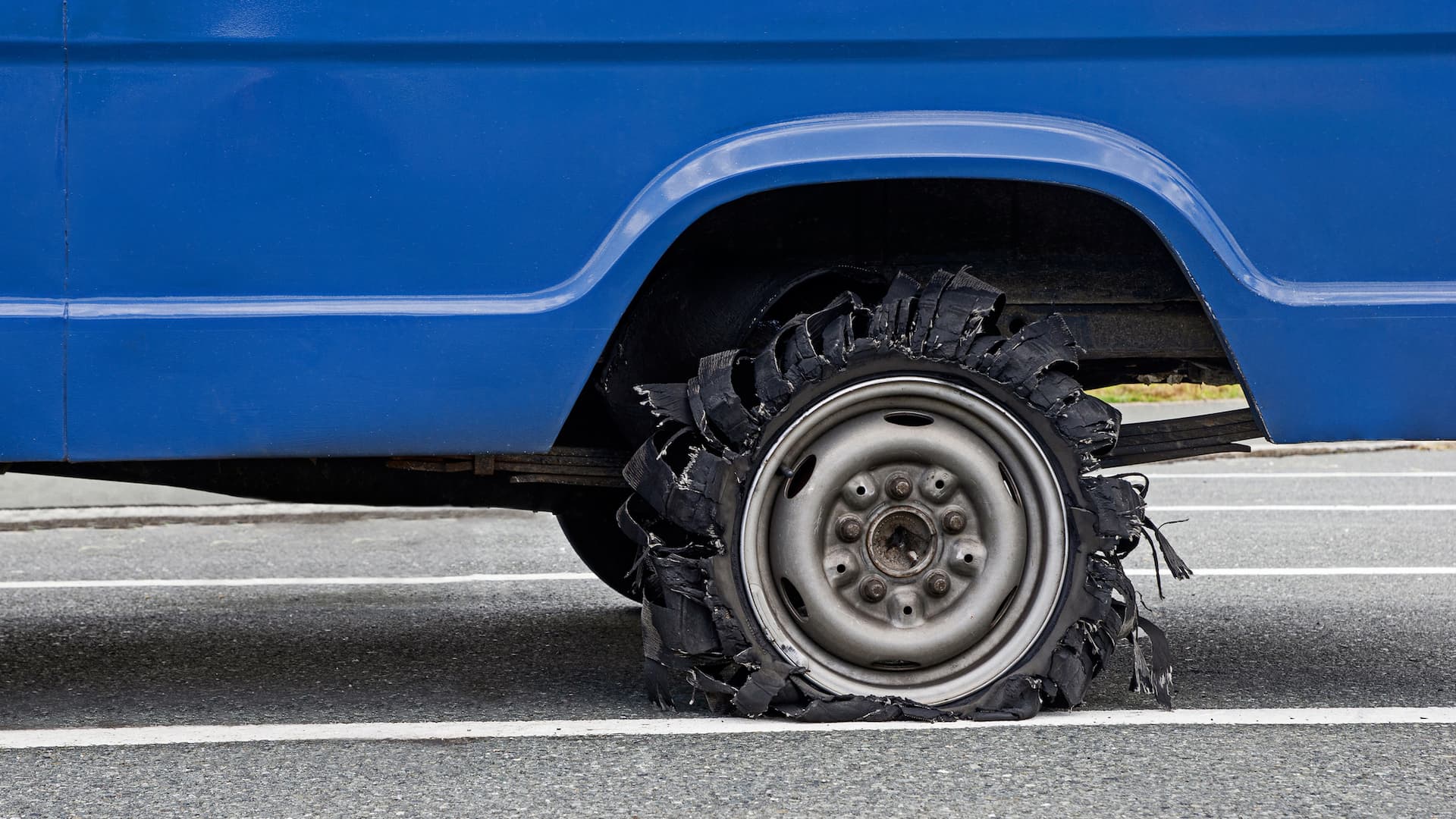
If you have a tire blowout, it’s essential to stay calm, keep both hands securely on the wheel, and avoid sudden movements.
Gradually release the accelerator and use engine braking (downshifting) to allow the car to slow down naturally. Gently steer the vehicle to a safe location and turn on your hazard lights. Once stopped, apply the parking brake, turn off the engine, and call roadside assistance.
Here’s a more detailed breakdown:
- Stay calm: Take a deep breath if you need to. Avoid sudden movements, as they can further decrease your control over the vehicle and cause a car accident. Keep both hands on the wheel to maintain control.
- Don’t hit the brakes: Braking suddenly can cause your vehicle to skid.
- Gently press the gas pedal: While it may seem strange, this can help retain vehicle control. Once you have control, gradually ease off the accelerator.
- Let the car slow down naturally: Allow the vehicle to decelerate by itself. If necessary, use engine braking by downshifting.
- Steer straight: If the car pulls to one side, gently steer to keep it straight and avoid overcorrecting.
- Turn on your hazard lights: Once in control, turn on your emergency lights to alert any other driver to the road hazard.
- Brake gently: Once you’re at a manageable speed (below 30 mph), begin braking gently to come to a full stop.
- Pull over to a safe location: Once you’ve reduced to 20mph, you can gently turn the steering wheel. Aim for the shoulder, breakdown lane, or any safe flat area away from traffic.
- Engage the parking brake and turn off the engine. As you leave the vehicle, watch for passing traffic to avoid personal injury.
- Call roadside assistance: While you may be able to replace any defective tires and continue driving, it’s best to have a professional inspect your vehicle. The tire blowout could have caused damage to the wheel rim, braking components, and suspension, making your vehicle unsafe to drive and increasing the likelihood of accidents.
Want to learn more about handling a tire blowout?
To help you avoid having a car accident, we’ll provide more details about what to do if you have a tire blowout, how to prevent tire popping, and how much it’ll cost to fix.
This Article Contains:
- 9 Concerning Causes of a Tire Blowout
- How to Prevent a Tire Blowout
- How Much Does It Cost to Resolve a Blown Tire?
- 3 FAQs about Tires
9 Concerning Causes of a Tire Blowout
If you experience a blowout, it could be due to:
- Underinflated tires: Because an underinflated tire lacks sufficient air pressure, more of its surface touches the road, causing excessive heat buildup due to increased friction. Over time, this heat weakens the deflated tire, making it prone to a sudden blowout.
- Overinflated tires: Excess air pressure makes the tire overly rigid, reducing its ability to flex and absorb impact from debris or other obstacles.
- Overloading the vehicle: Carrying more weight than the tire’s load rating stresses it beyond its limits, increasing heat and pressure inside the tire.
- Impact: Hitting a sharp object, pothole, or curb can damage the sidewall or tire tread. This causes cuts, punctures, tread separation, or weakened areas, and is especially dangerous for overinflated tires.
- Tire age and wear: An old tire or one with worn tread is more vulnerable to damage and less able to handle heat and impact. Similarly, uneven tread depth may indicate excess pressure on some tires.
- High speed or extended driving: Driving at high speeds or for extended periods generates excessive heat in the tires, weakening the rubber.
- Manufacturing defects: Occasionally, factories will make a defective tire with weak spots, poor bonding, or structural flaws.
- Poor tire repairs: Improper patching or plugging of tire damage can create weak points, which increase the likelihood of your tire popping.
- Exposure to harsh conditions: Prolonged exposure to harsh environments (extreme temperatures) degrades the rubber, making the old tire brittle.
Now that you know why tire blowouts happen, let’s look at how to prevent them.
How to Prevent a Tire Blowout
To avoid a popped tire, you should:
- Check tire pressure regularly: Ensure your tire pressure meets the manufacturer’s recommended pounds per square inch (proper tire pressure is usually 30 and 35 PSI). It’s best to check for an over- or underinflated tire once a month; however, if your vehicle has a tire pressure monitoring system, it’s easier to check more frequently.
- Inspect tires: Look for cracks, bulges, cuts, or exposed cords, which may indicate you need tire maintenance. Also, check for uneven tread wear, signaling alignment or suspension issues.
- Rotate your tires routinely: Regular tire maintenance practices like rotating your tires every 5,000 to 7,500 miles promotes even tread wear and extends tire life.
- Avoid overloading your vehicle: Check your vehicle’s load rating (found on the door sticker or manual) and avoid carrying excessive weight.
- Replace old or worn tires: Replace your tires every 6 years or sooner if there’s worn tire tread.
- Drive cautiously on rough roads: Slow down for potholes, curbs, and debris to prevent impact damage.
- Avoid sudden braking and swerving at high speeds: Sharp steering puts extra stress on tires and contributes to a blowout, especially for already defective tires.
- Check your alignment and suspension: Misalignment or worn suspension components can cause uneven tread depth and increase the risk of failure.
- Keep tires cool when driving long distances: If you’re on a long trip in hot weather, take breaks to let your tires cool down and ensure you have proper tire pressure before continuing.
If you have a blowout, you’ll need to service your tires and vehicle to avoid accidents and personal injury on the road. Let’s take a look at what you can expect to pay.
How Much Does It Cost to Resolve a Blown Tire?
You’ll need to replace the blown car tire to resolve the issue. You can expect to pay between $250 and $1,000 (including labor) for the tire replacement.
The total cost of the tire replacement ultimately depends on the type of car tire, your vehicle’s make and model, and the number of tires you replace.
A blowout can also damage the rim, brakes, suspension, and alignment. So, in addition to getting a new tire, you’ll likely need to pay to have a mechanic inspect and address these systems and components:
- Brake inspection: $80 and $120
- Brake replacement: $950 to $1,300
- Suspension repairs: $50 to $1500
- Wheel alignment: $50 to $200
Still have some unanswered questions about your tires?
We’ll clear things up in the next section.
3 FAQs about Tires
Here’s some additional information you should know:
1. How Do You Know if Your Tire Blows?
If your tire blows, you’ll experience:
- A loud bang or popping sound: The initial tire rupture often makes a sharp boom or pop.
- Sudden pull to one side: The car may jerk left or right, depending on the damaged tire, making steering feel unstable.
- Flapping or thumping noise: As the popped tire hits the road or fender, you’ll hear a rhythmic flapping, slapping, or thumping sound, especially if there’s tread separation.
- Difficulty steering or loss of control: The steering wheel might feel heavy or wobbly, especially if the damaged tire is at the front.
- Rapid loss of speed: Your car might slow down suddenly, even if you haven’t touched the brakes.
- Dashboard warning light: If your vehicle has a tire pressure monitoring system, a warning light or alert may flash as pressure drops suddenly.
- Vibration or harsh ride: You may feel the car vibrating unusually or bouncing more than normal, especially from the corner of the blown tire.
2. What’s the Difference between a Tire Blowout and a Flat Tire?
While many people may use the terms interchangeably, there’s a big difference between a blown and a flat tire:
- Blown tire: A sudden, violent, high-risk tire failure, often at speed. You typically can’t repair these tires.
- Flat tire: A puncture that causes a gradual loss of air, eventually resulting in a deflated tire. You can often repair this type of defective tire.
3. How Long Can You Drive on a Spare Tire After a Blowout?
It’s best to have a mechanic look at your vehicle before driving again, as the car could be a potential road hazard. However, if you have no other option, you can drive on a temporary spare tire for 50 to 70 miles.
If you replace the blown tire with a full-size replacement that matches your other tires, you can drive it for much longer (a new tire lasts around 6 years or more).
Avoid Disaster: Service Your Tires with AutoNation Mobile Service
A sudden tire failure is incredibly distressing. However, staying calm is crucial for regaining control of your vehicle. In addition, regular tire maintenance will help prevent blowouts on the road, so get your tires checked regularly.
Worried about having a tire blowout accident on the way to the mechanic?
AutoNation Mobile Service will inspect your vehicle and address any tire damage from your driveway!
We offer easy online booking and provide a 12-month,12,000-mile warranty on all repairs.
Contact us for any tire maintenance and all your other automotive needs.