
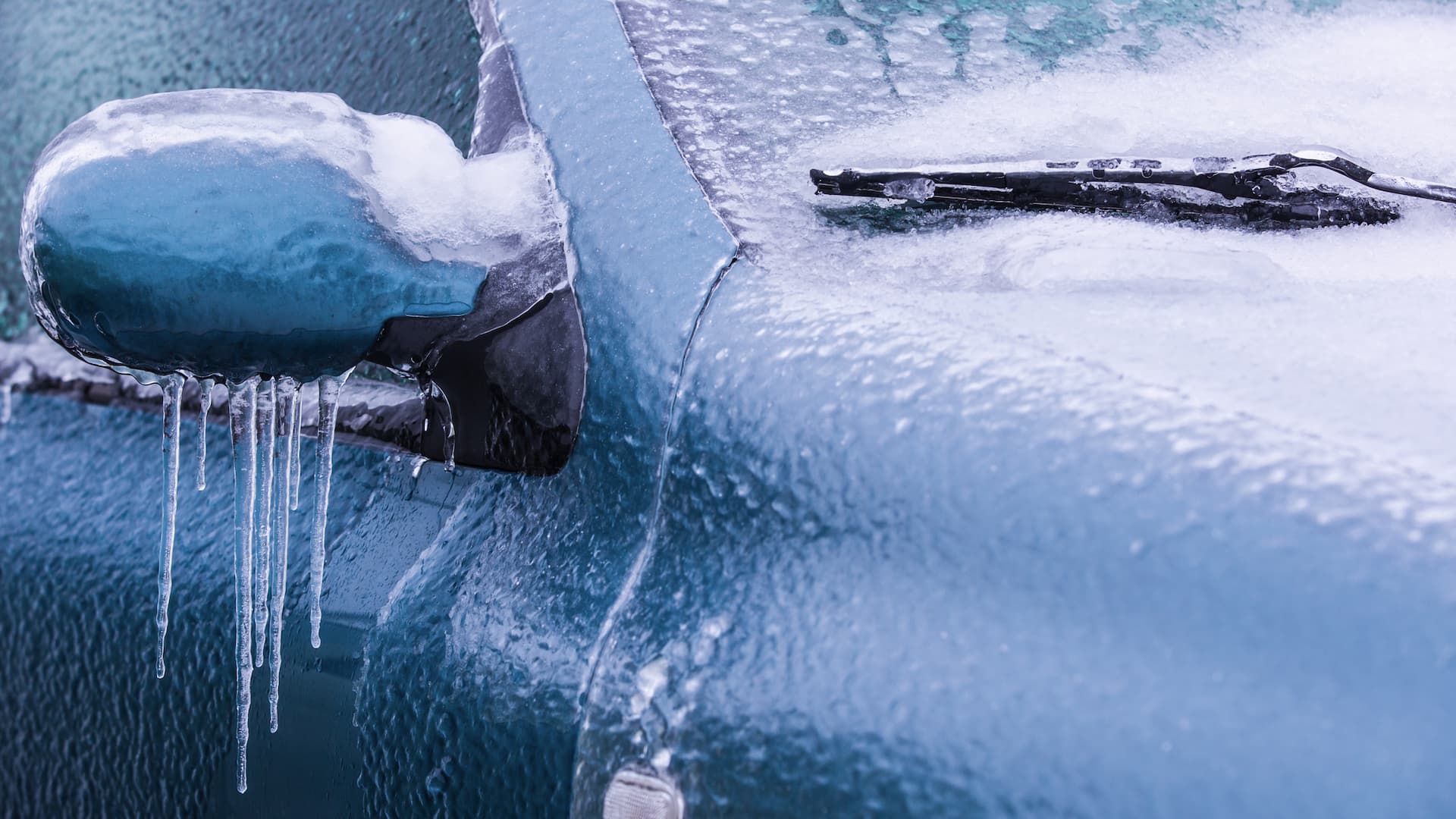
A layer of ice on your car can turn a routine winter morning into a frustrating start. And when you’re already running late, grabbing the nearest scraper or pouring warm water over the windshield might seem like the quickest solution.
But removing ice the wrong way can leave scratches on your paint, damage rubber seals, or even crack your windshield.
The good news?
You don’t need harsh chemicals or aggressive scraping to get your car ready for the road. With a few simple techniques, you can safely remove ice while protecting your car’s finish.
Here’s how to do it.
How to Safely De-Ice Your Car: 5 Simple Steps
The key to removing ice without damaging your car is to loosen it before clearing it.
1. Start With Your Car’s Defroster
Start your engine outdoors and turn on the front and rear defrosters.
Set the front defroster to warm air and let it gradually loosen the ice on your windshield. If your vehicle has heated mirrors or a heated windshield, activate those features too.
Avoid running your windshield wipers while they’re frozen to the glass. This can tear the rubber blades or strain the wiper motor.
TIP: Never leave your vehicle running inside a garage, even with the garage door open. Exhaust fumes can cause dangerous carbon monoxide buildup.
2. Use a Paint-Safe De-Icing Spray
For stubborn ice on your windshield or around door handles, use a commercially available automotive de-icer. Spray it on the affected area and allow the product to loosen the ice before removing it.
Choose a product intended for your vehicle’s surfaces and follow the manufacturer’s directions. Some de-icers are designed specifically for glass and shouldn’t be applied to painted panels.
Avoid repeatedly spraying household chemicals over your paintwork. Even solutions that don’t directly damage paint can gradually strip away protective wax.
3. Remove Loose Snow With a Soft Brush
Before tackling the remaining ice, gently clear loose snow from your vehicle.
Use a clean, soft-bristled automotive snow brush to remove snow from the roof, hood, trunk, and windows.
Keep these precautions in mind:
- Avoid pressing down hard on frozen or compacted snow.
- Don’t drag dirt, salt, or ice particles across painted panels.
- Use a plastic ice scraper only on glass, never directly on painted surfaces.
- Leave stubborn ice in place until it loosens naturally.
Remember, even a soft brush can scratch paint if grit gets trapped and dragged across the surface.
4. Carefully Free Frozen Doors and Handles
Frozen door handles and rubber seals need extra attention.
If a door won’t open, don’t pull the handle forcefully. You could damage the handle mechanism or tear the rubber weatherstripping around the door. Instead, apply a compatible automotive de-icer around the frozen area and allow it to work. Gently test the door again without forcing it.
Once the seals are dry, applying a manufacturer-approved rubber seal conditioner can help reduce sticking during future freezes.
5. Clear Remaining Ice Before Driving
Once the ice has softened, carefully remove any remaining buildup from your windshield and windows using a plastic scraper intended for automotive glass.
Make sure your headlights, taillights, mirrors, and license plates are clear too.
Don’t forget the roof. Snow and ice left there can slide onto your windshield when you brake or fly off while driving, putting other motorists at risk.
4 De-Icing Mistakes That Can Damage Your Car
Even common winter shortcuts can lead to unnecessary repairs. Here’s what to avoid:
- Pouring hot water over frozen glass: Sudden temperature changes can cause your windshield to crack. The water may also refreeze as temperatures drop.
- Using metal scrapers or sharp objects: Metal tools can scratch glass and permanently damage your car’s clear coat. Stick to automotive-safe tools.
- Applying vinegar or harsh household cleaners: Concentrated vinegar and other harsh cleaning products can damage protective finishes and certain vehicle materials. Use products designed for automotive de-icing instead.
- Chipping away at ice on painted panels: Forcing thick ice off your hood, roof, or doors can scratch the finish, especially if dirt or road salt is trapped underneath. It’s safer to let stubborn ice thaw than to risk damaging your paint.
How to Prevent Ice Buildup on Your Car
A little preparation can make the next freezing morning much easier. Try these preventive measures:
- Park under cover: A garage or covered parking space can reduce frost and ice buildup.
- Use a windshield cover: Choose a clean, properly secured cover that won’t rub against your paint.
- Protect your door seals: Keep rubber seals clean and use a suitable conditioner when recommended.
- Switch to winter washer fluid: Choose a formula rated for your area’s lowest expected temperatures.
- Keep your car clean: Regular washing helps remove road salt, dirt, and grime that can damage your car’s paint. If you use de-icing chemicals frequently, washing and maintaining your car’s protective wax or sealant can also help preserve its finish.
If you need additional maintenance or repairs, book a service with AutoNation Mobile Service. Our professional mechanics come to your driveway, offering upfront pricing and a 12-month/12,000-mile warranty on parts and labor.