A long road trip is on the horizon, and suddenly, your car struggles to start, with a burning fuel smell filling the cabin.
Sounds like a nightmare, right?
What’s worse? These troubles won’t fix themselves, as the culprit is likely a bad fuel filter that needs replacement.
Curious about how to change a fuel filter?
We’ll take you through the steps, explore what damages the filter, and explain why installing a new one is the fix for a smooth ride.
This Article Contains:
- How to Change a Fuel Filter Step-by-Step
- Why Should You Change the Clogged Fuel Filter?
- How Often Do You Have to Change a Car’s Fuel Filter?
- How Much Does Fuel Filter Replacement Cost?
- 3 FAQs on Fuel Filters
How to Change a Fuel Filter Step-by-Step
Changing a fuel filter is relatively straightforward, but it involves working with a pressurized gasoline system and delicate fuel lines, which can be nerve-wracking for novices. You also risk personal injury if you don’t relieve the fuel system pressure, so you should let a seasoned professional handle it.
They park your vehicle, engage the parking brake, wear safety equipment, and then perform the following steps:
Step 1: Depressurize the System
They find the fuel cap and loosen it (not remove it) until a hissing sound indicates the system is depressurizing. Then, the mechanic locates your vehicle’s fuse box and disconnects the fuel pump fuse to stop gas delivery.
Afterward, they start the engine, use the remaining gas in the fuel line, and wait. If the engine won’t restart, the fuel system pressure is fully relieved and safe for further repair.
Step 2: Disconnect the Car Battery and Locate the Filter
They access the engine compartment, detach the negative battery cable, and look for the fuel filter located near the gas tank or fuel rail.
Step 3: Raise the Vehicle and Detach the Fuel Lines
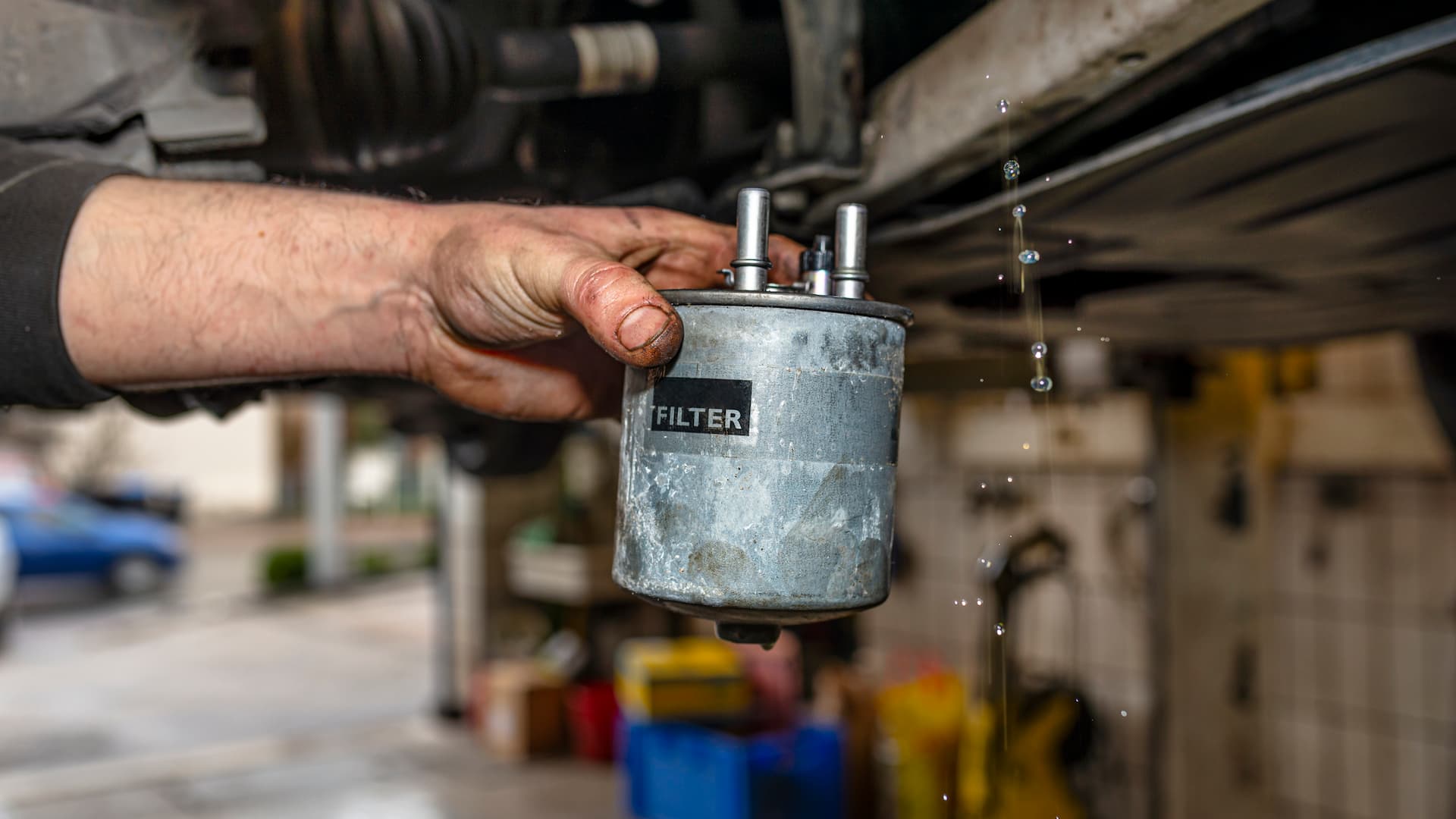
Now, the mechanic elevates your vehicle using jack stands and removes the plastic clip or the hose clamp from the front and back of the filter. Then, they slide each fuel line off the filter, allowing any spilled fuel to drip into the pan below. If the fuel lines are stuck, they use penetrating oil to loosen them.
IMPORTANT: Your mechanic will dispose of the extracted or spilled fuel according to local laws. Adding drained fuel to the tank isn’t recommended, as it may collect contaminants from the pan or other disassembled parts during repair.
Step 4: Remove the Old Filter
Next, they slide the old filter out of the cylindrical metal bracket that holds it in place. In some cars, the bracket is secured with bolts, which your mechanic removes before taking out the filter.
Step 5: Fix the New Filter
The mechanic carefully slides the replacement fuel filter into the metal bracket and fixes the lines onto the front and back of the new filter. Then, they secure the assembly with the plastic clip or hose clamp.
Step 6: Lower the Vehicle, Reconnect the Car Battery, and Test Drive
Afterward, they check for a fuel leak, carefully lower the vehicle, disengage the parking brake, and reconnect the negative battery cable.
Finally, they reinstall the fuel pump fuse and test drive to ensure there aren’t starting or idling issues.
Wondering if you can skip the filter change?
Keep scrolling to see if that’s the best idea.
Why Should You Change a Clogged Fuel Filter?
A routine filter change guarantees that your gasoline system remains clean and your engine receives ample fuel for proper operation. If you skip, the filter will clog with grime, preventing fuel flow and starving your engine.
Eventually, you’ll notice hard starts, rough idling, and other performance troubles, which can damage critical parts, like the fuel injector, incurring expensive repairs.
To minimize the damage, it’s best to book a filter replacement with a mobile mechanic regularly.
How Often Do You Have to Change a Car’s Fuel Filter?
Ideally, you should schedule a fuel filter change every two years or 20,000 to 30,000 miles (whichever comes first).
However, in some advanced fuel injection vehicles, you won’t have to change the filter until 70,000 or 150,000 miles. Refer to your service manual for the recommended car maintenance interval.
Apart from the schedule, you’ll also have to consider the local road conditions and your usage. If you frequently off-road or tow heavy loads in dusty conditions, your filter will choke up faster and need replacement sooner.
Thinking of getting the filter replacement?
Let’s see what it might cost.
How Much Does Fuel Filter Replacement Cost?
The average cost of installing a replacement fuel filter is around $190 to $280. However, the final price depends on the service complexity, vehicle model, and fuel type. For example, the cost of replacing a gasoline or diesel fuel filter in a high-performance luxury vehicle will be higher than in a standard car.
Now that you know what affects filter replacement costs, let’s look at some popular queries about them.
3 FAQs on Fuel Filters
Here are a few common questions people ask about fuel filters:
1. What Are the Warning Signs of an Old Fuel Filter?
A vehicle with a clogged filter can cause:
- An illuminated check engine light: Reduced gas flow lowers fuel pressure, which can activate the dashboard light.
- Difficulty starting the car: A clogged filter restricts fuel flow, especially during cold starts, which can cause extended cranking or failure to start.
- Burning smell: Bad filters induce fuel pressure imbalance in the lines, resulting in a fuel leak near the engine compartment and a burning smell inside the cabin.
- Engine misfires and rough idles: An insufficient gasoline supply due to a dirty fuel filter can lead to inconsistent combustion, which triggers misfires and rough idling.
- Reduced engine performance: A dirty fuel filter limits the fuel that reaches the engine. This reduces your engine’s overall power and causes sluggish acceleration.
- Poor fuel economy: A bad fuel filter may force your engine to run lean (more air, less fuel), hurting performance. The engine control unit uses more gasoline to compensate, increasing fuel consumption.
2. What Causes a Clean Fuel Filter to Clog and Fail?
Here are a few ways a fuel filter can get damaged:
- Sediment buildup from low-quality or contaminated fuel
- Clogging due to a dirty engine air filter
- Rust particles from an aging steel fuel tank or line
- Moisture accumulation in the gas tank from condensation
- Dust and debris entering the fuel tank during refueling
3. How Can You Keep Your New Fuel Filter in Optimal Condition?
Some simple practices can keep your filter in top shape, such as:
- Purchase high-quality fuel from reputed gas stations.
- Avoid driving the car on low fuel to prevent sediments from circulating in the system.
- Schedule fuel injector cleaning every 45,000 to 50,000 miles to stop dirt or debris from accumulating and clogging the filter.
Want a Smooth, Sputter-Free Ride? Time to Upgrade Your Fuel Filter
Rough idling, burning odor, and poor acceleration are clear signs that your filter needs help, and ignoring them will only lead to bigger problems later.
However, since multiple filters can affect a car’s performance, it’s best to confirm with professionals from AutoNation Mobile Service.
Our skilled mobile mechanics can quickly inspect and swap out the filthy fuel filter and get you back on the road. You also get fair pricing and simple online bookings, making your repair affordable and convenient.
Book your slot for a swift fuel filter replacement right from your driveway.