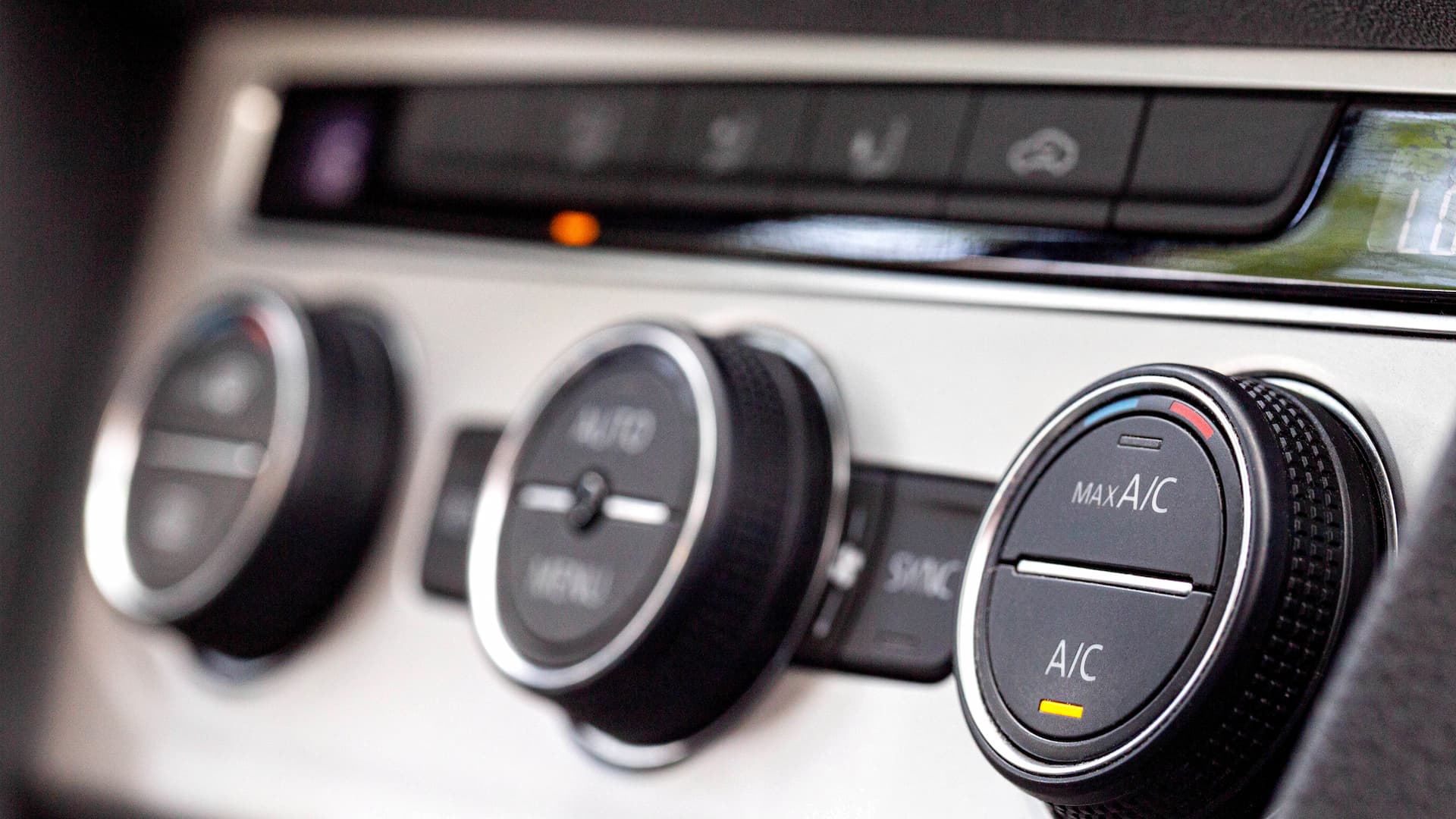
The exact amount of fuel usage while running your car’s AC depends on several factors, like vehicle type and driving conditions. But, on average, your car’s air conditioner uses between 0.5 and 1 gallon of gas per hour when running.
Factors affecting fuel consumption:
- Car model and engine: In hybrid vehicles, using the car air conditioner increases fuel consumption by about 1% on average. This goes up by approximately 4.6% for diesel cars, while in gasoline-powered vehicles, AC usage can raise fuel consumption by around 3.8%.
- Driving conditions: Stop-and-go city traffic makes the AC work harder, leading to increased fuel consumption.
- Outside temperature: Hotter days demand more cooling power and fuel.
- Open window vs. AC use: Open windows use less fuel at low speeds, but at high speeds, they create drag and may reduce mileage more than the AC. Smart AC usage can help keep you cool without burning extra fuel.
- Idling: Running the AC while idling burns fuel without moving the vehicle, resulting in zero mileage and unnecessary fuel loss.
- Vehicle size: Larger vehicles use more energy to cool bigger interiors.
- Speed: Accelerating with the AC on increases engine load.
- AC maintenance: Clear filters, clean evaporator coils, and correct refrigerant levels help reduce gas usage.
- Temperature settings: The lower you set your AC, the more fuel the engine burns to help cool the warm air.
Want to know more about your AC’s impact on fuel efficiency?
In this post, we explain how the car’s AC uses gas, dive deep into each factor mentioned above, and share tips on how to save fuel.
This Article Contains:
- Does a Car’s Air Conditioning Use Gas?
- 6 Factors that Determine How Much Gas Your AC Uses
- AC vs. Open Windows: What Saves More Fuel?
- 7 Essential Tips to Save Fuel While Using Your Car’s AC
- How to Maintain Your Car’s AC Unit
Does a Car’s Air Conditioning Use Gas?
Yes, a car’s air conditioner does use gas — but indirectly.
Your car AC doesn’t burn fuel on its own — it draws energy from the engine, which runs on petrol or diesel, leading to higher fuel consumption.
When the engine runs, the serpentine belt spins and powers the AC compressor, which moves the refrigerant to remove heat from the cabin air.
However, powering the AC compressor forces the engine to work harder (engine load), which requires more gas. As a result, turning on the AC will increase fuel consumption.
On average, a car’s AC system consumes between 0.5 and 1 gallon of petrol per hour. The actual consumption varies depending on the type of engine:
- Hybrid cars: Up to 9.3% more fuel in city driving and 2.8% more on highways, with an average increase of 6.1%.
- Diesel cars: About 6.3% more fuel in the city and 3.3% more on highways, averaging 4.6%.
- Gasoline cars: Up to 1% more fuel in the city and 2.7% on highways, resulting in an average increase of 3.8%.
However, other factors also play a role in your AC fuel consumption.
Let’s unpack.
6 Factors that Determine How Much Gas Your AC Uses
These conditions can impact fuel consumption during AC use:
1. Vehicle Type and Size
Smaller vehicles have less powerful air conditioning systems, resulting in a lower impact on fuel efficiency. Larger vehicles, such as trucks, show a noticeable drop in gas mileage, as the AC system works harder to maintain desired temperatures.
2. Driving Conditions
City driving involves navigating regular stop-and-go traffic, creating an unstable load on the engine. This constant fluctuation can make the compressor work harder to maintain the set temperature and increase fuel consumption.
3. Driving Speed
Rapid acceleration forces the engine to draw more power in a short burst, which can reduce the amount of energy available for the AC. As the engine works harder to meet sudden speed demands, the air con system may struggle to maintain consistent cooling performance.
4. Outside Temperature
In mild weather, the AC system uses about a quarter of a horsepower when running on low. However, in hot or humid conditions, it may require up to 10 horsepower to keep the cabin cool while running at full capacity.
5. System Maintenance
A well-maintained air conditioning system delivers cool air more effectively while reducing engine strain and gas usage. But if your AC has clogged filters and low refrigerant levels, it will require more energy to cool, leading to increased fuel consumption.
6. AC Temperature Settings
Running the AC at lower temperatures uses extra fuel as the system has to work harder to cool the hot air. This leads to higher fuel consumption, especially during long drives or in very hot weather.
NOTE: In an electric vehicle, the air conditioning system runs on electricity drawn from the car’s battery. The typical AC usage in an electric vehicle is around 3 to 4 kilowatts.
A high gas bill might tempt you to skip using the AC and roll down your windows instead. But it’s not always the better choice.
Confused?
Keep reading to know more.
AC vs. Open Windows: What Saves More Fuel?
At low speeds, especially in city traffic, it’s usually more efficient to turn off the AC and roll down the windows. Your engine produces less power at low speeds, so using the AC puts more strain on it.
However, at higher speeds, open windows create aerodynamic drag (air resistance), which reduces fuel economy.
For example, a full-size sedan loses 20% fuel efficiency with the windows down, while a large SUV loses 8%. In smaller modern cars, drag only becomes an issue above 80 mph.
A good rule of thumb is to:
- Roll down the windows below 40 mph
- Keep the AC on above 60 to 70 mph
Apart from this, there’s plenty more you can do to reduce fuel usage.
Let’s dive in.
7 Essential Tips to Save Fuel While Using Your Car’s AC
Here are some proven ways to save on gas while running your car’s AC:
- Ensure proper tire pressure: Under-inflated tires create more rolling resistance (friction between the road and tires), making your engine work harder. Check proper tire pressure at least once a month and before long trips.
- Park in shade: You should park the car in a covered garage or a shady area. Alternatively, you could use sun shades to keep the cabin cool and comfortable.
- Drive smoothly: Avoid rapid acceleration and hard braking. Aggressive driving can reduce fuel economy by 10 to 40%.
- Limit idling: Turn off the engine when your car idles for more than a minute. Idling alone can waste up to half a gallon of fuel per hour, and the consumption increases even more when the car’s air conditioning is on.
- Choose the right AC mode: Use fresh air mode when you are driving (in clean air) to bring in cold air from outside into the cabin. Switch to recirculation mode once the car has reached a comfortable temperature or when driving through humid areas to reuse cool air inside the cabin.
- Cool the cabin gradually: On extremely hot days, ventilate the cabin to let the warm air out. Turn on the blower fan and lower all windows for 2 to 3 minutes to let hot air or heat escape.
- Service the AC regularly: Servicing your car’s AC helps the system run efficiently, reducing engine strain and improving fuel mileage.
Keeping your car’s air con in good shape saves fuel, extends its lifespan, and helps you avoid costly repairs later.
Read on for some practical tips.
How to Maintain Your Car’s AC Unit
Here’s what you can do to keep your car air conditioning in top shape:
- Follow a routine service schedule: Service your car’s air con system at least once every two years or based on your recommended car service interval. These are common car service intervals for key AC components:
- Air filter change: Every 15,000-30,000 miles
- Ventilation system cleaning: Every 7,400 to 11,000 miles or every 2 years
- Refrigerant level check: Every 3 to 4 years
- Evaporator cleaning: Every 6 months
- Use your AC regularly: Running your car air conditioner on a regular basis helps keep it in good condition. Turn it on for at least 10 to 15 minutes each week, in the heat and the winter.
- Run on defrost mode: Once a week, run your AC on the coldest setting and maximum fan speed in defrost mode for about 10 minutes. This helps maintain gas pressure, clears out moisture, and lubricates the compressor.
- Use the coldest setting: Set your air con to the lowest temperature rather than frequently adjusting it. Raising the temperature can activate the car heater, which affects gas mileage. For comfort, adjust the fan speed or direct the flow of cold air instead.
- Keep your car clean: Dust, dirt, and bacteria can clog vents and filters, affecting performance. Clean your car’s interior regularly by vacuuming, dusting, and wiping down vents to prevent buildup.
Boost Your AC’s Performance with AutoNation Mobile Service
Many car owners worry about rising fuel prices and often avoid using the AC. This is a valid concern as running the AC can reduce fuel efficiency, particularly if the system isn’t well-maintained.
But you don’t have to sacrifice comfort for savings.
AutoNation Mobile Service can bring expert car service right to your driveway, seven days a week, and ensure that your AC runs optimally. Our services come with a 12,000-mile and 12-month warranty for your peace of mind.
Call us today for quick and reliable AC repairs.