
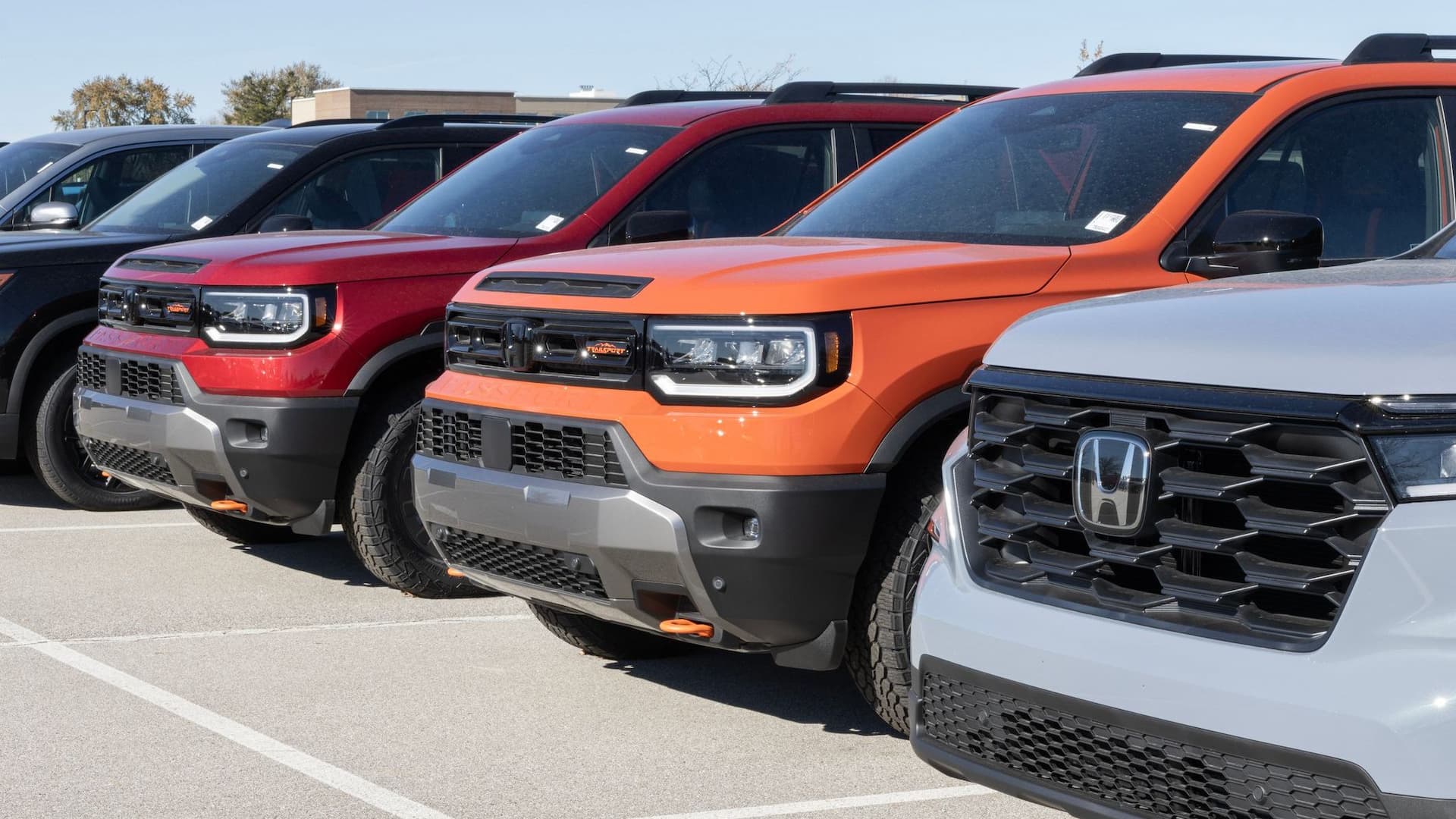
Honda has long been associated with a strong resale value, longevity, and reliable performance.
For example, check out what industry ratings say about this reliable car:
- J.D. Power’s 2025 Initial Quality Study (IQS): Honda recorded 179 problems per 100 vehicles (PP100), beating the industry average of 192 PP100. This suggests new Honda cars tend to experience fewer issues than many competitors.
- J.D. Power’s 2025 Vehicle Dependability Study (VDS): Honda logged 201 PP100 compared to the industry average of 202, showing long-term reliability that’s essentially in line with the average vehicle.
- iSeeCars Brand Reliability: Data from iSeeCars shows that Honda models consistently score between 8.0 and 8.2 out of 10 for reliability across multiple categories.
- Consumer Reports’ 2025 Brand Reliability Rankings: Honda earned a score of 59/100, placing it above average among mass-market automakers.
Additionally, here’s what makes Honda stand out:
- Lower-than-average maintenance and repair costs
- Long vehicle lifespans when properly maintained
- Strong resale value and ownership affordability
- Durable drivetrains in core models like the Civic and Accord
However, there are a few reliability issues you should be aware of, including:
- Automatic transmission problems in certain older models
- Turbo engine oil dilution in specific 1.5-liter vehicles
- Fuel pump recalls affecting multiple model years
- Suspension wear in higher-mileage vehicles
- Infotainment and electrical system glitches
Now, should you get yourself a Honda?
Join us as we dive deeper into reliability ratings, maintenance costs, reliable models, comparison to other brands, and more.
This Article Contains:
- What Industry Ratings Say About Honda Reliability
- 5 Common Issues That Affect Honda’s Reliability
- The Average Cost of Maintaining a Honda
- 7 Reliable Honda Models Worth Owning
- How Do Honda Vehicles Rank for Overall Protection and Highway Safety?
- All About Honda’s Warranty and Coverage
What Industry Ratings Say About Honda Reliability
Reliability studies show that Honda remains one of the most reliable automakers:
1. JD Power Initial Quality Study (IQS)
JD Power’s IQS measures problems per 100 vehicles (PP100) during the first 90 days of ownership. Lower scores indicate better initial quality.
In the 2025 IQS report, Honda recorded 179 PP100, placing it ahead of many mainstream competitors and the overall industry average of 192 PP100, meaning new Honda cars experience fewer owner-reported problems during the early days of ownership.
2. JD Power Vehicle Dependability Study (VDS)
The JD Power VDS tracks problems reported after about three years of ownership. In the 2025 U.S. VDS, Honda logged 201 problems per 100 vehicles (PP100).
For context, the overall industry average in that study was 202 PP100, meaning Honda owners reported long-term issues at roughly the same rate as the average vehicle. This reinforces Honda’s reputation for solid long-term reliability.
3. iSeeCars Brand Reliability
iSeeCars’ analysis of reliability data shows that Honda performs very well across multiple vehicle categories, with many of its models scoring around 8.0 to 8.2 out of 10 for reliability. For example, Honda’s small cars (including Civic and Fit) have an 8.1/10 reliability rating, and Honda compact SUVs (like the CR-V) scored 8.2/10.
4. Consumer Reports Predicted Reliability
According to Consumer Reports’ brand reliability rankings, Honda is generally rated as a reliable automaker. In the 2025 Consumer Reports survey, Honda earned a reliability score of 59 out of 100, placing it above average among mass-market brands. This score is based on owner-reported problems across multiple vehicle systems and model years.
While it’s a reliable car brand, Honda has its fair share of problems.
5 Common Issues That Affect Honda’s Reliability
Here are some reliability concerns that Honda owners have reported across different models and years:
1. Automatic Transmission Issues
Some Honda models (particularly older Accords, Odysseys, and Pilots) have experienced automatic transmission problems, including harsh shifting, delayed engagement, and premature transmission failure. These issues are more commonly reported in certain model years from the early 2000s through the mid-2010s, and can result in costly repairs if not addressed early.
2. Engine Oil Dilution on Turbocharged Engines
Certain Honda models equipped with the 1.5-liter turbocharged engine (such as some CR-V, Civic, and Accord vehicles from roughly 2016-2018) have experienced engine oil dilution, where unburned fuel mixes with the engine oil.
This issue occurs because fuel can pass by the piston rings and accumulate in the oil, reducing its lubrication effectiveness and potentially increasing wear on internal engine parts.
3. Fuel Pump Failure
Several Honda owners have reported an issue related to defective fuel pumps that can fail, stall, or prevent the engine from starting. For example, Honda recalled over 2.5 million vehicles from 2017 to 2020 due to a fuel pump impeller defect.
4. Suspension and Steering Wear
Some old Honda models show above-average wear in suspension and steering components such as bushings, control arms, and power steering systems. These issues can lead to vibrations, clunking noises, or reduced ride comfort, particularly in higher-mileage vehicles or those driven frequently on rough roads.
5. Infotainment and Electrical System Glitches
Modern Honda vehicles frequently receive complaints related to infotainment systems, including screen freezing, Bluetooth connectivity issues, and software lag.
So, how much would you have to pay to keep the vehicle in great condition?
The Average Cost of Maintaining a Honda
The average annual repair and maintenance cost for a Honda in the US is between $430 and $450, depending on the model and the vehicle’s mileage. This is significantly lower than the industry average of around $650.
Over the first 10 years of ownership, Honda models average about $6,799 in total maintenance and repair costs. This is $1,457 less than the average for comparable brands.
There’s also roughly a 20% chance that a Honda will require a major repair during this period, which is about 4.7% better than similar vehicles in the segment.
Low maintenance costs are a positive, but which Honda should you pick?
7 Reliable Honda Models Worth Owning
The Honda models in this section are known for durability, long lifespans, and strong reliability ratings.
NOTE: The data and reliability ratings in this section were obtained from iSeeCars.
1. Honda Civic
This compact Honda car is known for strong reliability, longevity, and excellent fuel efficiency. It has an average lifespan of about 163,000 miles (13.5 years) and a solid reliability rating of 8.1/10.
When properly maintained, this reliable vehicle has roughly a 27% chance of reaching at least 200,000 miles.
2. Honda CR-V
The Honda CR-V has an average lifespan of about 170,000 miles (around 14 years) and a reliability score of 8.2/10, placing it among the more dependable compact SUVs. With proper maintenance, this Honda model has roughly a 31% chance of reaching at least 200,000 miles.
3. Honda Accord
The Honda Accord is a midsize sedan known for long-term reliability and impressive fuel efficiency. It has an average lifespan of about 162,600 miles (around 12.4 years) and a reliability score of 8/10.
This Honda vehicle has roughly a 26.7 % chance of reaching at least 200,000 miles, and many owners report ownership well beyond that mark.
4. Honda Pilot
The Honda Pilot midsize SUV has an average lifespan of about 171,550 miles (around 11.5 years) and a reliability score of 8/10. This Honda model has a 31.9 % chance of reaching at least 200,000 miles, according to large-scale vehicle data.
5. Honda Odyssey
The Honda Odyssey is a reliable minivan with an average lifespan of about 159,000 miles (around 10.7 years) and a reliability score of 8/10. When properly maintained, about 25 % of Odysseys reach at least 200,000 miles.
6. Honda HR-V
The Honda HR-V is a dependable subcompact SUV that lasts between 150,000 and 200,000 miles (about 10-15 years). This Honda vehicle tends to have lower annual repair costs and fewer severe issues than the typical SUV.
7. Honda Fit
The Honda Fit is a reliable, subcompact hatchback with a reliability rating of 8.2/10. When properly maintained, this Honda car often lasts 180,000 miles (17 years), making it a durable choice for city driving and long-term ownership.
Along with durability and reliability, overall protection and highway safety are factors to consider.
How Do Honda Vehicles Rank for Overall Protection and Highway Safety?
Honda vehicles are known for advanced safety features, like collision mitigation, lane keeping assist, and adaptive cruise control. They consistently earn strong safety ratings from both IIHS and NHTSA, reflecting reliable protection in frontal, side, and rollover crashes.
For highway safety, these safety features help reduce the risk of collisions and provide extra driver support during long-distance travel. Honda’s commitment to safety technology helps its vehicles consistently achieve high safety ratings.
Also, the brand provides Honda Sensing — a suite of advanced driver-assistance and safety technologies designed to help prevent collisions. A key part of Honda Sensing is the Collision Mitigation Braking System (CMBS).
Beyond safety and crash protection, you’ll also want to understand Honda’s warranty coverage.
All About Honda’s Warranty and Coverage
Here’s a look at how Honda protects your vehicle and ensures a seamless ownership experience:
| Coverage Type | Duration / Limit | Coverage Details |
| Limited Warranty | 3 years / 36,000 miles | Covers most new Honda vehicles for defects in materials and workmanship. |
| Powertrain Warranty | 5 years / 60,000 miles | Covers engine, transmission, and drive systems to protect major components. |
| Honda Care & Extended Coverage | Vehicles under 3 years / 36,000 miles eligible | For extended protection, vehicles are eligible for Honda Care Vehicle Service Contracts. |
| Honda Service Pass | 12 months / 12,000 miles | Covers complimentary maintenance, including oil changes, tire rotations, and multi-point inspections using Honda Genuine Parts. |
| Roadside Assistance | During the warranty period | Honda provides 24/7 emergency support for towing, jump starts, flat tires, and lockout service for model-year 2015 and newer vehicles, helping improve driver safety. |
| Corrosion Coverage | 5 years / Unlimited miles | Warranty against corrosion. |
| Accessory Limited Warranty | 3 years / 36,000 miles | Covers Honda Genuine Accessories installed at the time of vehicle purchase. Damage caused by non-Honda accessories is not covered under the warranty. |
| Replacement Parts Limited Warranty | 1 year | Covers Honda Genuine Parts purchased and installed by a Honda dealer, including both parts and labor. |
| Remanufactured Parts Limited Warranty | 3 years / 36,000 miles | Covers all Honda Genuine Remanufactured Parts. |
Handle Your Honda Repairs and Maintenance Hassle-Free with AutoNation Mobile Service
Although Honda is a reliable car brand with low maintenance costs, some models may experience issues over time — from transmission quirks to suspension wear.
How can you keep your Honda running smoothly?
Familiarize yourself with common reliability issues and follow recommended service schedules.
And if you want an easier way to handle Honda repairs and routine maintenance, look no further than AutoNation Mobile Service.
With us, you don’t have to visit a repair shop — our Honda mechanics will come and assist you right from your driveway. For added peace of mind, we back our repairs and regular maintenance services with a 12-month, 12,000-mile warranty.
Book an appointment today and keep your Honda performing at its best.