
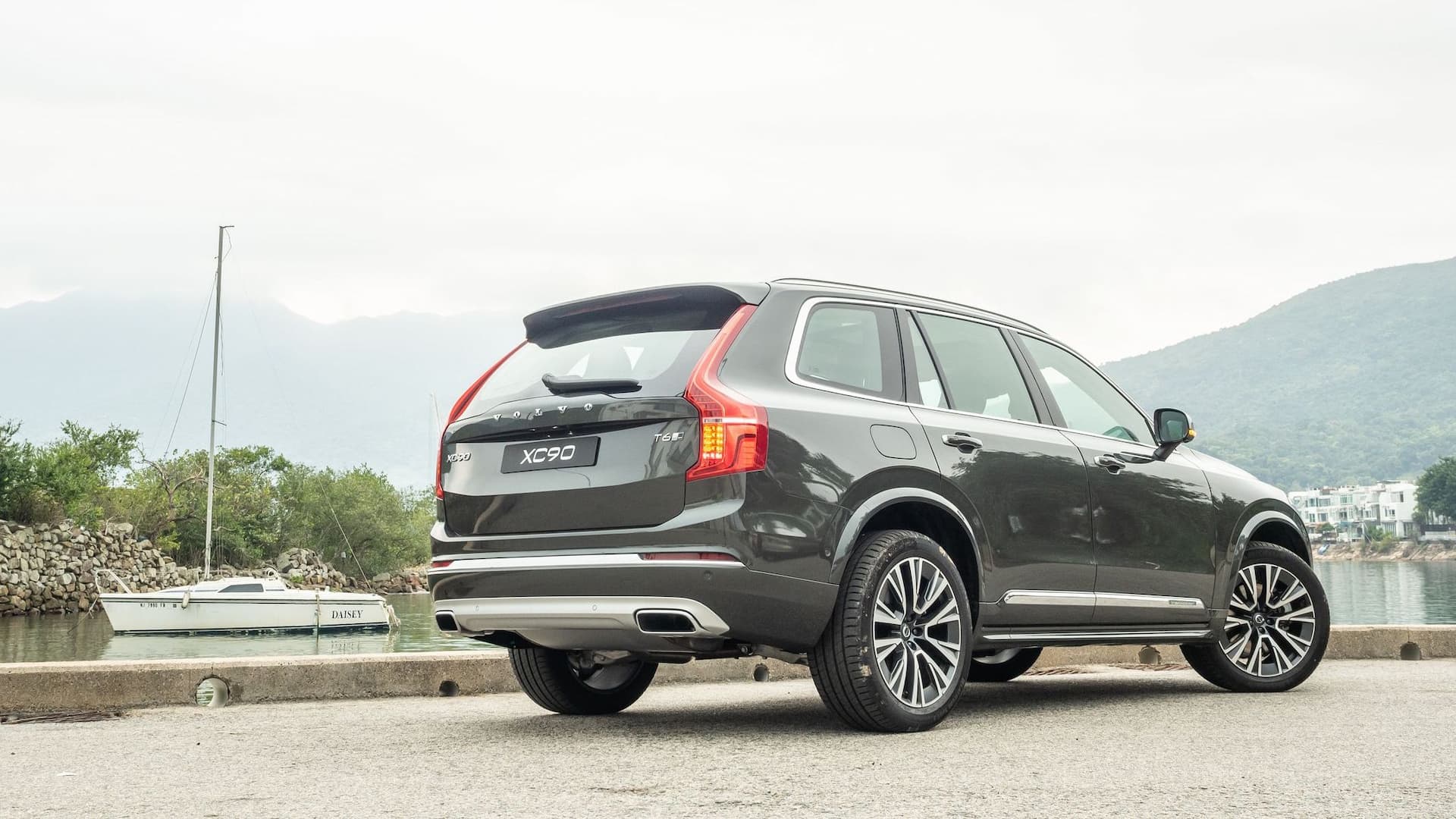
Volvo XC90s are moderately reliable cars, ranking slightly below average for a midsize luxury SUV. While this Volvo model avoids major failures and has strong safety ratings, minor issues can increase maintenance costs and impact ownership.
Volvo XC90 Reliability Pros:
- Repair frequency and prevalence of severe repairs are average for a luxury vehicle.
- Common problems usually affect the driving experience rather than drivability.
- Newer models (post-2016) show low complaint and recall rates (though lower volume is expected for a niche luxury SUV).
Volvo XC90 Reliability Cons:
- Annual repair cost is higher than average.
- Independent reliability ratings are below average for both the XC90 and Volvo overall.
- Many owners report lower-than-expected fuel economy.
For a more detailed breakdown, keep reading.
This Article Contains:
- Volvo XC90 Reliability Ratings
- Volvo XC90 Average Annual Repair Costs
- 8 Common Problems with the Volvo XC90
- The Best & Worst Volvo XC90 Model Years
- Caring for Your Volvo XC90
- 3 FAQs About the Volvo XC90
Volvo XC90 Reliability Ratings
Volvo Cars is a Swedish automaker associated with safety-focused engineering and Scandinavian design. The Volvo inventory includes:
- SUVs like the Volvo XC60 and XC90
- Fully electric models like the Volvo EX30 and EX60
- Sedans like the Volvo S80 and Volvo S60
- A separate industrial range of Volvo trucks
The Volvo XC90 is a flagship AWD (all-wheel drive) midsize luxury SUV in the Volvo lineup. Its current powertrain and engine options include PHEV (plug-in hybrid) and MHEV (mild hybrid) versions.
As a three-row SUV, the XC90 is popular with families. Inside, the Volvo XC90 interior emphasizes comfort and modern Swedish design. XC90 owners also value its safety features, which earned it a five-star Euro NCAP (European New Car Assessment Programme) safety rating.
But how does this Volvo model perform in terms of long-term reliability?
We can start with independent reliability rating organizations, which show Volvo scoring below average.
J.D. Power ranks Volvo in the lower half of ~30 brands when measuring problems per 100 vehicles over three years.
The overall J.D. Power ratings for the Volvo XC90 are typically in the mid-70s, but scores are boosted by driving experience and resale value. Its reliability rating, specifically, is usually in the low-70s or below. For example, the 2016 model scores 71 overall, but 58/100 for reliability.
Consumer Reports rankings reinforce this:
- Volvo places 21st overall and 10th for luxury vehicles.
- It ranks 15th for reliability of new cars and 10th for used cars.
- It places 18th for owner satisfaction.
- It ranks 24th for repair costs.
These rankings indicate weaker reliability than expected for a luxury vehicle, with high repair costs. We’ll explore that next.
Volvo XC90 Average Annual Repair Costs
The average annual repair and maintenance cost for a Volvo XC90 is $851 — higher than both the overall average ($652) and the luxury vehicle average ($807).
The XC90 requires repairs about once every 1.5 years, with ~11% considered severe. This is average for a luxury car, but higher compared to all vehicles. It suggests the XC90 doesn’t need repairs more often, but they are more expensive due to premium parts and its tightly packaged design.
So, what issues contribute to the repair and maintenance cost?
We’ll dig into the top complaints and how they affect reliability.
8 Common Problems with the Volvo XC90
Common XC90 problems affect driving experience, fuel efficiency, and overall cost, but rarely drivability. For buyers expecting a luxury SUV experience, these still factor into reliability.
1. Infotainment
The touchscreen infotainment module can lag, freeze, or randomly reboot. This common problem can take key functions offline, such as driver assist and HVAC. Issues may also affect Apple CarPlay, Android Auto, and the Volvo Cars app.
Although it’s rare for it to affect vehicle functionality, it can require costly resets, software updates, or head-unit replacements.
2. Transmission
Many XC90 owners report abrupt or inconsistent shifting with the Aisin 8-speed transmission from early on.
More serious wear-related issues may still emerge later if transmission fluid isn’t serviced.
Volvo states transmission fluid doesn’t need changing during its service life, and doesn’t cover it under the warranty, leading many to skip maintenance. However, fluid can degrade early, and servicing is often recommended around 50,000 miles.
3. Roof Leaks
Roof leaks, often from blocked drainage channels, are a known XC90 issue that can cause water to seep into the headliner or cabin.
Resulting issues can range in severity from cosmetic staining to major electrical damage.
4. Suspension
XC90 models with air suspension can develop clunks, leaks, or compressor malfunctions, causing sagging ride height and warning messages. Repairs are also more expensive than standard setups.
However, even with spring suspension, you may experience wear in ball joints or steering components after 4–5 years.
5. Brakes
The XC90 is a bigger vehicle, so its weight can contribute to faster-than-expected brake wear. Pads and rotors may need replacement every 2-3 years (or more often with adaptive cruise control and automatic emergency braking features).
6. Supercharger & Turbocharger
Twin-charged models (with both a turbocharger and supercharger) can present inconsistent power delivery or drops in fuel economy.
Repairs can be complex and costly due to the tightly packaged engine design.
7. Fuel Efficiency
While official EPA (Environmental Protection Agency) estimates suggest mid-20s mpg fuel economy, many XC90 owners report noticeably lower real-world efficiency, especially in city driving. Some average closer to ~18–22 mpg, with worst cases dropping into the mid-teens.
8. Tires
Premature tire wear is a common problem on the XC90 due to its weight and suspension setup. Some owners report needing replacements as early as 15,000 miles. If you choose Volvo genuine tires, replacement costs can exceed $150–$350 per tire.
Now, the Volvo XC90 has been sold since 2003, and the reliability has changed over time. Different model years are more dependable than others.
The Best & Worst Volvo XC90 Model Years
Most Volvo XC90 model years are similar in performance and reliability, though newer models offer improved safety features and dependability. Still, some years stand out as more problematic, such as:
- 2003–2007: Early model years (especially the 2004–2005) have higher complaint rates, largely focused on electrical, transmission, and engine problems.
- 2016: This model year is notorious among modern XC90s for a very high complaint volume, especially for engine, brake, and electrical issues.
Regarding the most reliable cars among Volvo XC90 models, the 2019 to 2022 models are crowd favorites. These models are old enough to surface issues but maintain low complaint rates and relatively minor recalls.
After 2022, long-term dependability is harder to assess due to limited data on new cars.
The 2024 and 2025 models have earned IIHS (Insurance Institute for Highway Safety) Top Safety Pick+ status. However, Consumer Reports predicts average or slightly below-average reliability for 2023–2026 models.
While vehicle and model year choice matter, it’s not the only factor in how long a vehicle lasts. Regular upkeep is key to extending your vehicle’s life.
Caring for Your Volvo XC90
Common XC90 issues are usually minor, but neglecting them can lead to costly repairs.
To keep your XC90 running smoothly, focus on these key maintenance habits:
- Follow a proactive, stricter-than-minimum maintenance schedule.
- Keep up with fluid maintenance and replacing known wear items (like brake pads and rotors).
- Get regular inspections of problem areas like suspension components, supercharger components, and roof drains.
- Keep infotainment and vehicle software updated.
- Regularly check VIN-specific recalls so you can get the prescribed repairs done promptly.
If this sounds overwhelming, a mobile mechanic makes maintenance much more convenient and manageable.
You can skip shop visits by letting AutoNation Mobile Service handle your maintenance and repairs. Our professional mechanics come directly to your driveway to handle diagnostics, repairs, and routine servicing.
Still trying to decide if this is the right vehicle for you?
We’ll help clarify some of your lingering questions.
3 FAQs About the Volvo XC90
Here’s some extra information about the Volvo XC90 to help you make an informed decision about your next vehicle purchase:
1. What Are the Volvo XC90 Specs and Trim Level Options?
The Volvo XC90 has a set of standard specs, with additional options to enhance performance and interior features.
Standard features include:
- A turbocharged four-cylinder engine with an automatic transmission
- AWD (all-wheel drive) drivetrain
- Driver assistance features such as adaptive cruise control, pilot assist (semi-autonomous mode), and emergency braking
- Central touchscreen interface for vehicle controls and infotainment
- Smartphone integration via Apple CarPlay and Android Auto
- Connected features through the Volvo Cars app
- Modern and minimal Volvo XC90 interior and a three-row SUV layout with a third row best suited for children or short trips
Across the lineup, buyers can choose between different trim levels and features depending on their preferred setup:
- Multiple engine options within the same core powertrain — E.g., plug-in hybrid (PHEV) variants like the XC90 T8 and XC90 Recharge or mild hybrid (MHEV) variants like the B5 and B6.
- Choice of spring or air suspension
- Optional head-up display (projects key driving info onto the windshield)
- Customization through Volvo accessories, such as roof racks, tow hitches, and cargo organizers.
2. How Does the XC90 Compare to Other Models in the Volvo Lineup for Reliability?
Here’s a quick, side-by-side view of how the XC90 stacks up for reliability across the Volvo lineup:
- Compared to the Volvo XC60, the XC90 is a bigger vehicle with more complexity, which can mean slightly higher repair risk.
- Sedans like the Volvo S60 and Volvo S80 tend to be more reliable due to a simpler design, but the XC90 feels more practical and spacious.
- Compared to newer EVs like the Volvo EX90 and Volvo EX30, which don’t have much long-term data available, the XC90 is a safer pick.
3. How Does the Volvo XC90 Compare to Other Luxury SUVs for Reliability?
The XC90 is often cross-shopped with luxury SUVs like the:
- Lexus GX
- Audi Q7
- BMW X5
- Land Rover Discovery
In terms of reliability, the XC90 is most comparable to the BMW X5, though the BMW has a stronger focus on performance while the Volvo emphasizes safety and comfort.
The XC90 tends to outperform the Land Rover Discovery and Audi Q7, which have more faults and higher repair costs.
However, the XC90 still falls short of top-tier durability benchmarks like the Lexus GX.
Keep Your XC90 Running Smoothly with AutoNation Mobile Service
If you’re considering a used or new Volvo XC90 at your local Volvo dealer, it’s a fairly reliable car, but it’s not without its problems.
Whether you experience premature tire wear, roof leaks, or bumpy suspension, AutoNation Mobile Service can help you get to the root of the issue.
When you schedule service, our professional mechanics come right to your driveway to perform repairs. Even better, every repair is backed by a 12-month, 12,000-mile warranty, giving you added peace of mind.
Ready to simplify XC90 maintenance?
Book a visit from AutoNation Mobile Service today.