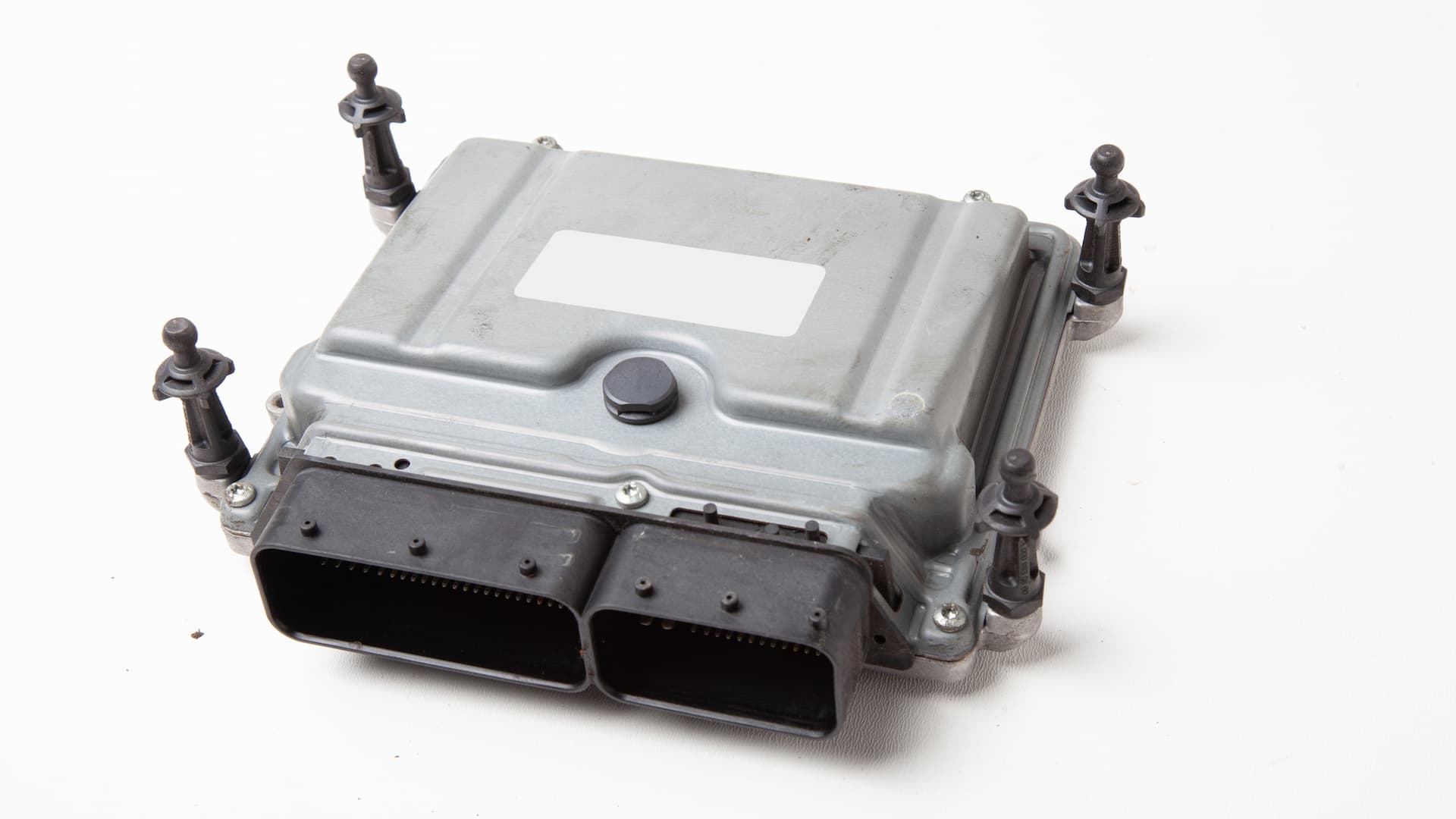
Your car’s engine control module (ECM) is a small but crucial component that controls everything from fuel delivery to ignition timing.
Think of it as your vehicle’s ‘brain’; when it malfunctions, you may notice a drop in performance, and replacing it can cost anywhere from $900 to $2,200.
But why is ECM replacement so expensive?
In this guide, we break down the engine control module replacement costs, key factors that influence pricing, and early warning signs that indicate your ECM needs attention.
This Article Contains:
- How Much Does Engine Control Module Replacement Cost?
- Is It Worth Replacing the Engine Control Module?
- 5 Signs You Need an Engine Control Module Replacement
- How Long Does the Engine Control Module Last?
- How to Diagnose and Replace an ECM
- How to Prevent ECM Failure
Let’s get started!
How Much Does Engine Control Module Replacement Cost?
Here’s what you might have to spend on an ECM replacement:
A. Range
Swapping out an engine control module can cost between $900 and $2,200. This estimate covers the cost of:
- Parts: $800 to $2000
- Labor: $100 to $200 (the replacement takes around 1-2 hours)
B. Factors Affecting Cost
While we’ve provided a general estimate above, the final replacement costs can vary depending on several factors, including:
- Vehicle make and model: Luxury or high-end vehicles often have more complex ECMs than standard cars, increasing parts and labor costs. For example, replacing the ECM in a BMW or Mercedes-Benz can be significantly more expensive than in a Toyota or Honda due to the advanced electronics and additional programming requirements.
- Diagnostic fee: Some repair shops may charge a flat diagnostic fee, typically ranging from $50 to $170, to assess the ECM and identify the issue.
- New vs. refurbished unit: While a brand-new ECM in some cars can cost over $2,000, installing a refurbished unit is typically more cost-effective, ranging from $500 to $1,500. However, it’s best to consult your mechanic to address any potential quality concerns.
- Warranty coverage: If your vehicle is still under warranty, you may be eligible for a free ECM replacement, provided the issue is due to a manufacturing defect.
- Additional costs: Most ECMs require programming according to the vehicle’s specifications after replacement, adding an extra $100 to $200 to the total cost.
Is It Worth Replacing the Engine Control Module?
Absolutely.
The engine control module, as its name suggests, manages critical engine functions, such as fuel injection, ignition timing, and other essential systems. It ensures your engine runs efficiently, safely, and meets emission standards. In some cases, it can even protect the engine by limiting performance (entering limp mode) if a problem is detected.
When the ECM fails, your engine may run poorly and could be at risk of damage. Replacing a faulty ECU helps restore proper engine function and keep your vehicle safe on the road.
That said, the decision to repair or replace the ECM depends on the specific issue and the condition of your car.
If it’s a minor issue and your vehicle is older, a simple repair may be the more practical choice. However, if the ECU is severely damaged and your car is relatively new, a replacement will provide a longer-lasting solution.
5 Signs You Need an Engine Control Module Replacement
If you notice any of these signs, have a mechanic inspect your ECM:
- Illuminated check engine light
- Engine stalling and frequent misfires
- Reduced power, sluggish acceleration, or poor fuel efficiency
- Vehicle won’t start
- Dead or weak battery
How Long Does the Engine Control Module Last?
The engine control module is meant to last the lifetime of your vehicle; however, the following factors may cause it to fail sooner:
- Environmental conditions: Moisture, extreme temperatures, and voltage fluctuations can cause ECM failure.
- Electrical problems: Issues like power distribution faults, short circuits, or a failing ECM power relay can lead to malfunctions.
- Excessive engine heat: The ECM needs proper cooling to function properly. Heat from nearby engine components or restricted airflow can cause it to overheat and fail.
- Physical damage and vibrations: Accidents or loosely mounted ECMs can damage the unit, while constant vibrations may cause the circuit board to crack.
- Power surges: Irregular voltage from a failing battery or alternator causes spikes in electrical flow, damaging the ECM’s internal circuits.
How to Diagnose and Replace an ECM
Replacing an ECM isn’t a simple task, and any mistake in handling or programming can cause engine damage or electrical issues. That’s why it’s best left to a professional mechanic.
Here’s how they’ll diagnose ECM problems:
- Refer to your vehicle’s manual to find the exact location of the ECM.
- Connect an OBD-II scanner to read diagnostic trouble codes (DTCs).
- Inspect sensors and wiring for damage, corrosion, or loose connections.
- Use a multimeter or oscilloscope to check input and output signals.
- Verify power and ground circuits to ensure proper continuity.
- Rule out any hardware faults.
Once it’s confirmed your ECM is the problem, here’s how they’ll replace it:
- Disconnect the battery: Remove the negative terminal first, then the positive, to prevent electrical shocks or damage.
- Remove the old ECM: Carefully detach all connectors and unbolt the unit.
- Install the new ECM: Position the new ECM, secure it with bolts, and reconnect all connectors.
- Reconnect the battery: Restore the battery connection to power the new ECM.
- Initialize and program: Reprogram the ECM to match your vehicle’s specifications.
- Test the system: Start the vehicle and verify that all systems function properly, and no error codes remain.
How to Prevent ECM Failure
Follow these simple tips to protect your ECM from damage:
- Check your battery regularly: A weak or failing battery can’t correctly power the ECM, increasing the risk of failure.
- Jump-start carefully: Incorrect jump-starting can cause voltage spikes that can damage the ECM.
- Get professional inspections: If you notice performance issues, have a mechanic check the ECM and its connections for corrosion, loose wires, or damage.
- Keep the software updated: Updating your ECM software helps improve fuel efficiency, emissions compliance, and overall engine performance.
ECM Replacement Made Easy with AutoNation Mobile Service
Understanding the signs of a failing ECM, knowing the costs involved, and taking preventive measures can help you avoid costly repairs and engine damage.
Fortunately, with AutoNation Mobile Service, you don’t even need to drive to a repair shop.
We’re a convenient mobile car repair solution, available seven days a week, offering upfront pricing and a 12-month, 12,000-mile warranty on repairs.
Contact us, and we’ll replace your faulty ECM right from your driveway.