Does cold weather affect brakes?
Yes, it does — and in more ways than you might think.
Freezing temperatures can actually damage your brake lines, pads, and rotors, leading to costly repairs and unsafe driving conditions.
However, understanding how cold weather impacts your brakes can help you prevent problems before they occur.
Let’s take a closer look.
This Article Contains:
- How Does Cold Weather Affect Brakes? (+Warning Signs)
- What to Do When Your Brakes Are Frozen
- How to Prevent Your Brakes From Freezing in Cold Weather
How Does Cold Weather Affect Brakes? (+Warning Signs)
Here’s what happens to your brakes when temperatures drop:
1. Moisture and Ice Buildup
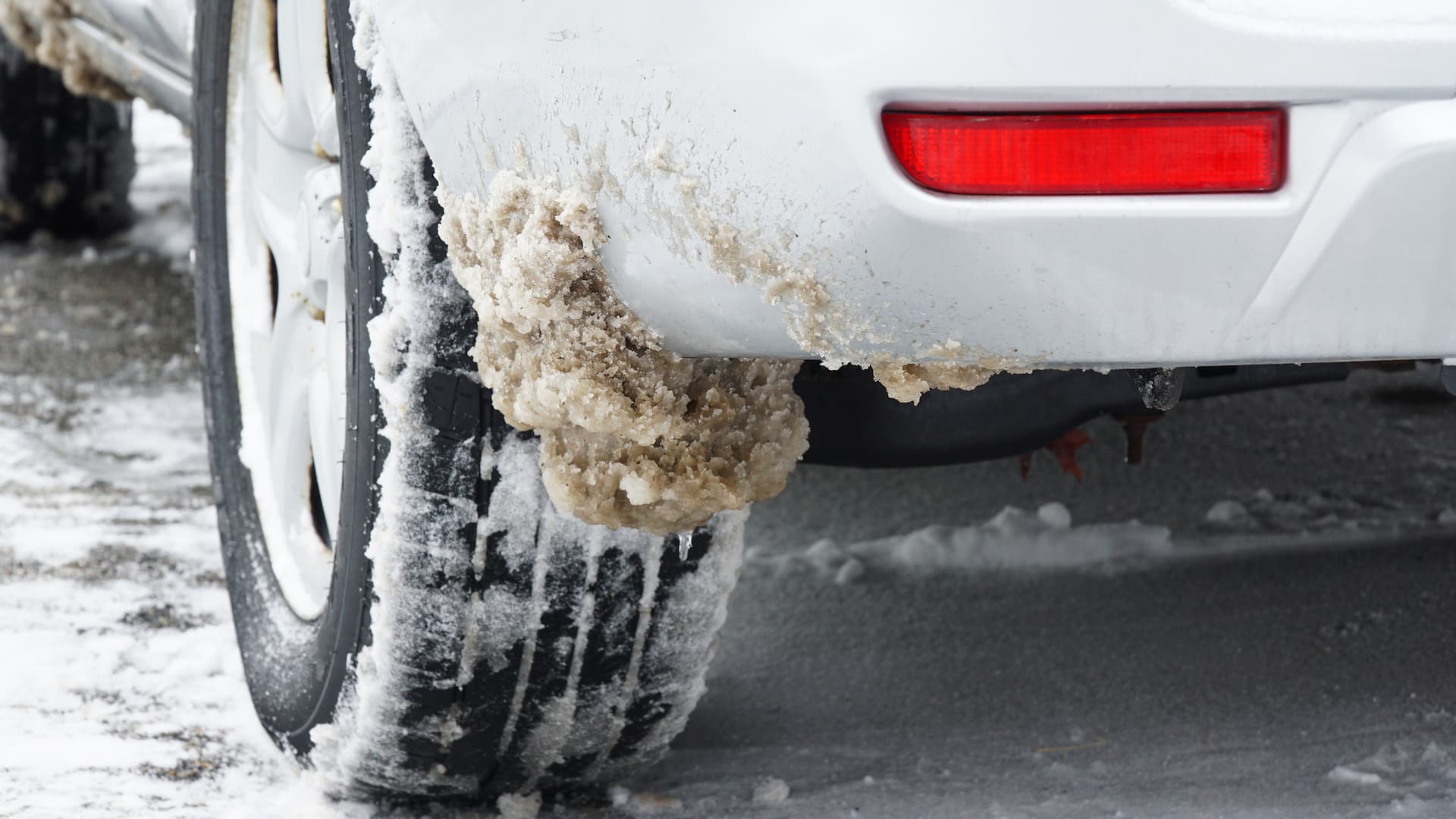
Snow, slush, or freezing rain can cause water to collect around brake components. When this moisture freezes, it can lead to stuck brake pads, frozen parking brakes, or icy brake lines.
SYMPTOMS: The brake pedal may feel unusually stiff. Your car might not move freely after releasing the parking brake, or you may hear scraping or grinding noises as frozen components break free.
2. Overheating
When snow or icy buildup reduces braking efficiency, drivers often press harder on the brake pedal. This can generate excessive heat, which can overheat your brake pads and rotors and, over time, cause them to glaze or warp.
SYMPTOMS: You might smell something burning, experience a soft brake pedal, or notice that the car takes longer to stop. In severe cases, the steering wheel may vibrate during braking due to warped rotors.
3. Brake Fluid Thickening
Modern brake fluids can operate reliably at low temperatures (down to – 40°F). But when it is extremely cold, the fluid’s molecules move more slowly, making it harder for the liquid to flow through the brake lines.
SYMPTOMS: You may feel increased pedal effort, delayed braking response, or an inconsistent pedal feel.
4. Cracks in Brake Lines
Repeated freezing and thawing can cause metal brake lines or rubber hoses to become brittle and crack over time. This can lead to fluid leaks.
SYMPTOMS: You might notice a brake fluid warning light, a soft pedal, or the car pulling to one side when braking. Yellowish fluid spots under the car may also indicate a leak.
5. Rust and Corrosion
Moisture and road salt in winter can cause rust to form on brake rotors, calipers, and other metal components, leading to corrosion. Road salt and ice can also damage the vehicle’s undercarriage, including brake lines and mounting points.
SYMPTOMS: You may hear squealing, whining, or grinding noises when braking, feel vibrations in the pedal and steering wheel, or experience uneven braking performance.
If that high-pitched squeal sounds familiar, check out our detailed guide — 3 Reasons Why Brakes Squeal When Cold (+Proven Solutions), to know more.
NOTE: On icy or snowy roads, your Anti-lock Braking System (ABS) may activate more often to maintain grip and prevent skidding.
Frozen brakes can be a real hassle, but there are safe ways to get them working again.
What to Do When Your Brakes Are Frozen
You can use these methods to thaw frozen brakes:
- Use a hairdryer to blow warm air on the icy parts near the wheels or parking brake.
- If your rear drum brakes freeze, add weight to the trunk and gently rock the car between drive and reverse to loosen them.
- If the brakes still feel stiff, drive a short distance to melt any remaining ice.
- Spray warm water (using a spray bottle) directly onto the icy areas to melt the ice more quickly. You can also use a de-icer spray or an isopropyl alcohol based solution.
CAUTION: Never use an open flame to unfreeze brakes, as it may cause damage to rubber seals and other components.
Once you’ve thawed your brakes, it’s time to make sure they don’t freeze up next time.
How to Prevent Your Brakes From Freezing in Cold Weather
Here are some tips to help protect your brakes from seizing up in winter:
- Avoid using the parking brake overnight: In freezing weather, moisture can cause it to freeze. Instead, park on a flat surface or use wheel chocks if necessary.
- Keep your car in a covered area: Parking under shelter helps protect the brakes from snow and ice buildup.
- Dry your brakes before parking: After driving through snow, gently press the brakes a few times to remove moisture.
- Use engine braking on icy roads: When slowing down, shift to a lower gear instead of relying only on the brakes to prevent heat buildup and wear.
- Clean the brakes frequently: Remove salt, dirt, and moisture to keep ice from forming around brake parts.
- Use high-quality brake fluid: Choose a low-temperature, low-viscosity fluid rated for winter use, such as DOT 4 or DOT 5.1 formulations. Replace the fluid every 2 years (or 30,000 miles), or as recommended by the manufacturer.
- Check your brakes regularly: Have your brakes inspected as part of your winter maintenance routine. For replacements, opt for components made from winter-resistant materials such as coated (corrosion-protected) discs and ceramic brake pads.
Keep Your Brakes Strong with AutoNation Mobile Service
Nothing ruins a cold morning faster than frozen brakes.
AutoNation Mobile Service is here to help. Our expert technicians will come straight to your driveway to handle your braking issues — seven days a week.
What’s more?
Every repair comes with upfront pricing and a 12-month|12,000-mile warranty.