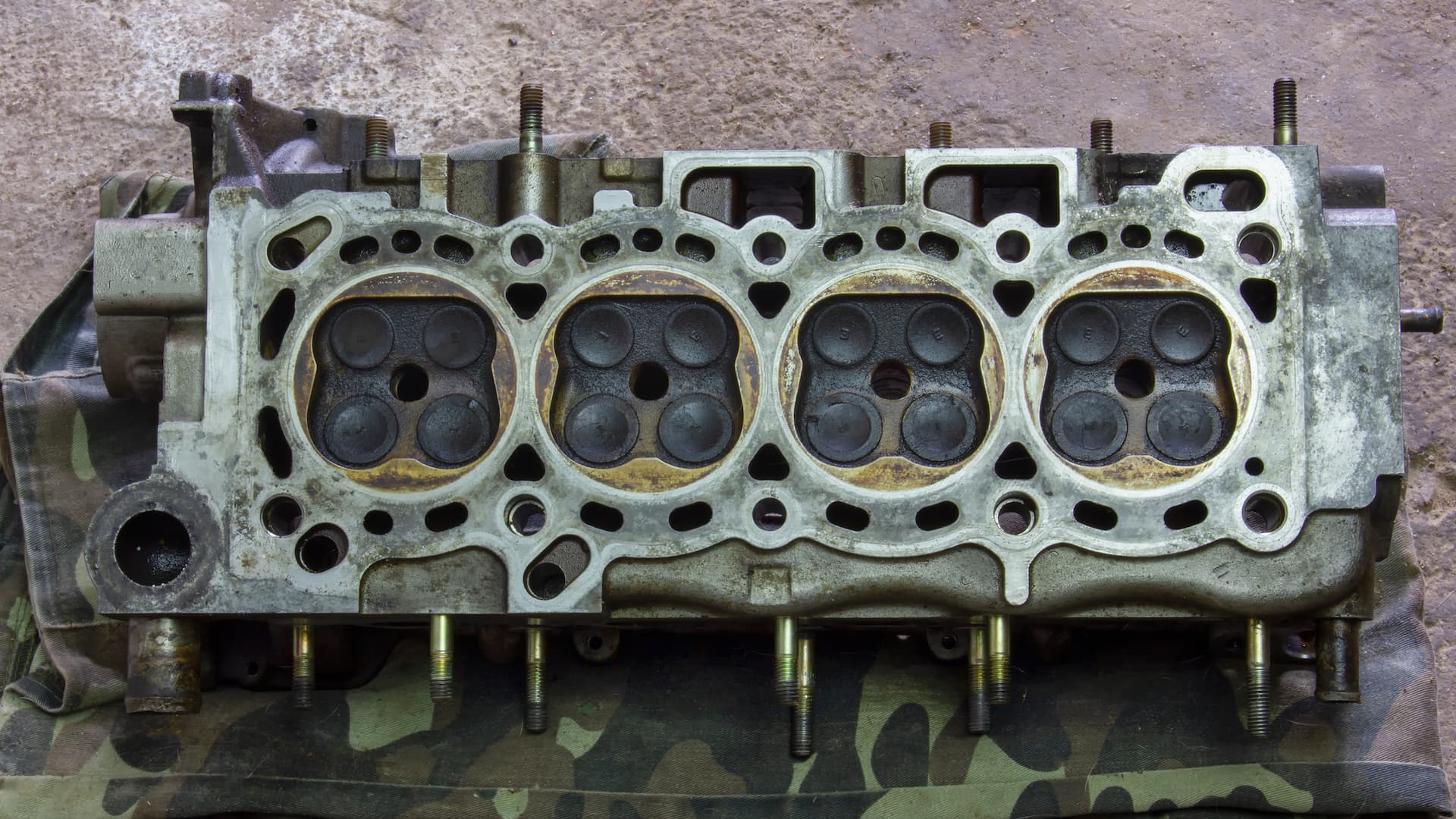
A cylinder head replacement typically costs around $4,000- $5,000, making it one of the priciest engine repairs a car owner can face. It’s a major fix, but a vital one — a damaged head can cause poor performance or even total engine failure if ignored.
Understanding what drives the cost, and when replacement makes sense, can help you make the best decision for your car and your wallet.
This Article Contains:
- How Much Does a Cylinder Head Replacement Cost?
- What Influences the Cost of Cylinder Head Replacement?
- Is it Worth Replacing a Cylinder Head?
- Can You Repair a Cracked Cylinder Head?
- How Long Do Cylinder Heads Last?
- How Do You Know Your Cylinder Head is Bad?
- What Causes Cylinder Head Damage?
- Can You Drive with a Bad Cylinder Head?
How Much Does a Cylinder Head Replacement Cost?
The average cylinder head replacement cost sits between $4,000 and $5,000, though it varies by vehicle make, model, and location.
- Parts: $2,400 – $2,600 on average. The actual range can be from a few hundred dollars for smaller engines to over $5,000 for high-performance cars.
- Labor: $1,600 – $2,400 on average. Replacing a cylinder head is time-intensive, requiring precision and patience.
These figures exclude taxes and related repairs, such as gaskets, fluids, or head bolts.
Let’s dig a little deeper into costs.
What Influences the Cost of Cylinder Head Replacement?
Several factors can push the total higher or lower:
A. Labor Time and Complexity
Replacing a cylinder head can take anywhere from 6 to 15 hours, since mechanics must remove several engine components, inspect the head gasket, and reassemble everything perfectly.
Engines with tighter spaces or more complex designs take longer, which translates to a higher labor bill.
B. Engine Type
Your engine layout matters, too:
- Inline engines use one cylinder head, which makes replacement simpler and cheaper.
- V-shaped engines (like V6 or V8s) use two cylinder heads, doubling parts and labor if both need replacing.
Material choice also plays a role:
- Aluminum heads are common in modern vehicles because they’re lightweight and boost performance. But they’re also more prone to heat warping and typically cost more to replace.
- Cast iron heads are often found in older or heavy-duty engines. They’re heavier, somewhat less fuel-efficient, but more durable and generally cheaper.
C. Part Quality
You’ll have a few options when it comes to the replacement part quality:
- OEM (Original Equipment Manufacturer) heads: Best quality and perfect fit, but the highest cost.
- Aftermarket heads: More affordable, but quality and warranty vary.
- Remanufactured heads: Rebuilt from used ones and typically cheaper than new parts, though their lifespan depends on the quality of the rebuild.
D. Additional Repairs
Cylinder head problems rarely occur alone. The failure might be caused by, or lead to, warped engine blocks, damaged valves, blown gaskets, or worn piston rods.
Before approving the replacement, ask your mechanic for a complete diagnostic to avoid surprise add-ons later.
Is it Worth Replacing a Cylinder Head?
Usually, yes — if the rest of your engine is sound. Replacing the cylinder head can restore power, improve efficiency, and extend the life of your vehicle.
However, if your car has high mileage or the engine already has internal wear (like damaged bearings or a cracked block), a full engine replacement may be more cost-effective. A trusted mechanic can help you compare both options.
PRO TIP: Here are some things you can do for a realistic quote:
- Provide your vehicle’s make, model, year, engine type, and VIN when requesting a quote.
- Request multiple quotes from reputable repair shops or mobile services.
- Ask if the estimate includes related work, such as head resurfacing, valve seat grinding, or coolant system flushing.
But… Could You Replace It Yourself?
It’s technically possible, but not recommended for most drivers.
The job involves removing timing chains, valves, camshafts, and several gaskets — all of which must be perfectly aligned and torqued to spec. A small mistake can lead to serious engine damage.
Unless you’re an experienced DIY mechanic with specialized tools, it’s safer (and ultimately cheaper) to have it done professionally.
What about repairing, instead of replacing?
Can You Repair a Cracked Cylinder Head?
Sometimes.
Minor cylinder head cracks can be welded or epoxy-stitched, for example. This restores function and is cheaper than a full replacement. However, if the root cause (such as overheating) isn’t fixed, the head may crack again.
For long-term reliability, a replacement typically makes more sense.
That leads to the next question:
How Long Do Cylinder Heads Last?
With proper care, a cylinder head can easily last 100,000 miles or more, often for the lifetime of the engine.
You can help extend its life by:
- Getting regular oil changes
- Maintaining your cooling system
- Avoiding overheating and low coolant levels
- Using quality parts and fluids
A healthy engine means a healthy cylinder head.
How Do You Know Your Cylinder Head is Bad?
Cylinder head issues will manifest noticeable symptoms.
Watch for:
- Reduced power or performance
- Coolant or oil leaks near the engine head
- White smoke from the exhaust (coolant burning in the cylinders)
- Engine misfires or rough idling
- Visible cracks or warping on the head surface
If you spot any of these, get the car inspected immediately. Early detection can save thousands in repairs.
You’ll also want to know why failure happened in the first place:
What Causes Cylinder Head Damage?
The biggest culprit is overheating. Excessive heat causes the metal to expand, warp, or crack.
Other common causes include:
- Coolant leaks or air pockets in the cooling system
- A failed thermostat or water pump
- Detonation or pre-ignition (fuel burning too early in the cycle)
- Neglected maintenance — dirty oil or blocked coolant passages trap heat and stress the metal
Keeping your engine cool and well-maintained is the best prevention.
But if it still happens despite your best efforts…
Can You Drive with a Bad Cylinder Head?
It might be tempting to push through a few more miles, but it’s not advisable.
A bad cylinder head can lead to:
- Coolant mixing with oil, which destroys engine bearings
- Loss of compression and misfires
- Severe overheating that can seize the engine entirely
Ignoring the issue could turn a $4,000 repair into a $10,000+ engine replacement. When in doubt, park it and call for service.
Restore Engine Performance with AutoNation Mobile Service
A damaged cylinder head doesn’t have to mean the end of your car’s engine. While it’s a costly fix, replacing it restores performance and reliability when done right.
With AutoNation Mobile Service, our technicians come directly to you to diagnose, repair, or replace your cylinder head with expert precision. We’re available 7 days a week, and every repair is backed by a 12-month/12,000-mile warranty, giving you confidence that your engine is in good hands.
Book your appointment online, and let us keep your engine running strong.