
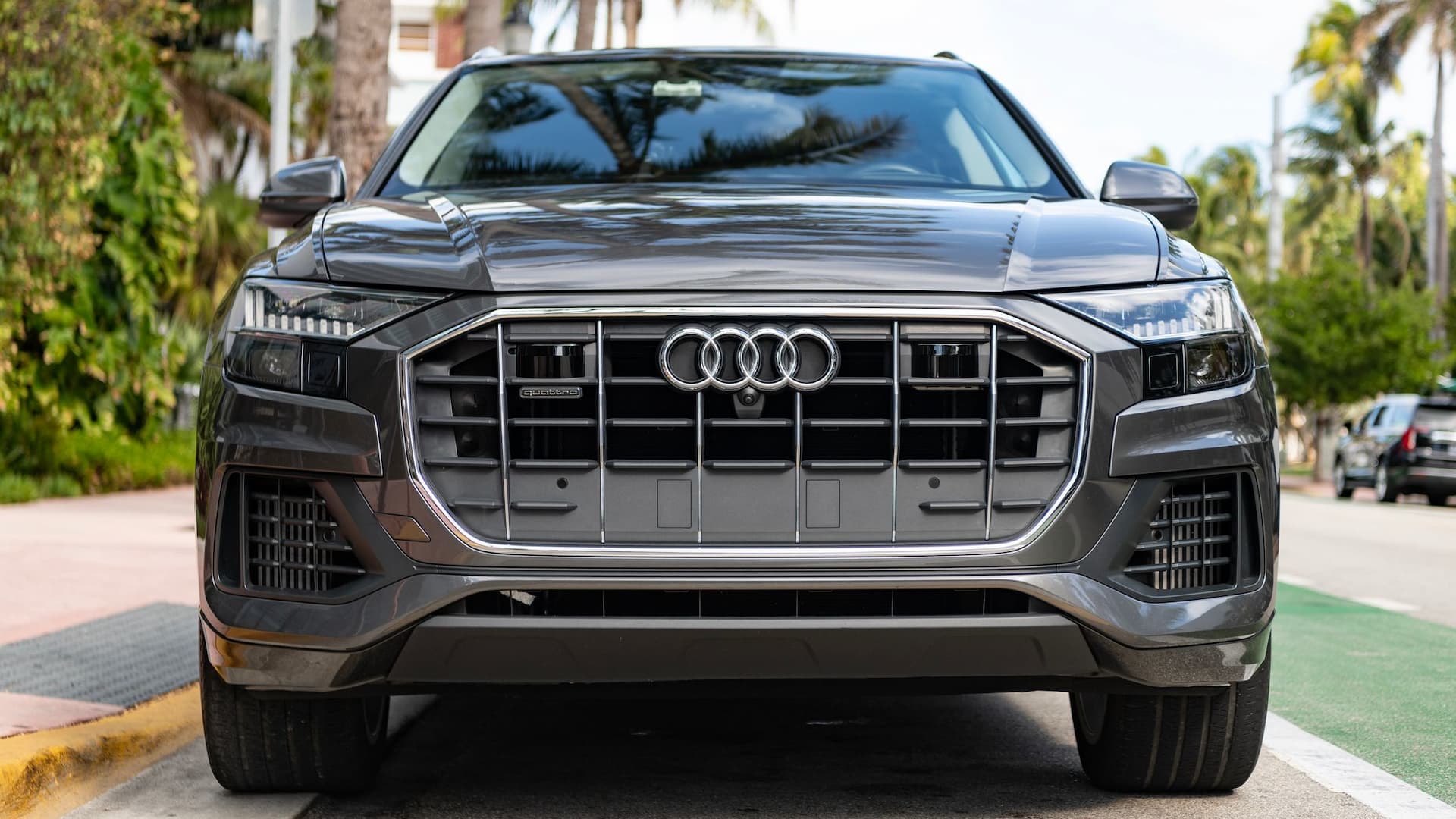
Audi has built a reputation for premium design, advanced technology, and strong driving performance. But reliability can vary widely depending on the model and other factors.
Let’s first look at industry ratings:
- Consumer Reports’ 2026 Automotive Brand Report Card: Audi dropped 10 places from the previous year, finishing around 16th overall. Most owner complaints were focused on newer models like the Q4 e-tron.
- J.D. Power’s 2025 US Vehicle Dependability Study (VDS): Audi recorded 273 problems per 100 vehicles (PP100), well above the industry average of 202 PP100. Tech-heavy models were the ones with the most issues.
Some common reliability issues to be aware of include:
- Engine and transmission concerns, including DSG-related issues
- Electrical and software-related faults
- Cooling system and suspension wear on higher-mileage models
Here’s where Audi usually performs well:
- Strong build quality and premium interior materials
- Advanced safety engineering and solid structural design
- Engaging driving dynamics and well-regarded Quattro all-wheel drive systems
Wondering if it’s worth owning an Audi?
Read on to discover reliability ratings in detail, maintenance costs, reliable models, comparison to other brands, and more.
This Article Contains:
- What Industry Ratings Say About Audi Reliability
- 6 Key Factors That Influence Audi’s Reliability (+ Common Issues)
- How Much Does It Cost to Maintain an Audi?
- 4 Reliable Audi Models Worth Owning
- How Does Audi’s Reliability Compare to That of Competitors?
What Industry Ratings Say About Audi Reliability
Reliability ratings offer a valuable perspective on how Audi performs compared to other brands.
Let’s dive deeper into this:
1. Consumer Reports’ 2026 Automotive Brand Report Card
According to Consumer Reports, Audi experienced one of the biggest year-over-year drops in the 2026 brand report card.
It dropped 10 places from the previous year and finished around 16th overall among all car brands based on reliability, owner satisfaction, safety, and maintenance data.
Much of this decline is linked to issues reported on newer models. For example, the Q4 e-tron saw a rise in owner complaints, including problems with climate control systems, in-car electronics, electrical accessories, and occasional EV battery or charging faults.
2. J.D. Power’s 2025 US Vehicle Dependability Study (VDS)
J.D. Power’s Vehicle Dependability Study, which tracks problems after about three years of ownership, reflects a similar pattern. Audi generally scores well in initial quality and driving experience, but its long-term reliability is usually affected by complex technology and advanced electronic systems.
In the study, Audi logged 273 problems per 100 vehicles (PP100), placing it toward the lower end of dependability rankings compared with other mainstream and premium brands.
For context, the overall industry average in that study was about 202 PP100, and several mainstream and premium brands (including Toyota, Mazda, and BMW) scored significantly better and had fewer problems.
While issues tend to be model-specific, tech-heavy vehicles received the most complaints.
Next, we’ll take a closer look at what really affects Audi’s reliability — from engines and electronics to safety features.
6 Key Factors That Influence Audi’s Reliability (+ Common Issues)
Reliability comes down to more than just brand reputation. It’s shaped by how each specific model is built and how you maintain it over time.
Here’s everything you need to know about Audi’s reliability, along with some common issues:
- Engine and Transmission Performance
- Suspension and Drivetrain
- Cooling System
- Materials Used
- Advanced Technology and Safety Features
- Maintenance and Repair Costs
1. Engine and Transmission Performance
Each powertrain type (TFSI petrol, TDI diesel, or hybrid) has specific strengths and challenges that can impact long-term durability.
For instance, petrol engines with direct injection may experience timing chain or belt wear, excessive oil consumption, or carbon buildup. In contrast, diesel engines can be prone to issues like soot-related buildup.
Also, DSG dual-clutch transmissions can develop a shifting issue if not serviced regularly.
If you want to avoid these issues, opt for a model with a reliable powertrain and adhere to recommended service intervals.
2. Suspension and Drivetrain
Audi’s suspension and drivetrain parts are engineered for performance but can be prone to wear over time. For example, control arms, bushings, differentials, and transfer cases may require regular attention, especially on high-mileage vehicles or heavier SUV models.
3. Cooling System
Water pumps, thermostats, and radiators often fail on the V4 model, as well as other turbocharged engines. Neglecting these parts can lead to overheating and potential engine damage.
4. Materials Used
Audi uses high-strength steels, aluminum alloys, and corrosion-resistant coatings to enhance structural durability and reduce rust progression over time.
The interiors are often praised for consistent, quality soft-touch materials and well-finished surfaces, which contribute to long-lasting cabin durability.
5. Advanced Technology and Safety Features
Modern Audis are equipped with a range of technology, from infotainment systems to driver assistance features and adaptive lighting. While these features improve comfort and safety, they can sometimes fail or require software updates.
Electrical issues, sensor failures, and infotainment glitches are among the most common complaints from Audi drivers.
6. Maintenance and Repair Costs
Luxury vehicles like Audi often have higher service costs, and neglecting scheduled maintenance can lead to expensive repairs.
To ensure your car stays reliable, consider regular oil changes, brake servicing, software updates, and inspections of drivetrain and suspension components.
Which brings us to the next question:
How Much Does It Cost to Maintain an Audi?
The average annual cost for maintenance and repairs on an Audi in the US is approximately $990. This is significantly higher than the overall industry average of $652.
Generally, routine servicing, such as oil changes and inspections, often costs between $200 and $300 every 10,000 miles.
Want to save money and avoid paying for unexpected repairs?
Picking a model with a strong reliability record can help.
4 Reliable Audi Models Worth Owning
Here are the Audis that combine performance, luxury, and strong reliability:
- Audi A3: The Audi A3 is a compact luxury car known for its balanced handling and efficient engines. Buyers love it as it has a solid reputation for reliability, especially in later model years with updated TFSI engines.
- Audi A5: The A5 is a reliable car that combines sporty styling with strong performance and a well-built interior. Buyers report good long-term durability, particularly with regular maintenance of the TFSI engines.
- Audi A7: The A7 is a larger, premium hatchback with a focus on comfort and advanced technology. Its engines and drivetrain are generally reliable, though higher-mileage examples may require attention to timing chains and suspension components.
- Audi Q5: This reliable car offers a comfortable ride, Quattro all-wheel drive, and a solid overall build. It’s generally regarded as one of Audi’s most reliable SUVs, especially when maintained according to factory service schedules.
At this point, you’re probably wondering:
How Does Audi’s Reliability Compare to That of Competitors?
Here’s a look at how Audi’s dependability holds up against other top brands:
1. Audi vs BMW Reliability Comparison
Both Audi and BMW are German luxury brands with similar engineering standards. However, Audis tend to have slightly better long-term reliability scores in some studies, particularly in terms of engine and electronic performance.
BMW cars are often praised for their overall performance. However, certain models are more prone to costly maintenance issues, including those related to the cooling system or timing chain.
Overall, the differences in reliability are subtle, and long-term dependability largely depends on how well you maintain and care for the car.
2. Audi vs Mercedes-Benz Reliability Comparison
Overall reliability between the two is similar, though differences can appear depending on the model.
Audis tend to be slightly more consistent in engine and drivetrain dependability, while Mercedes-Benz vehicles are more likely to experience gearbox and electrical issues.
3. Audi vs Toyota Reliability Comparison
Toyota is widely regarded as one of the most reliable brands overall, often outperforming Audi in long-term durability and lower maintenance costs.
Audis offer superior performance, technology, and luxury. But its premium components can be costly to maintain.
If your main goal is to get a car with long-term reliability and low maintenance costs, Toyota is generally the safer choice.
Keep Your Audi Running Reliably with AutoNation Mobile Service
Audi delivers a premium driving experience with advanced technology and strong performance. However, some models can be more maintenance-intensive than others.
Familiarizing yourself with common reliability issues and following recommended service schedules can help you keep your vehicle in top condition.
Want an easy way to handle routine maintenance and repairs?
Look no further than AutoNation Mobile Service.
With use, you don’t have to visit a shop when you encounter issues — our skilled Audi technicians will come and assist you right from your driveway. For your peace of mind, we back our services with a 12-month, 12,000-mile warranty.
Book an appointment today for reliable service at a time and place that works for you.