Home
Estimates Engine Electrical and Electronics Fuel Injector Replacement

How to Replace a Fuel Injector (+ Signs It’s Faulty)

Our mobile mechanics bring the shop to you.
Get a quote today for your BMW 750Li

Find Your Cost

BMW 750Li Fuel Injector Replacement Costs

AutoNation Mobile Service offers upfront and competitive pricing. The average cost for BMW 750Li Fuel Injector Replacement is $581. Drop it off at our shop and pick it up a few hours later, or save time and have our Delivery mechanics come to you.

Car
Location
Price
2012 BMW 750Li
4.4L V8 Turbo Hybrid ActiveHybrid • 120,000 miles
CA 95640
$736 - $900
2012 BMW 750Li
4.4L V8 Turbo Base • 123,000 miles
CA 90020
$689 - $843
2014 BMW 750Li
4.4L V8 Turbo Base • 65,000 miles
CA 90266
$725 - $886
Get A Quote 12-Month | 12,000-Mile Warranty

How It Works

Our certified technicians come to you with a wrench and a smile. Do what you’d normally do at home (or the office) - catch up on yard work or a favorite TV show, make dinner - while your vehicle is being serviced.

Tell us about your vehicle

Provide your car’s year, make, model and engine type or provide your plate and we’ll look it up for you.

Get an instant quote

Depending on your repair, you will receive an instant quote or one directly from one of our advisors during business hours.

Schedule your repair

Schedule a time that works best for you and we’ll come to your home or office to complete the repair. Or drop it off at one of our local shops.

TESTIMONIALS

Real reviews from our customers

Fuel Injector Replacement: Step-by-Step Guide

Replacing your fuel injector means working with your vehicle’s fuel system and electrical components. So, unless you have a good grasp of how these parts work, it’s best to leave the fuel injection replacement to professional mechanics. 

Important: Fuel is flammable, and the system operates under pressure. Make sure to work in a well-ventilated area, wear appropriate safety gear, and follow proper procedures to reduce the risk of injury.

That said, here’s a general step-by-step overview of the process:

  1. Relieve fuel system pressure: Before touching any components, carefully depressurize the fuel line and fuel rail according to the vehicle manufacturer’s procedure. This helps prevent fuel spray and reduces the risk of fuel spills.
  2. Disconnect the battery: Make sure the engine is cool and disconnect the battery. This prevents electrical issues while working with the wiring harness and electrical connector attached to each injector.
  3. Remove components blocking access: In some vehicles, parts like the engine cover, intake components, or air ducts may need to be removed to access the fuel injectors mounted along the fuel rail.
  4. Disconnect electrical connectors: Each injector has an electrical connector that controls fuel delivery. Unclip these connectors carefully.
  5. Remove the fuel rail and injectors: Unbolt the fuel rail and lift gently. Take special care to avoid stressing the fuel line. Pull each injector from its injector port using a steady motion. On some vehicles, a dedicated puller tool is used to prevent damage.
  6. Inspect and prepare the new injector: Compare the new fuel injector to the old injector to ensure proper fit. Install fresh seals and gaskets, and apply a light coat of engine oil to help the injector seat properly and reduce the chance of fuel leaks.
  7. Install the new injector: Press the new injector back into the fuel rail and align it with the cylinder intake area. The fuel rail and injectors are reinstalled as a unit and secured in place.
  8. Reconnect everything: Reconnect the fuel line, electrical connectors, and wiring harness. Reinstall any removed components, such as the engine cover.
  9. Restore power and check for leaks: Turn the key to the “ON” position to build fuel pressure, then start the engine after 10-15 seconds. Once running, inspect carefully for fuel leaks.

A fuel injector replacement directly affects combustion and engine performance. Incorrect installation can lead to engine misfire, excess fuel delivery, or damage to spark plugs. When in doubt, professional repair is the safest option.

How Do You Clean a Fuel Injector?

Not every fuel injector issue demands immediate replacement. Sometimes, cleaning the fuel injection system can restore proper fuel flow — especially if deposits or debris are restricting an injector.

You’ll need a fuel injector cleaning kit for this task. Here’s how the process typically goes:

  1. Work with a cool engine: Always start with a cool engine in a well-ventilated area. This reduces the risk of fuel spills and fire hazards while working around the fuel system.
  2. Access the fuel system: Disable the fuel pump to stop fuel delivery from the tank. This helps ensure the cleaning solution flows through the system without interference from the regular fuel supply. 
  3. Connect a fuel injector cleaning kit: Attach the cleaning kit to the injector port or fuel system service port. This allows a concentrated cleaner to circulate directly through the fuel injection system rather than mixing with fuel in the tank.
  4. Run the engine on cleaning solution: Start the engine and allow the cleaner to move through the fuel rail and fuel injectors. This helps dissolve deposits that can disrupt efficient combustion inside the combustion chamber and cylinder.
  5. Restore connections: Once the cleaning process is complete, remove the kit. Reattach the fuel pump, fuel filter connections, and any disconnected fuel line components.

Cleaning can improve fuel efficiency, fuel economy, and overall engine performance if buildup was affecting spray patterns. 

However, if a bad fuel injector is mechanically damaged or leaking excess fuel, cleaning alone won’t fix the issue. In those cases, you’ll need an injector replacement.

What Are the Signs of a Bad Fuel Injector?

Because injectors control fuel delivery into the combustion chamber, a bad fuel injector can affect how your engine runs and how efficiently it uses fuel.

Common signs include:

1. Reduced Engine Performance

A faulty fuel injector can cause rough idling, hesitation during acceleration, or a noticeable power loss. The engine may feel uneven as individual cylinders receive incorrect fuel amounts.

2. Engine Misfire

If a bad injector delivers too little or too much fuel, it can disrupt combustion and lead to engine misfires. This may also increase strain on spark plugs and other engine components.

3. Fuel Leaks or Fuel Smell

A faulty injector seal or body can cause fuel leaks near the fuel rail. This leak may produce a strong fuel odor and can be a serious safety concern.

4. Check Engine Light Turns On

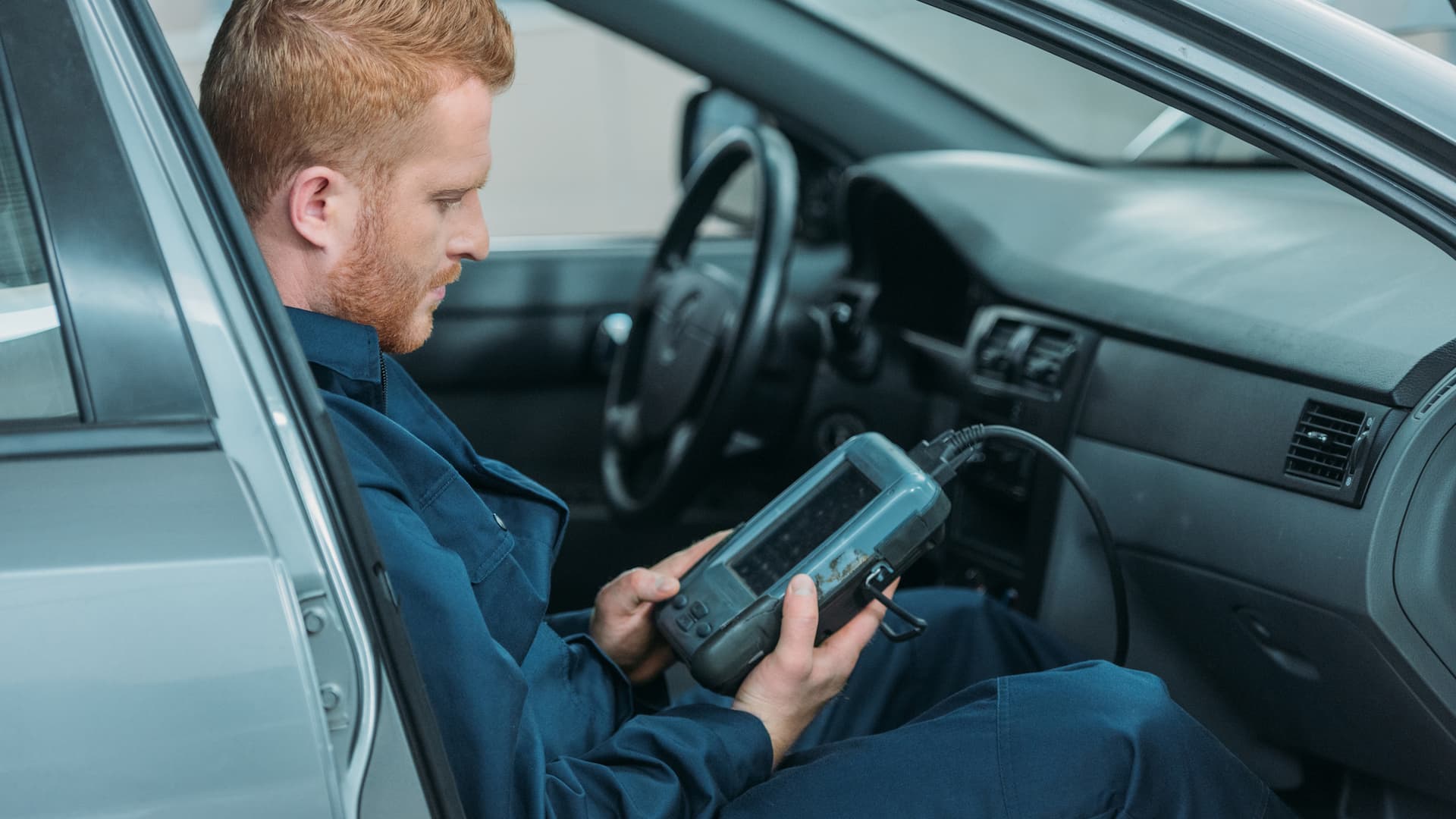
A bad injector can trigger the check engine light. A scan tool can help identify whether the issue is related to a specific injector or another part of the fuel system.

5. Poor Fuel Efficiency

When fuel injectors don’t regulate fuel flow properly, fuel consumption can rise. You may notice reduced fuel economy or more frequent stops at the fuel pump, even if your driving habits haven’t changed.

6. A Failed Emissions Test

A damaged fuel injector can cause insufficient or incomplete fuel combustion. Naturally, this results in increased emissions by the car. In some cases, a fuel injector leak can also cause the catalytic converter to burn. So a failed emissions test could potentially indicate a faulty fuel injector.

What Causes Fuel Injectors to Go Bad?

Fuel injectors are built to last, but they operate in a demanding environment where heat, pressure, and constant fuel flow can take a toll over time. 

Here are some common causes behind a faulty fuel injector or overall fuel injection system problems:

1. Normal Wear and Tear

Like many engine components, injectors can simply wear out with age. Over time, internal parts degrade, affecting how accurately fuel is delivered into the combustion chamber.

2. Contaminants in the Fuel System 

Dirt, debris, or poor-quality fuel can clog an injector. A neglected fuel filter or restricted fuel flow can allow particles to reach the injectors, affecting spray patterns and combustion.

3. Lack of Maintenance

Skipping routine oil changes and general service can indirectly impact engine and fuel system health. Deposits build up more easily, reducing fuel efficiency and increasing strain on components.

4. Driving Conditions and Habits

Frequent stop-and-go driving, heavy loads, or extreme operating conditions can stress the engine and fuel injection system, potentially shortening injector lifespan.

Can You Drive With a Bad Fuel Injector?

You can, but it’s not recommended. Your vehicle may still run with a bad fuel injector, but remember — injectors play a key role in efficient combustion

A faulty injector can deliver the wrong amount of fuel, disrupting combustion, causing engine misfires, and uneven performance. In some cases, excess fuel can enter the cylinder and foul spark plugs. Over time, this increases engine wear.

Fuel leaks from a damaged injector can also pose safety risks, especially if fuel collects in hot engine areas. Additionally, poor fuel efficiency and higher fuel consumption may make the vehicle more expensive to operate.

Because of these risks, it’s best to have a faulty fuel injector checked and repaired ASAP.

How Much Does It Cost to Replace Fuel Injectors?

The cost of fuel injector replacement will vary depending on the vehicle, the number of injectors involved, and labor rates. Generally, replacing fuel injectors can cost anywhere from $335 to $2,000

A new fuel injector can be a large part of the total cost, ranging from $35 to $1,600 per injector, and multiple injectors may be replaced for balanced performance. 

However, note that you don’t always need to replace the fuel injector. Sometimes, your mechanic may simply recommend a thorough cleaning of the fuel injection system instead.

We're here to keep you moving

Our experienced mobile mechanics are ready to help.

Get a Quote

1-Year | 12,000-Mile Warranty