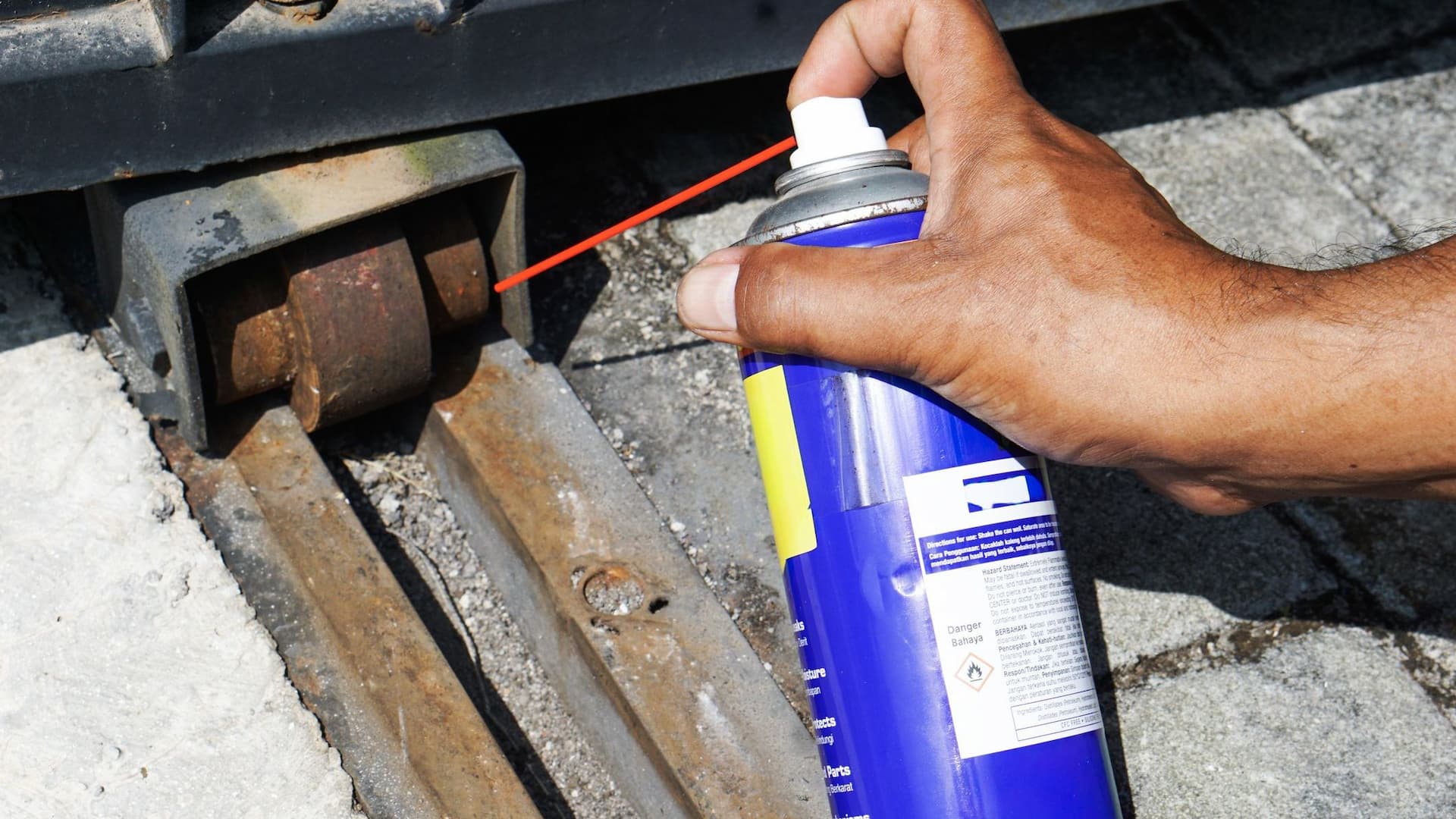
Squeaky brakes are annoying, and that high-pitched sound can make a perfectly safe car feel like something’s wrong.
In moments like that, the can of WD-40 in your cabinet may be tempting. You may even wonder: Can I spray WD-40 on my brakes to stop squeaking?
The quick answer is: No.
While WD-40 might sound like an easy solution, it’s actually one of the worst things you can put on your brake system. We’ll explain why, and what you should do instead.
This Article Contains:
- Does WD-40 Stop Brake Squeaking?
- Why You Shouldn’t Use WD-40 on Brakes
- What You Can Do to Stop Brake Squeaking
Does WD-40 Stop Brake Squeaking?
Only temporarily, and at the cost of your safety.
WD-40 may quiet the noise for a moment because it reduces friction. But your brakes depend on friction to work. Anything that lowers friction on the pads or rotors immediately affects how well your car can stop.
Most brake squeaking isn’t caused by “dry” brakes. It’s usually fixable issues, such as dust buildup, light surface rust, or worn hardware — things that WD-40 cannot safely fix, and doesn’t address the underlying cause.
For more reasons behind the brake squeaks, take a look at 10 Common Causes of Squeaky Brakes (+ How to Fix Them).
Why You Shouldn’t Use WD-40 on Brakes
Before we get into safer solutions, it’s important to understand why WD-40 is a poor match for your braking system.
1. WD-40 Reduces Brake Stopping Power
Brakes work by pressing brake pads against the rotors with enough friction to slow the car.
WD-40, on the other hand, is a lubricant and water-displacer.
That means it:
- Creates a slippery film
- Reduces friction
- Increases stopping distance
Even a slight reduction in friction can significantly impact your ability to stop in an emergency. In other words, WD-40 on brakes can turn a minor squeak into a serious safety hazard.
2. WD-40 Contaminates Pads and Rotors
Brake pads are slightly porous. When WD-40 soaks into them, it causes contamination that prevents the pad from gripping the rotor properly. Contaminated pads may glaze over, further reducing brake performance and sometimes worsening the squeak.
WD-40 can also leave a residue that glazes or coats the rotor surface — meaning the rotors may need to be machined or replaced to restore proper braking.
3. WD-40 Can Damage Rubber Seals and Brake Components
Brake systems operate under high heat and high pressure. WD-40 isn’t designed for this environment. Over time, it can damage rubber parts such as caliper seals and dust boots. Damaged seals can cause hydraulic fluid leaks, sticking calipers, or even total brake failure.
So, how do you solve the brake squeaks?
What You Can Do to Stop Brake Squeaking
There are safe, effective ways to stop brake squeaking without using WD-40:
1. Use a Dedicated Brake Cleaner
Brake squeaks are often caused by:
- Moisture
- Rust film (especially after rain or car washes)
- Dust buildup
Brake cleaners are designed to dissolve contaminants without harming the friction material. A quick cleaning can reduce or eliminate unwanted noise.
2. Apply Brake-Specific Lubricant on the Correct Parts
A brake lubricant can help reduce noise when used correctly.
Apply high-temperature brake grease only (not WD-40 or household lubricants) to:
- Caliper slide pins
- Brake pad backing plates (the metal backing, not the pad surface)
- Caliper hardware and contact points
Never apply lubricant to the rotor or the pad’s friction surface. Doing so destroys braking performance.
3. Inspect Brake Pads and Rotors
Some brake squeaks come from pads with a high metal content, which can produce noise even when everything is working normally. However, squeaking may also signal actual wear or damage.
Check if:
- Pads are worn down to the wear indicator
- Rotors look uneven or warped
If pads or rotors show visible wear, replacement is the safest and most effective solution.
4. Consider “Bedding-In” New Brakes
New pads often squeak until they’re properly bedded in. Bedding helps transfer an even layer of brake compound onto the rotor, which improves both performance and quietness.
A simple series of controlled stops is usually all it takes.
5. When to See a Mechanic
You should get a professional inspection if:
- The squeak persists
- The brakes feel weak or inconsistent
- You need more pedal pressure to stop
- You hear grinding (metal-on-metal contact)
Grinding usually means the pads are worn through, and you’re damaging the rotors. This should be addressed immediately.
Stop the Squeak, Not Your Brakes
WD-40 might quell squeaky brakes for a moment, but it’s not meant for braking systems and causes far more harm than good. Instead, use proper brake cleaners, apply brake-specific lubricants to the correct parts, and get your brakes inspected when needed.
The safest and most effective way to eliminate brake squeaking is to fix the real cause, not just silence the symptom.
If you need help diagnosing brake problems, AutoNation Mobile Service is available 7 days a week. Our expert technicians can come right to your driveway, perform repairs on the spot, and a 12-month | 12,000-mile warranty backs all work done.