
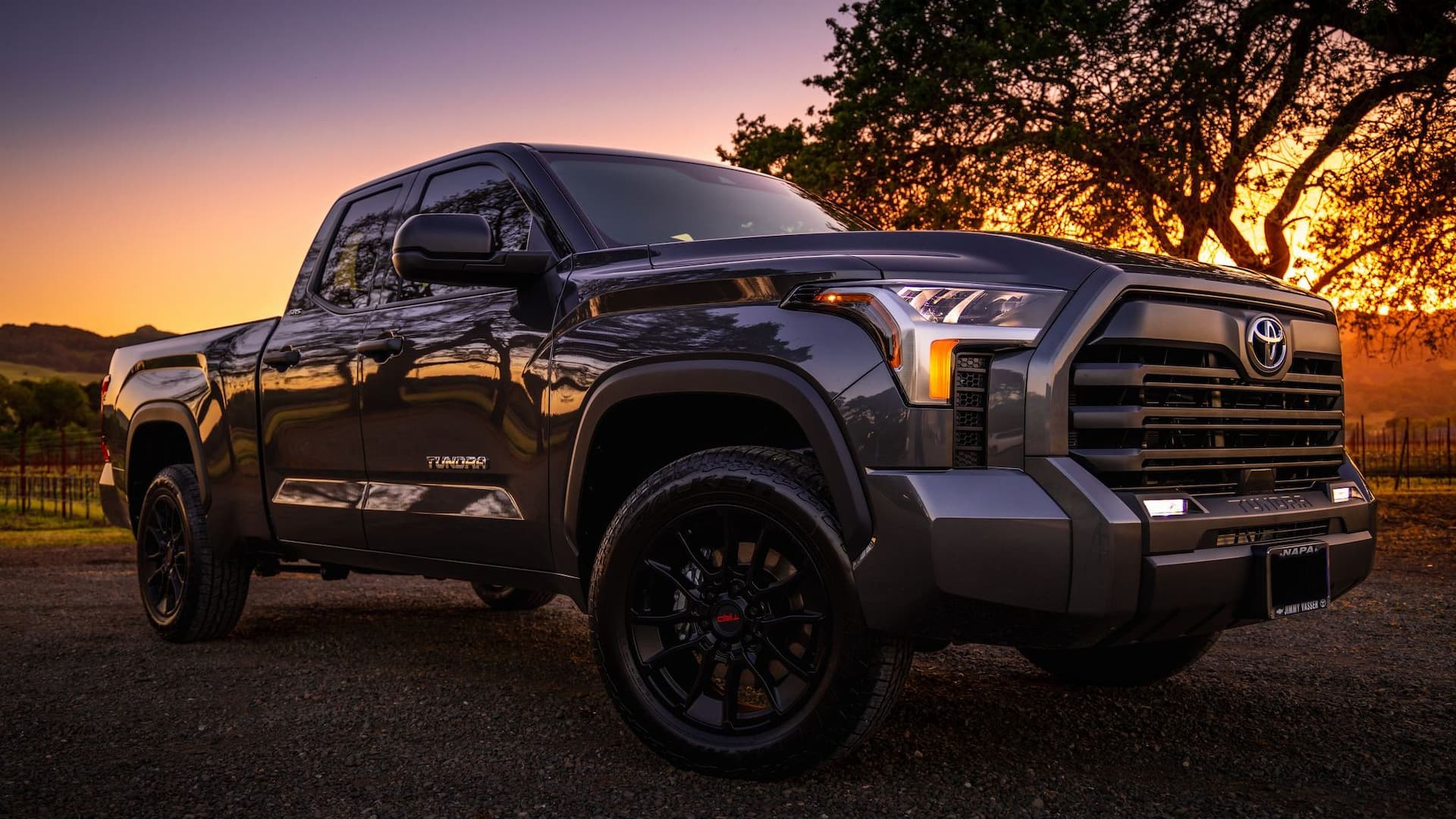
The Toyota Tundra is a full-size pickup truck known for its durable construction and long-term dependability. It’s often chosen by drivers who need a reliable truck for towing, hauling, off-road use, or high-mileage driving.
Toyota Tundra’s ranking in reliability indexes:
- The 2026 Toyota Tundra received a J.D. Power Quality & Reliability score of 83/100, placing it in the “Great” category.
- According to Edmunds, the 2026 Toyota Tundra has an overall expert rating of 7.0/10, reflecting strong towing capability, interior space, and technology features.
Problems impacting Toyota Tundra reliability:
- Engine failure concerns and recalls (2022–2025 model years)
- Turbocharger and powertrain issues
- Transmission hesitation or rough shifting
- Electrical and infotainment glitches
- Wind noise and interior rattles
- Air injection pump failures
- Leaks and rusting
Need a deep dive?
Keep reading to learn more about Toyota Tundra reliability, average annual maintenance costs, warranty coverage, and the model years worth considering.
This Article Contains:
- Toyota Tundra Reliability Rating Overview
- 7 Common Problems Reported by Toyota Tundra Owners
- Toyota Tundra Maintenance Cost Breakdown
- Which Toyota Tundra Models Are Worth Buying (& Years to Avoid)
- How Long Can a Toyota Tundra Last?
- Toyota Tundra vs. Ford F-150 and GMC Sierra
- What You Need to Know About Toyota Tundra Warranty Coverage
Toyota Tundra Reliability Rating Overview
Here’s how the Toyota Tundra performs in reliability studies:
1. J.D. Power
The 2026 Toyota Tundra received a J.D. Power Quality & Reliability score of 83/100, placing it in the “Great” category.
These ratings indicate:
- Strong ownership satisfaction
- Good resale value
- Competitive predicted reliability for a full-size truck
2. Edmunds
According to Edmunds testing, the 2026 Toyota Tundra received an overall expert rating of 7.0 out of 10.
Edmunds notes that the Toyota Tundra offers a comfortable cabin, smooth ride quality for a pickup truck, strong towing capability, and user-friendly infotainment features.
While these reliability rankings provide a general overview, knowing the most commonly occurring problems gives a clearer picture of long-term ownership.
7 Common Problems Reported by Toyota Tundra Owners
These are some of the most frequent complaints about the Toyota Tundra:
1. Engine Failure Concerns
The current generation (2022–2025) Toyota Tundra introduced a brand new twin-turbo V6 engine, but some models have been linked to engine failure recalls. There have been plenty of owner complaints about knocking noises, sudden power loss, and, in some cases, complete engine failure.
2. Turbocharger and Powertrain Issues
Certain newer Tundra models may experience turbocharger component issues such as hesitation under acceleration, reduced boost pressure, or inconsistent performance affecting drivability.
3. Transmission Hesitation and Rough Shifting
Some first-time owners of the 2022 model year report delayed throttle response, hard downshifts, or rough shifting at lower speeds, particularly during towing or stop-and-go driving.
4. Infotainment and Touchscreen Glitches
New Tundra models have also experienced infotainment system lag, touchscreen freezing, Bluetooth connectivity issues, backup camera glitches, and occasional software reset problems.
5. Wind Noise and Interior Rattles
Some drivers report excessive wind noise around the side mirrors and doors at highway speeds in newer Tundra generation models, along with dashboard and interior trim rattling.
6. Secondary Air Injection Pump Failures
The 2007 and 2013 Toyota Tundra years are known for experiencing secondary air injection pump issues. It’s an emissions system component in Toyota trucks that helps reduce pollution during cold starts.
When it fails, it can trigger the check engine light or activate the limp mode, leading to expensive repairs if not addressed early.
7. Exhaust Manifold Leaks and Rust Concerns
First-gen Tundra trucks with high mileage, especially those frequently driven in colder climates, may develop exhaust manifold leaks, rust-related corrosion, or underbody rust over time.
While some of these problems are generation-specific, ownership costs and maintenance frequency also affect long-term reliability.
Toyota Tundra Maintenance Cost Breakdown
The average cost to maintain a Toyota Tundra is about $600 per year, which is significantly lower than the average of $940 for many full-size trucks.
Ownership data also shows:
- Drivers visit repair shops for unscheduled repairs about 0.3 times per year, matching the average for full-size trucks and slightly lower than the 0.4 average across all vehicles.
- The likelihood of a severe repair is 18%, which is the same as the average for a full-size truck.
Repair costs can vary based on your vehicle’s model year, which is why it’s important to know which Toyota Tundra years are considered the most reliable.
Which Toyota Tundra Models Are Worth Buying (& Years to Avoid)
Here’s a look at the most to least reliable pickup truck model years:
A. Reliable Model Years
Several Toyota Tundra model years are widely regarded as dependable because of their proven engine designs and durability. These include:
- 2020 model year: The 2020 Toyota Tundra introduced infotainment upgrades like Android Auto and Apple CarPlay. It also continued using Toyota’s proven V8 powertrain, which many Tundra owners viewed as dependable. The truck also received updated safety features and strong highway safety ratings, positioning it as a reliable truck.
- 2019 TRD Pro trim levels: The 2019 Tundra year stands out for pairing strong V8 performance with newer safety features like Toyota Safety Sense and lane departure warning. It’s often viewed as one of the more dependable second-generation Tundra models. The 2019 TRD Pro trim level is especially popular among Tundra owners looking for off-road capability and reliable performance.
- 2014 model year: The 2nd-gen 2014 Tundra is widely considered one of the best model years because it combines Toyota’s proven 5.7L V8 engine with updated styling and a more refined interior. Many owners praise this model for its towing durability, strong resale value, and long-term dependability.
- 2007 and 2012 models: These second-generation Tundra years remain popular for their strong towing capability, durable V8 engines, and longer lifespan when maintained properly. Many buyers still view these models as reliable full-size trucks with proven durability.
Even though the Toyota Tundra has a reputation for legendary reliability, a few model years have received more complaints than others.
B. Model Years to Avoid
These Tundra model years have recorded plenty of owner complaints related to design changes, powertrain concerns, and long-term reliability issues:
- 2022 model year: The redesigned 2022 Tundra introduced a new twin-turbo V6 engine, updated infotainment system, and newer Toyota Safety Sense features. As the first model year of the current generation, the redesigned truck reported more issues than many older Tundra models. Owners raised concerns about engine recalls, drivetrain hesitation, infotainment glitches, failing headlights, and inconsistent fuel economy.
- 2013-2014 model years: Many 2nd-gen Tundra models, like those from 2013 and early 2014, have reported automatic transmission issues, including hard shifting and occasional slippage.
- 2010-2013 model years: These second-gen Tundra trucks are generally dependable but may experience secondary air injection pump failures, exhaust manifold leaks, suspension wear, or interior wear over time.
- 2000-2003 model years: Older first-gen Tundra trucks may experience frame rust, suspension wear, and exhaust-related issues, especially in colder climates.
Now that you know which Toyota Tundra model years are worth your money, let’s take a look at their average lifespan.
How Long Can a Toyota Tundra Last?
Many new Tundra trucks are known to last 150,000 to 250,000 miles, but with regular maintenance, some owners report surpassing 300,000 miles.
Several factors affect long-term reliability:
- Consistent maintenance and servicing
- Towing and payload use
- Driving habits
- Rust prevention
- Addressing repairs early
TIP: If you’re a first-time buyer planning to get a used Tundra, be sure to review its service history carefully. Also, choose a vehicle with lower mileage, and go on a test drive before purchasing.
Eyeing other options in the same segment?
Let’s understand how the Toyota Tundra competes with some popular full-size pickup trucks.
Toyota Tundra vs. Ford F-150 and GMC Sierra
According to J.D. Power 2026 ratings, the Ford F-150 received a Quality & Reliability score of 86/100, while the GMC Sierra received a score of 82/100. The Toyota Tundra earned a reliability rating of 83/100, placing it among the most reliable pickup truck options in its segment.
This reliability can also translate into lower long-term ownership expenses. The GMC Sierra has an average annual repair cost of about $730, while the Ford F-150 averages around $790 per year. By comparison, the Toyota Tundra averages roughly $600 annually in maintenance and repair costs.
Based on this, most buyers prefer the Toyota Tundra for its legendary reliability, proven V8-powered models, smooth ride comfort, and fewer long-term ownership concerns.
But what further adds to this trust is Toyota’s comprehensive warranty plans.
Let’s check them out.
What You Need to Know About Toyota Tundra Warranty Coverage
Toyota offers standard warranty coverage for the Tundra, including additional protection for hybrid-equipped (i-Force MAX) models:
- Basic limited warranty: Lasts for 3 years or 36,000 miles and covers defects in automotive materials or workmanship for most vehicle components. This includes coverage for many electrical systems, factory-installed parts, and other essential components.
- Powertrain warranty: This coverage lasts for 5 years or 60,000 miles and includes major engine, transmission, and drivetrain components. This protection can help reduce repair costs tied to expensive powertrain-related issues.
- Rust-through coverage: Lasts for 5 years with unlimited miles, helping protect body panels from corrosion perforation over time.
- Hybrid battery coverage warranty (i-FORCE MAX models): Hybrid Toyota trucks have battery coverage for 10 years or 150,000 miles, providing added peace of mind for long-term ownership.
- Roadside assistance: Lasts for 2 years with unlimited miles. Includes towing assistance, battery jump-starts, flat tire service, lockout assistance, emergency fuel delivery, and support during roadside or highway safety emergencies.
Keep Your Toyota Tundra Reliable with Regular Maintenance
The Toyota Tundra is known for its durability, but like any full-size pickup truck, long-term reliability depends heavily on your maintenance habits.
Routine inspections, fluid changes, and early diagnosis of warning signs can go a long way in improving the drivability of your Toyota truck and ensuring reliable performance over time.
AutoNation Mobile Service makes maintaining your Toyota Tundra more convenient by bringing certified mobile technicians directly to your driveway. Every service also includes upfront pricing and a 12-month/12,000-mile warranty for added peace of mind.
Book your automotive service today and keep your truck running like brand new.