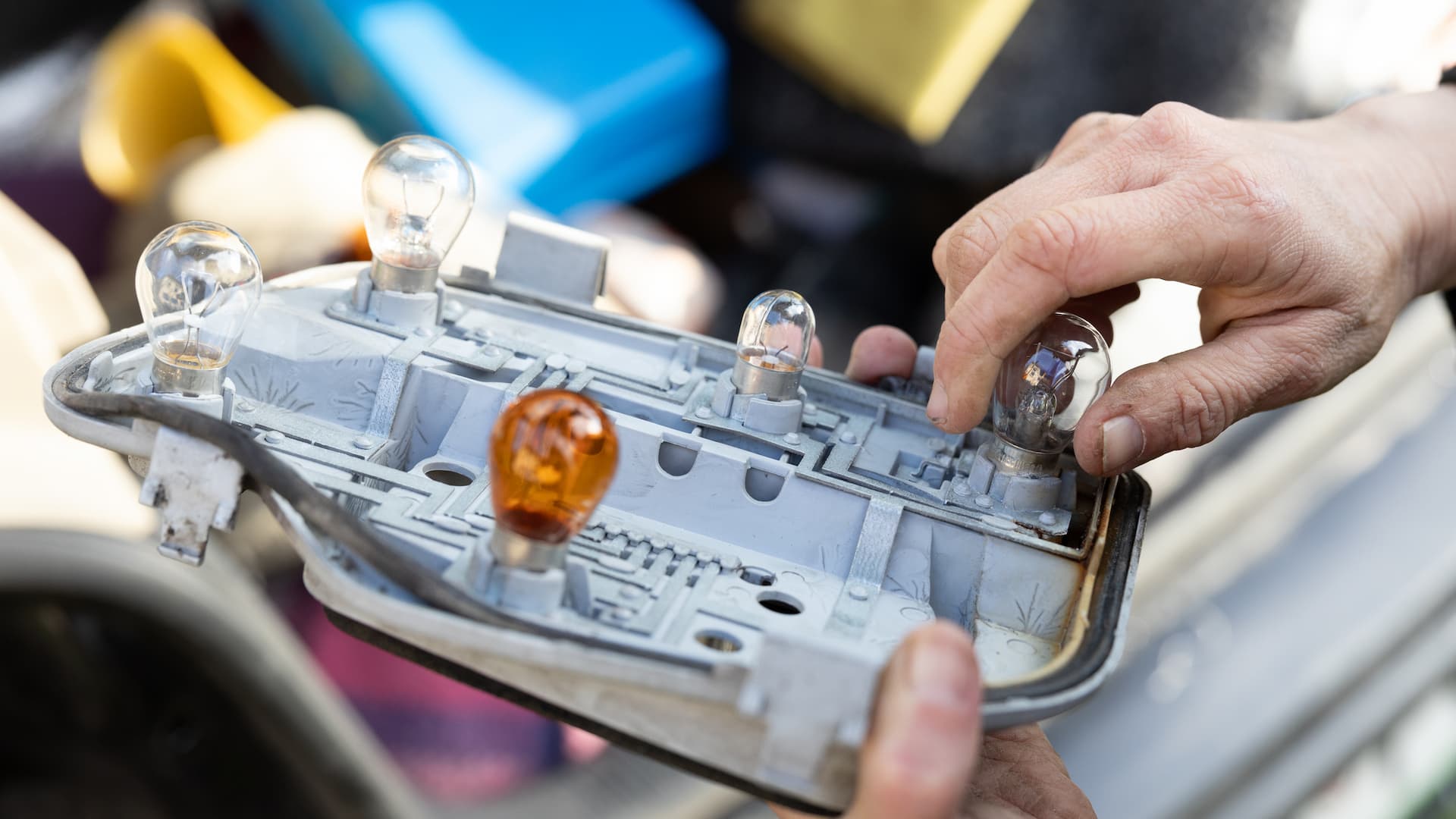
Replacing a faulty taillight can cost about $60 for a basic bulb replacement and around $800 for a full LED assembly. The final price depends on factors such as labor charges, the vehicle make and model, and your location.
But should you replace a faulty taillight right away?
In this guide, we’ll break down the average tail light replacement cost and discuss the urgency of this repair. We’ll also help you understand why this service is best left to a professional.
This Article Contains:
- How Much Does a Taillight Replacement Cost?
- 5 Key Factors Affecting the Taillight Replacement Cost
- Is It Worth Replacing a Faulty Taillight?
- 5 Glaring Signs That You Need a Taillight Replacement
- How Long Do Taillights Last?
- Can You Replace a Taillight Yourself?
Let’s get started!
How Much Does a Taillight Replacement Cost?
The average taillight replacement cost is $60-$800, depending on whether you’re replacing just the bulb, lens, or full assembly:
1. Bulb Replacement ($60-$270)
The cost is on the low end if only the bulb has burned out.
Here’s a breakdown:
- Bulbs: $10-$30 for a standard halogen bulb and $70-$100+ for LED bulbs
- Labor: $50-$170 (the job takes about 10 to 15 minutes)
2. Lens Replacement ($100-$400)
If the lens is cracked or broken but the bulb is still functional, you may only need to replace the lens cover.
Here are the estimated costs:
- Lens: $50-$200
- Labor: $50-$200 (takes 15 to 20 minutes)
3. Full Assembly Replacement ($300-$800)
Many modern cars (especially those with LED or integrated lighting) require replacing the entire taillight assembly when it fails. Your costs may include:
- Taillight assembly: $150-$500
- Labor: $150-$300 (takes 30 to 60 minutes)
5 Key Factors Affecting the Taillight Replacement Cost
Below are the factors a qualified mechanic considers when quoting you for a taillight replacement:
- Vehicle make and model: Since parts on common vehicle models are widely available, it’s cheaper to replace them. Luxury or newer vehicles often need specialized assemblies that cost several hundred dollars. For example, a halogen bulb for a Toyota Corolla can be under $30, while a complete LED unit for a BMW may exceed $500.
- Taillight type: Swapping a halogen bulb costs little, but LED and xenon lights are far more expensive.
- Location or region: Replacing a taillight is usually more expensive in large cities or areas with higher living costs (such as San Francisco). Shops in rural regions often charge less for labor and parts.
- Original Equipment Manufacturer vs. aftermarket parts: OEM parts are more expensive, but they guarantee a proper fit and reliability. Meanwhile, aftermarket parts cost less, though quality and durability may vary.
- Labor costs and additional repairs: Labor costs are usually minimal when replacing a bulb. Meanwhile, a full assembly replacement costs more because it takes longer, especially if the panels need to be removed. The costs can rise further if the wiring, sockets, or control modules are damaged.
Is It Worth Replacing a Faulty Taillight?
Yes, and you should attend to this immediately.
Why?
A working taillight is essential for both safety and legal reasons.
Let’s dive deeper into the details:
- Driving with a broken taillight is illegal in most regions and can lead to fines if you’re pulled over.
- Beyond the legal issue, neglecting taillight replacement raises the risk of accidents. Other drivers may not notice your vehicle at night or in bad weather, increasing the chance of rear-end collisions.
- Replacing a faulty taillight is a relatively small expense compared to the fines, safety risks, and potential repair bills resulting from an accident.
5 Glaring Signs That You Need a Taillight Replacement
These are common signs that indicate your taillight needs replacing:
- One or both taillights don’t turn on: If only one side is out, it’s often a failed bulb or a damaged socket that needs replacing.
NOTE: If neither light comes on when you switch on your headlights, the issue may be a blown fuse, a bad relay, or faulty wiring. In such cases, the mechanic will fix these problems independently, and you likely won’t have to replace the taillights. - Dim light: If one taillight looks dimmer than the other, the bulb is likely nearing the end of its lifespan. You’d need to replace it to ensure both visibility and safety. For best results, replace both bulbs simultaneously so brightness stays consistent.
- Cracks or damage to the lens: A cracked lens can let in moisture, which may fog up the light or damage the electrical components inside the bulbs. Over time, this leads to dimmer illumination or complete failure.
- Electrical issues (flickering or inconsistent lighting): Flickering or lights that only work intermittently often point to wiring or socket problems. These issues can worsen quickly and require light and wiring repairs.
- Dashboard warning light: When a bulb fails on most modern vehicles, you’ll usually see a warning sign displaying a bulb icon with an exclamation mark. If you see this dashboard warning light, inspect the taillight and replace it immediately if needed.
How Long Do Taillights Last?
The lifespan of a taillight depends on the type of bulb your car uses:
- Standard halogen bulbs: These last 1-2.5 years on average.
- LED taillights: Last for 10-15 years, but you may have to replace the entire assembly if your lights fail.
NOTE: Moisture, accidents, or wiring problems can shorten the lifespan of your taillights.
Can You Replace a Taillight Yourself?
No, a DIY taillight replacement can be complicated if you lack experience. An improperly installed light may cause wiring issues, water leaking into the light assembly, or reduced visibility.
Hiring a professional ensures proper installation, safe wiring, and proper sealing. This helps you stay safe on the road and avoid fines.
Here’s everything you need to know:
- Full assembly replacements: Installing a new assembly requires removing panels, disconnecting wiring, and aligning the unit correctly. Making mistakes here can cause loose connections or misaligned lights that don’t meet legal standards.
- Electrical or wiring issues: Problems like bad sockets, damaged wiring, or faulty modules are far beyond most DIY skill sets. They need diagnostic tools and expertise to repair safely.
- Bulb swaps: Swapping a standard bulb is a straightforward task. It usually costs under $30 and takes only a few minutes with basic tools. But if you want peace of mind and secure connections, let a mechanic handle it.
Taillight Bulb Replacement Steps
Here’s how a mechanic would typically replace a taillight bulb:
- Park the car on a flat surface, engage the parking brake, switch off the ignition, and disconnect the battery.
- Open the trunk or rear hatch to access the taillight assembly.
- Remove the interior panel or access cover behind the taillight.
- Disconnect the wiring harness and twist the bulb socket out of the housing.
- Pull out the old bulb and push the new one firmly into the socket.
- Reinsert the socket, reconnect the wiring, and secure the panel.
- Reconnect the battery and test the lights to ensure the new bulb works correctly.
Need a more in-depth walkthrough?
Check out our complete guide to replacing a taillight bulb.
Brighten Up Your Drive with AutoNation Mobile Service
A faulty taillight can make your car harder to see at night or in bad weather, putting you at risk of accidents or fines. That’s why it’s essential to have the light replaced by a mechanic when you notice the warning signs.
With AutoNation Mobile Service, you don’t have to worry about shop visits when your lights fail. Our trained technicians come to you and replace your faulty taillight right from your driveway. We also back our services with a 12-month, 12,000-mile warranty.
Book an appointment with us and keep your taillights shining bright wherever the road takes you.