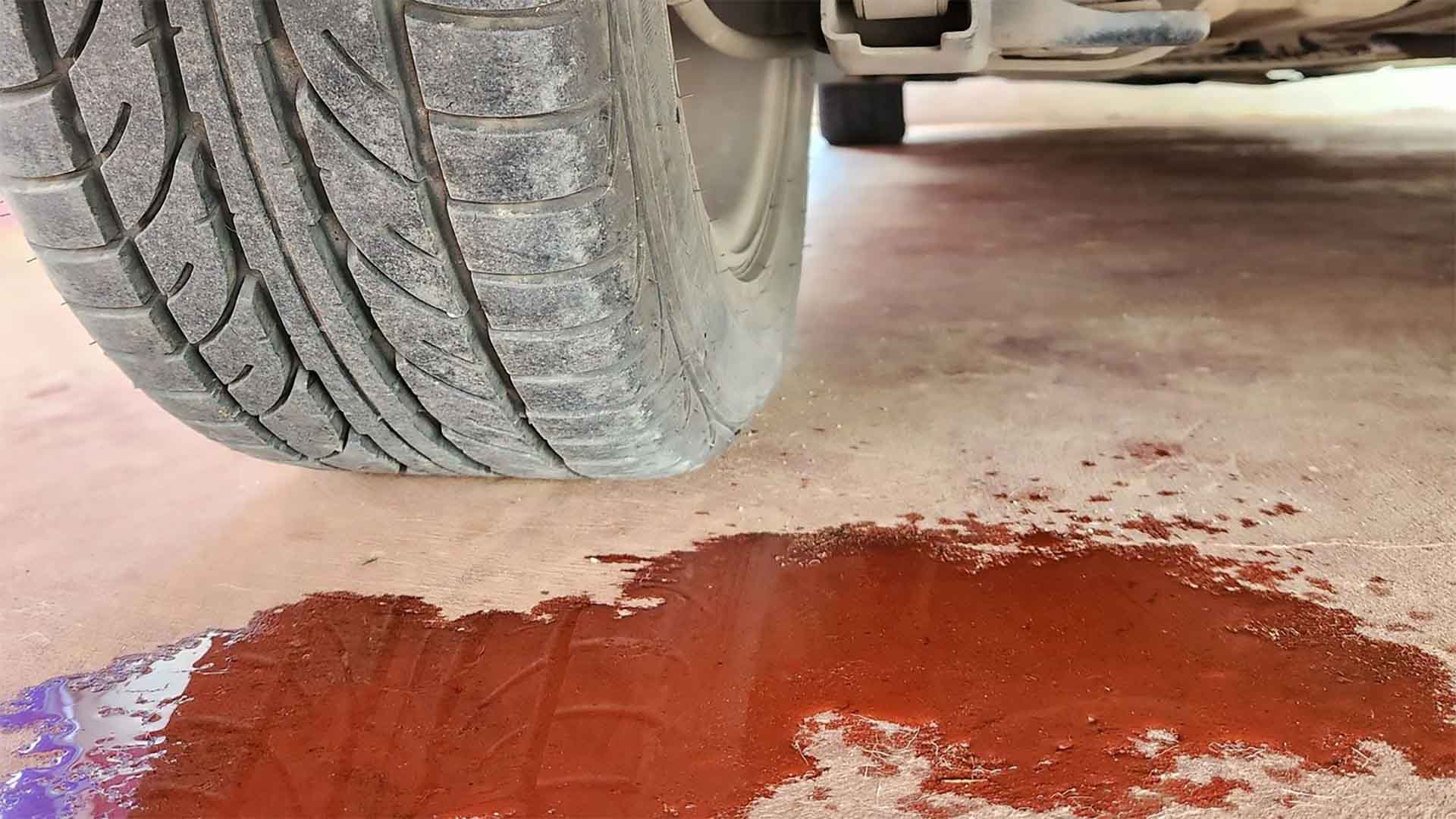
Noticing a transmission fluid leak is stressful, but don’t panic — act fast.
Pull over safely and avoid driving further if shifting feels off. Check for red or brown fluid under the car.
A leak can lead to serious damage, so identifying the source early helps you protect the transmission and your wallet.
This guide breaks down symptoms, immediate steps you can take, and preventive measures.
This Article Contains:
- What to Do If Your Transmission Fluid Is Leaking (5 Immediate Steps)
- How Mechanics Diagnose a Transmission Leak
- How You Can Prevent Transmission Fluid Leaks
- 4 Quick FAQs About Transmission Fluid Leaks
What to Do If Your Transmission Fluid Is Leaking (5 Immediate Steps)
Transmission fluid usually shows a few telltale signs, like:
- Red or pink oily drops under your car
- Drips forming around the front-middle or middle-rear area
- Slow dripping, steady wetness, or a small puddle
- A burning smell after driving
- Slipping, hesitation, or whining noises
- A check engine or transmission warning light
If you spot any of these, move quickly with the following steps:
Step 1: Confirm the Leak Is Transmission Fluid
Transmission fluid has a very distinct look and feel: it’s usually red or pink when fresh, and turns brown as it ages. It feels slick and oily — thicker than coolant but not as heavy as motor oil.
If the puddle matches that color and texture, it’s almost always ATF and not engine oil, coolant, or power steering fluid.
Step 2: Avoid Driving Unless Absolutely Necessary
Transmissions rely on fluid to create hydraulic pressure, cool the internal components, and lubricate moving parts.
When fluid is leaking, all three functions drop instantly.
Even a short drive with low pressure can cause slipping, hard shifts, or rapid overheating. To make it worse, driving can worsen the issue, leading to more expensive repairs.
Step 3: Check the Fluid Level if Your Car Has a Dipstick
Check the level with the engine running and at operating temperature for an accurate reading. A low level confirms the leak and gives you an idea of how severe it is.
You can top it off just enough to reach a nearby mechanic, but don’t rely on it as a fix.
Step 4: Try to Spot Where the Leak Might Be Coming From
Leaks near the front-middle often point to the pan gasket, cooler lines, or the bell housing.
Wetness closer to the wheels can indicate axle or output shaft seal issues.
Step 5: Schedule a Professional Diagnosis ASAP
Most leaks come from worn gaskets, loose fittings, or aging rubber seals. These are usually straightforward to fix when caught early, but dangerous if ignored.
A quick inspection prevents bigger issues.
Want a deeper breakdown of all symptoms and causes?
Head over to our detailed guide on transmission fluid leaks for an in-depth look at what each sign means.
Once your car is in professional hands, the process gets much more precise.
How Mechanics Diagnose a Transmission Leak
Mechanics use a combination of visual checks and diagnostic tools to pinpoint the source, which includes:
- Lift inspection: They look for wet spots, loose bolts, cracked lines, or failing seals.
- UV dye test: They use an automotive leak detection kit with fluorescent dye and a UV light to trace the exact path of the leak.
- Pressure testing & line check: This ensures cooling lines and internal passages hold pressure without seeping.
- Fluid condition report: The color, smell, and contaminants in the fluid reveal overheating, clutch wear, or internal damage.
While a professional should handle any transmission leak repair, there are several steps you can take to prevent leaks in the first place.
How You Can Prevent Transmission Fluid Leaks
A few simple habits go a long way:
- Regular fluid level checks: Spotting low or dark fluid early prevents seal stress and overheating.
- Scheduled transmission service: Routine service catches worn gaskets, loose bolts, and aging O-rings before they become leaks.
- Address overheating issues: Heat is the enemy. Fixing cooling problems keeps seals from hardening and cracking.
- Keep the undercarriage protected: Debris and impact damage can rupture lines or dent the pan, so avoid rough terrain when possible.
4 Quick FAQs About Transmission Fluid Leaks
Let’s answer some burning questions about transmission fluid leaks:
1. Is Transmission Fluid Leak a Serious Issue?
It is.
Even a small leak can lead to low pressure, overheating, and major internal wear. What starts as a drip can quickly become a full transmission failure, needing expensive repairs.
2. Can I Drive With a Transmission Fluid Leak?
Short trips to a nearby shop may be okay if the leak is minor and shifting feels normal. But if the drip is steady, or the car hesitates, don’t risk it.
Tow it, or better yet, call a mobile mechanic service.
3. Will Adding Fluid Fix the Problem?
It’s only a temporary solution to keep your pump fed till you reach professional help. It won’t stop the leak or protect the system long-term.
4. Which Leaks Are Usually Cheap to Fix, and Which Cost More?
Minor pan gasket, drain plug, cooler line clamp, or O-ring repairs are often inexpensive.
In contrast, torque converter seals, internal case cracks, or damage from running with no fluid can require a rebuild or replacement, increasing the cost significantly.
Stay Safe and Let AutoNation Mobile Service Handle It On-Site
A transmission leak can start small and escalate quickly. But with fast action and the right diagnosis, you can avoid severe damage and high repair bills.
AutoNation Mobile Service brings expert mechanics to your driveway. You can easily book the services online with upfront pricing. Plus, we’ve got your back with a 12-month/12,000-mile warranty on all repairs.
Book a visit now and get your transmission inspected before the leak gets worse.