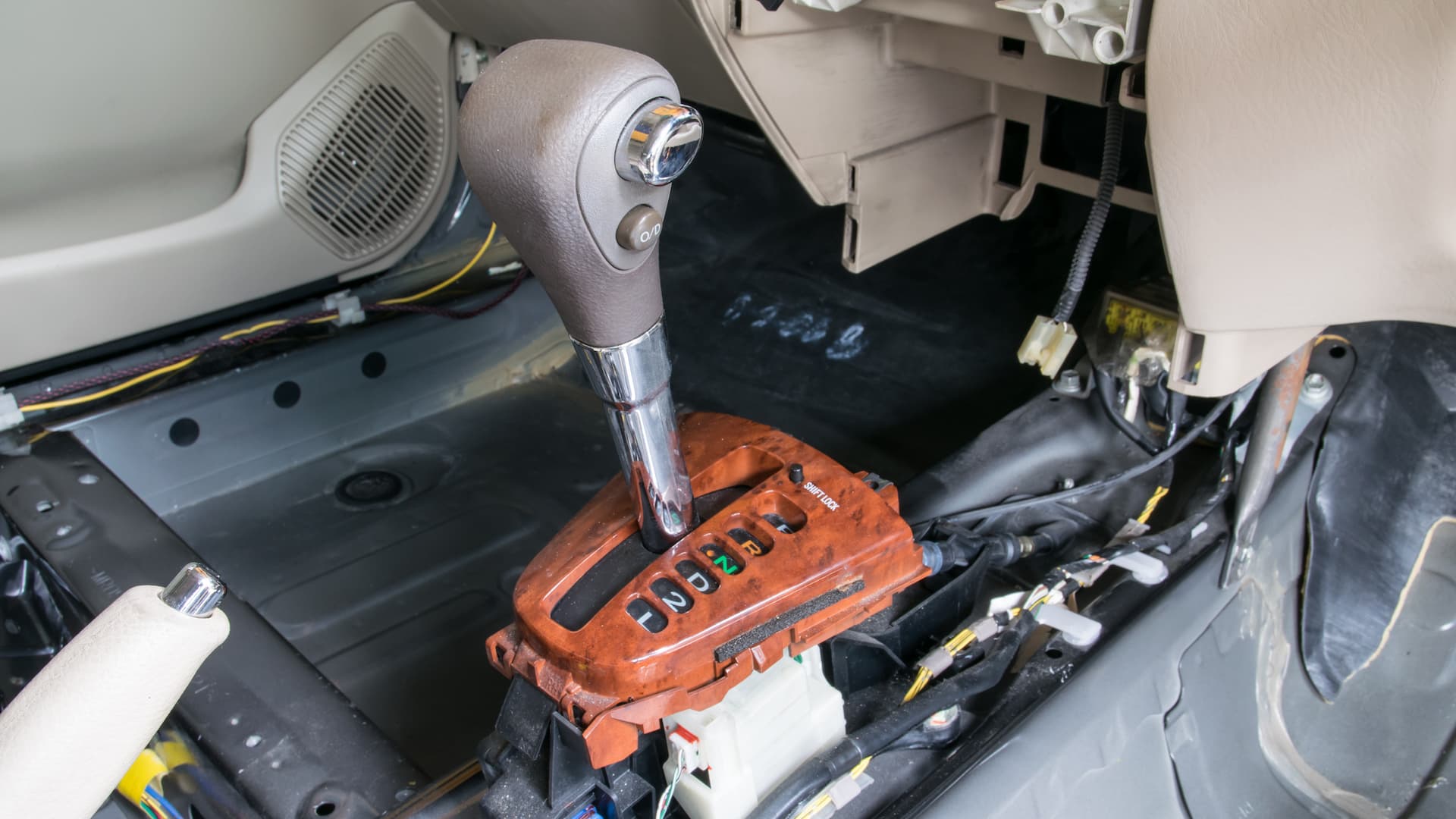
Struggling to get your car out of ‘Park’?
Or hearing a faint click every time you press the brake to shift?
You could be looking at a faulty shift-interlock solenoid.
The silver lining?
Swapping out the solenoid is usually much more affordable than repairing shifter or transmission damage later.
Let’s look at how much a shift-interlock solenoid replacement typically costs, what drives the price, and why DIY isn’t the safest route.
This Article Contains:
- How Much Does a Shift Interlock Solenoid Replacement Cost?
- 7 Signs of a Faulty Shift Interlock Solenoid
- Can You Drive with a Bad Shift Interlock Solenoid?
- How Long Do Shift Interlock Solenoids Last?
- Can You Replace a Shift Interlock Solenoid Yourself?
- 6 Simple Tips to Prevent Shift Interlock Solenoid Issues
How Much Does a Shift Interlock Solenoid Replacement Cost?
Here’s what you’re likely to pay to replace a damaged shift interlock solenoid:
A. Range
The average cost of a shift interlock solenoid replacement can range from $150 to $270.
This includes:
- Parts: $50 to $100
- Labor: $100 to $170
Let’s explore what impacts this cost.
B. Factors Affecting Cost
Here are a few other factors that influence your total replacement cost:
- Accessibility: Some luxury cars have the shift interlock solenoid built into complex electronic shifters, making it harder to access and more expensive to service. In contrast, a standard car uses a simple, standalone part, ensuring easier access and lower labor costs.
- Material of the shift interlock solenoid: Most shift-interlock solenoids use a combination of steel and plastic parts, which helps keep costs down. In comparison, units made with higher-grade alloy materials are more expensive but offer improved strength and durability.
- Parts quality: Original equipment manufacturer (OEM) shift solenoids are often more expensive but ensure a precise fit. Meanwhile, aftermarket parts may be more affordable, but their quality may vary.
- Reprogramming cost: Modern vehicles with electronic shifters require calibration or software reprogramming after replacement to sync the new solenoid with the transmission control module. Auto shops usually charge an additional fee for this.
- Additional repairs: Replacing a shift interlock solenoid can also uncover other issues, such as a worn shifter cable or a faulty brake light switch, which may increase the overall repair cost. For instance, replacing a brake light switch can add $80 to $100 to the final bill.
That said, understanding the price is only half the picture. You also need to recognize the signs of a failing solenoid.
7 Signs of a Faulty Shift Interlock Solenoid
If you spot any of these symptoms, get your vehicle checked by a mechanic right away:
- Check engine or transmission warning light is on
- The gear selector moves freely, even without pressing the brake
- Clicking or clunking sound when trying to shift
- The gear selector is stuck in ‘Park’
- The brake light doesn’t turn on
- The key gets stuck in the ignition
- Unexpected delays or jumps when shifting gears
Wondering how safe it is to drive with these symptoms?
Let’s find out.
Can You Drive with a Bad Shift Interlock Solenoid?
No, it’s not safe to drive with a bad shift interlock solenoid. This component keeps your vehicle from shifting out of Park unless you press the brake pedal, making it an essential safety lock.
When it fails, you may be unable to move the shifter, or worse, it could shift unintentionally, increasing the risk of an accident.
So, it’s best to have a qualified mechanic inspect and replace the solenoid as soon as possible.
Next, let’s see what kind of lifespan a healthy solenoid usually has.
How Long Do Shift Interlock Solenoids Last?
The shifter interlock solenoid is designed to last the life of your vehicle, but premature failure isn’t uncommon. Rough shifting, electrical problems, brake-light issues, or dirt and debris buildup can all shorten their lifespan.
Now, before you roll up your sleeves to fix the solenoid, here’s something important to know:
Can You Replace a Shift Interlock Solenoid Yourself?
Replacing a shift interlock solenoid yourself isn’t recommended unless you have solid automotive experience.
The job often involves removing interior panels, accessing the shifter assembly, and working with electrical connectors. A single mistake could cause shifting or safety issues, so it’s best to have a qualified mechanic handle the diagnosis and replacement to ensure proper operation and reliability.
To diagnose a bad shift interlock solenoid, the technician will check the ignition, brake lights, power, fuses, and then test the solenoid. If it receives power but doesn’t activate, they’ll bench-test it and replace it if faulty.
Here’s how they’ll replace the shift interlock solenoid:
- Disconnect the battery to prevent electrical issues.
- Remove the center console trim or shifter cover to access the shifter assembly.
- Locate the shift interlock solenoid near or within the shifter assembly.
- Unplug the electrical connector and remove any retaining clips or screws that secure it in place.
- Take out the faulty solenoid from the shifter assembly.
- Install the new solenoid and secure it with screws or clips.
- Reconnect the electrical connector and ensure a snug fit.
- Reinstall the console trim and reconnect the battery.
- Test the shifter to confirm it locks and releases properly when the brake pedal is pressed.
Well, you can avoid all this trouble by taking good care of your shift interlock solenoid.
6 Simple Tips to Prevent Shift Interlock Solenoid Issues
Here’s how to extend the solenoid’s lifespan:
- Avoid spills near the shifter, as liquids can damage the solenoid or shifter electronics.
- Use the parking brake before shifting into Park. This reduces strain on the shift mechanism.
- Press the brake firmly to ensure the brake switch sends a proper signal to release the solenoid.
- Avoid aggressive driving, as sudden stops and fast shifts can strain the shift mechanism.
- Regularly check your brake light bulbs and fuses during maintenance inspections, as a broken circuit prevents the solenoid from unlocking.
- Start the vehicle before shifting to ensure proper voltage supply to the solenoid for consistent operation.
Shift Interlock Solenoid Replacements Made Easy with AutoNation Mobile Service
A failing shift-interlock solenoid can prevent your vehicle from shifting out of Park or cause unsafe shifting behavior. Taking care of it early helps you avoid safety risks and more expensive transmission repairs later.
Can’t get to the shop?
No worries — AutoNation Mobile Service can come to you.
We deliver reliable repairs seven days a week, with clear, upfront pricing and a simple online booking process. For added confidence, every service also comes with a 12-month, 12,000-mile warranty.
Contact us and we’ll get your shifts back in gear.