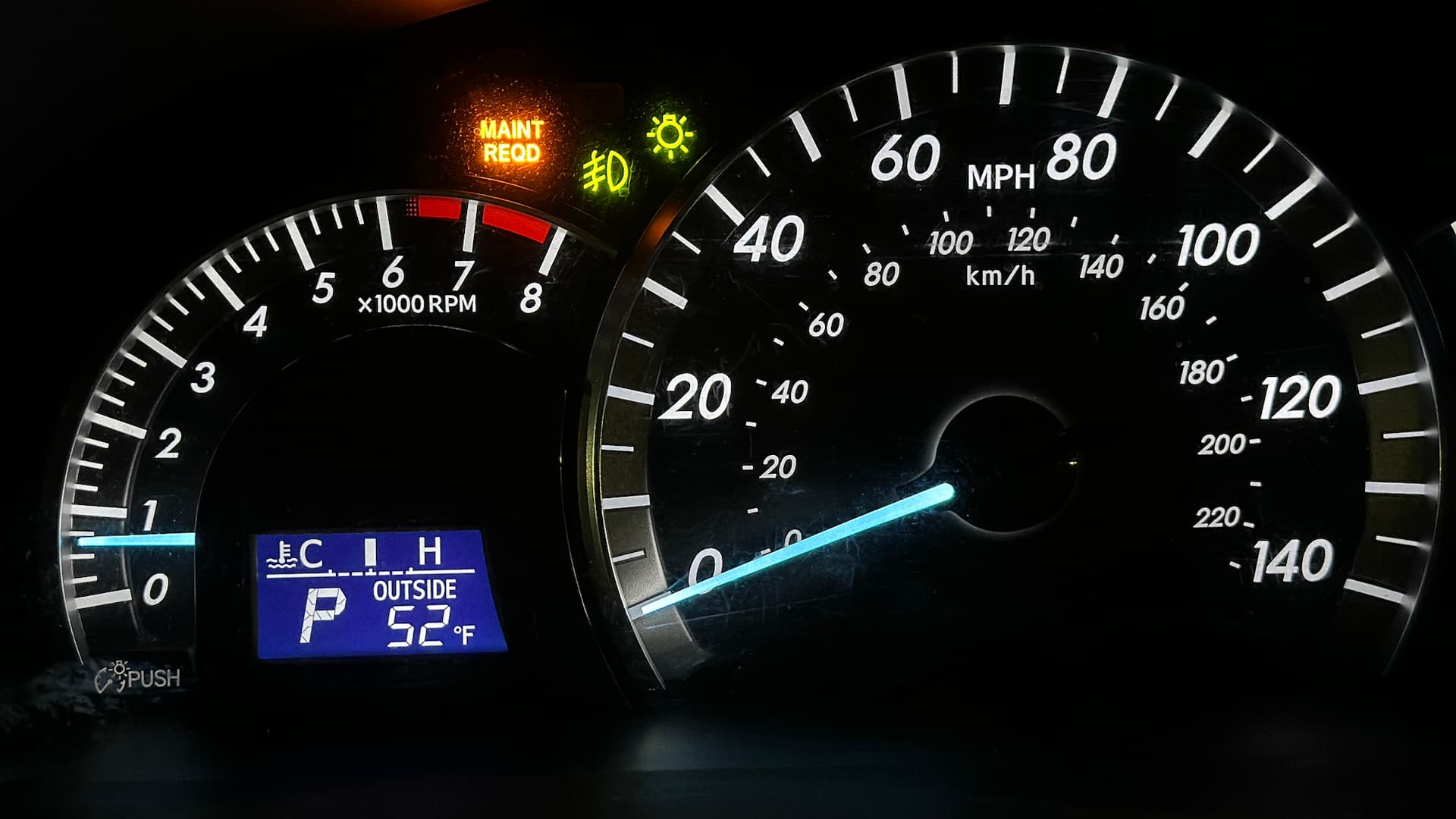
The “Routine Maintenance Required” light is part of your vehicle’s maintenance reminder system. This exact message may appear on a Mitsubishi, though on other makes, it may also appear as a:
- Maintenance Required light
- Maintenance light
- Maint Reqd notification
It means your car is due for scheduled maintenance.
Triggers:
The Maintenance Required message is typically triggered by a mileage interval or time-based maintenance schedule.
What may be due:
- Oil changes
- Tire rotation
- Fluid checks
- Brake pad checks
What to do:
- Check your car maintenance schedule and book your next maintenance service.
- Continue driving if needed, but don’t delay service too long.
- Reset the maintenance required light after servicing (manually or during service). This must be done, or the light will remain on even after maintenance is complete.
Urgency:
It’s a maintenance reminder, not a sign of immediate equipment failure. However, it’s not advisable to ignore it. Staying on top of regular maintenance helps your vehicle stay in good condition and avoid costly repairs.
For more details on this alert, what routine maintenance tasks your car may need, and when to take action, keep reading.
This Article Contains
- What Does the Routine Maintenance Required Light Mean?
- Why Does the Maintenance Required Light Come On?
- What Routine Maintenance Does Your Car Need?
- Is It Safe to Drive with the Maintenance Required Light On?
- Maintenance Required Light vs Check Engine Light: What’s the Difference?
- Car Maintenance Schedule: When to Service Your Car
- How Much Does Routine Maintenance Cost?
- How Routine Maintenance Helps Prevent Bigger Problems
What Does the Routine Maintenance Required Light Mean?
If the Maintenance Required light comes on, your car is due for regular maintenance. While the wording may differ slightly across brands, the purpose remains the same: to remind you to complete scheduled vehicle maintenance.
For example, on Mitsubishi vehicles, it typically appears as Routine Maintenance Required. On other vehicle brands, you might see this alert displayed as:
- Maintenance Required
- Maint Reqd
- Service Required
- A wrench icon or maintenance light
This message is designed to help you stay on track with preventative maintenance, reducing the risk of long-term wear or unexpected repair needs.
With that in mind, let’s explore what triggers it in the first place.
Why Does the Maintenance Required Light Come On?
The Maintenance Required light is triggered by your vehicle’s internal tracking system — essentially a set of precision instruments and programmed counters that monitor usage and service intervals. It’s not reacting to a fault, but to time or usage:
- Mileage-based intervals: Most systems track how far your car has traveled since the last maintenance task. Once you reach a set mileage interval, the reminder activates.
- Time-based intervals: Some services, like oil changes or brake fluid replacement, are also tied to time. Even if you don’t drive much, fluid degradation can still occur.
- Not a fault detection system: Unlike a warning light tied to a malfunction, this system doesn’t detect equipment failure. It simply follows your scheduled maintenance plan. Some modern systems do track oil condition indirectly (driving behavior, temperature, etc.), though still not fault detection.
Now that you know why the light comes on, let’s see what maintenance is required when it does.
What Routine Maintenance Does Your Car Need?
When the Routine Maintenance Required alert appears, it usually means your vehicle is due for standard routine maintenance tasks, based on your car’s current maintenance needs and usage:
1. Engine Oil and Filter Change
This is one of the most important maintenance items. Fresh oil reduces friction and heat, helping prevent engine wear and avoiding expensive repair issues down the line.
2. Tire Rotation and Tire Checks
Regular tire rotation ensures even wear across all tires, extending their lifespan and maintaining proper handling and safety. Keeping your tires in good condition also improves fuel efficiency and overall driving stability.
3. Fluid Checks and Top-Ups
Routine fluid checks help keep essential systems running properly.
These include:
- Coolant
- Brake fluid
- Transmission fluid
- Power steering fluid
Low or degraded fluids can affect performance and lead to avoidable damage. This includes systems like your power steering, where proper fluid levels ensure smooth and responsive handling.
4. Brake Inspection
Your brake pads, rotors, and other components are checked for wear. Since braking performance directly affects safety, this is a critical part of vehicle maintenance.
5. Air Filter Replacement
Both engine and cabin air filters are replaced as needed to maintain airflow, engine efficiency, and interior comfort.
These services form the foundation of preventive maintenance, helping your car run smoothly over time. But if your light is already on, you might be wondering — can you keep driving?
Is It Safe to Drive with the Maintenance Required Light On?
In most cases, yes.
You can continue driving with the maintenance required light on. But it’s not something you should ignore for long.
This light isn’t signaling an emergency, but it’s a sign that your car is overdue for regular maintenance. However, if the light has been on for an extended period, underlying maintenance issues could begin to affect reliability.
Delaying service can lead to:
- Increased wear on key components
- Reduced vehicle performance
- Higher risk of costly repairs
For example, skipping an oil change can lead to overheating and engine damage, while neglecting brake inspections can affect stopping ability. Think of this light as a prompt for preventive maintenance. Acting early keeps your vehicle maintenance on track and helps avoid bigger issues later.
To better understand how urgent this is, it helps to compare it with another common dashboard alert.
Maintenance Required Light vs Check Engine Light: What’s the Difference?
Although they may appear similar, these two alerts serve very different purposes.
The Maintenance Required light:
- Is a maintenance reminder
- Follows your maintenance schedule
- Indicates upcoming or overdue routine maintenance
The Check Engine light:
- Is part of your vehicle’s diagnostic system
- Signals a fault or potential equipment failure
- May require immediate inspection or repair
In short, one is scheduled, while the other is reactive maintenance triggered by a problem.
Knowing the difference helps you prioritize what needs attention, and when.
Car Maintenance Schedule: When to Service Your Car
Your car maintenance schedule outlines when each maintenance task should be performed. It’s typically based on manufacturer recommendations found in your owner’s manual.
1. How a Maintenance Schedule Works
Most schedules are built around mileage intervals and time-based servicing. These apply to all modern vehicle systems.
2. Common Scheduled Maintenance Intervals
Typical scheduled service includes:
- Oil changes
- Tire rotation
- Brake inspections
- Fluid checks
These types of preventative maintenance ensure your car continues to operate safely and efficiently.
3. When You Should Schedule Service
- If the light just came on → schedule service soon
- If slightly overdue → don’t delay too long
- If significantly overdue → higher risk of wear and costly repairs
Your owner’s manual outlines specific service intervals tailored to your vehicle model.
4. Why Timing Matters
Staying on schedule keeps your vehicle maintenance consistent and helps prevent minor issues from turning into major repair problems. It’s one of your primary responsibilities as a vehicle owner to protect performance and overall safety.
Of course, one of the most common concerns drivers have is cost, so let’s break that down.
How Much Does Routine Maintenance Cost?
Here are some typical ranges for services that may be covered by routine maintenance:
- Oil change: $30 – $100 (depending on oil type)
- Brake pads replacement: $115 – $290 per axle
- Tire rotation and balancing: $60 – $200
Several factors affect pricing, including:
- Service type and location
- Parts vs labor costs
- Vehicle make and model
- Driving conditions and usage
While some of these costs can add up, skipping them may lead to far more expensive repair work later. Regular maintenance is one of the most effective ways to avoid unexpected expenses.
And that leads to the bigger picture — why routine maintenance matters at all.
How Routine Maintenance Helps Prevent Bigger Problems
At its core, routine maintenance is about preventing issues before they happen.
Preventive maintenance focuses on keeping systems working properly through regular servicing, especially in modern vehicles that rely on precision instruments and tightly calibrated components. In contrast, reactive maintenance involves fixing problems after something breaks or fails.
By staying on top of your maintenance needs, you can:
- Reduce the risk of breakdowns
- Extend the life of your vehicle
- Maintain performance and safety
- Avoid major repair costs
Even simple services, like fluid checks or replacing worn brake pads, play a big role in preventing long-term damage. That’s exactly why your car has a maintenance reminder system in the first place.
Get Your Routine Maintenance Done Without the Hassle
If your Routine Maintenance Required light is on, the next step is simple: schedule a professional inspection and service. To maintain a reliable vehicle, keeping up with routine service is one of the primary responsibilities.
AutoNation Mobile Service makes it easier by bringing expert technicians directly to your driveway. Whether you need diagnostics, scheduled maintenance, or common repairs, you can get the work done without visiting a shop.
We’re available 7 days a week, and all services are backed by a 12-month/12,000-mile warranty, giving you added confidence in the quality of our work.
Keeping up with vehicle maintenance doesn’t have to disrupt your day. And staying on schedule is one of the best ways to keep your car running smoothly for the long haul.