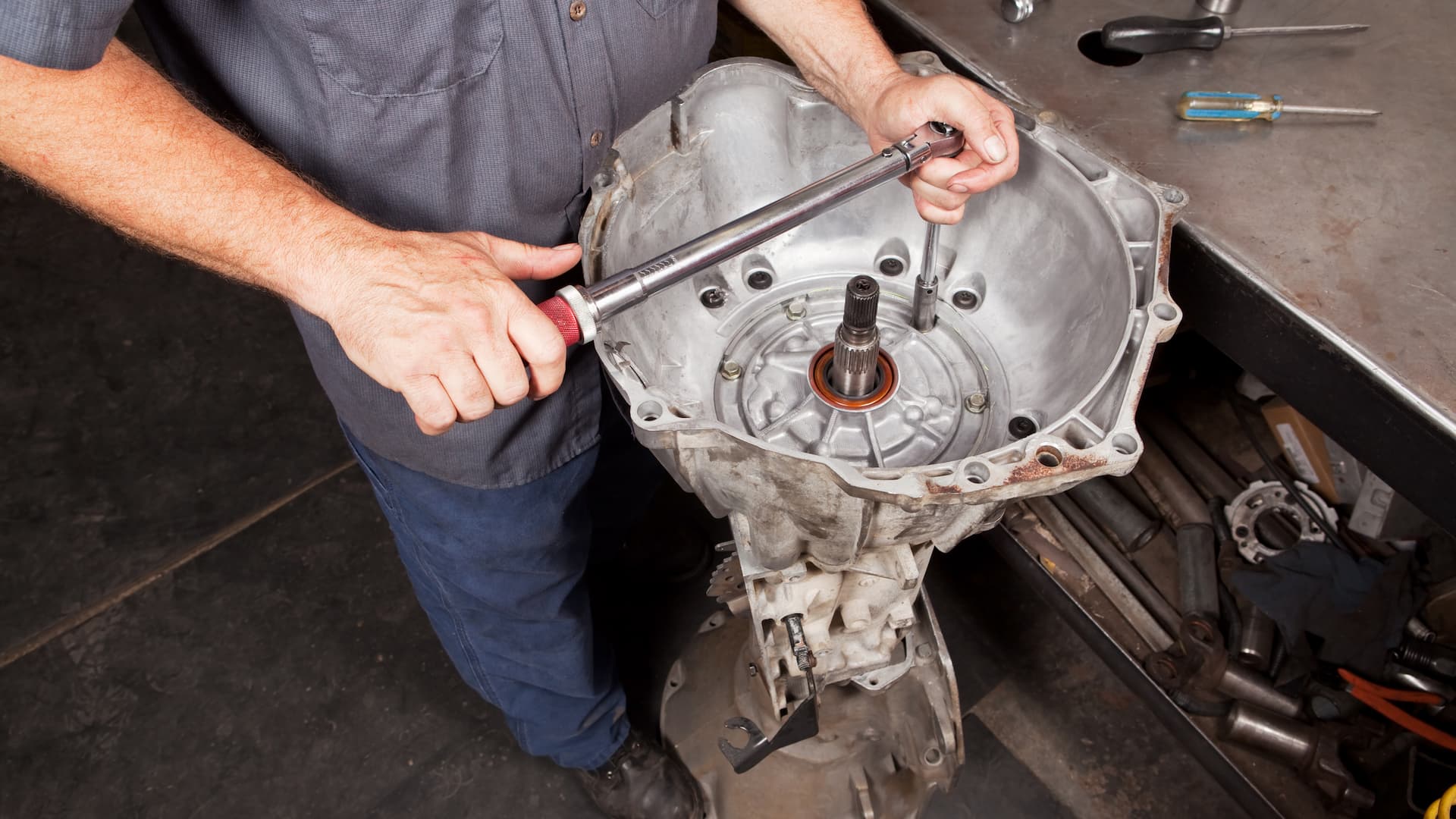
When surface-level repairs aren’t enough to fix a failing transmission, this question pops up:
Is it better to rebuild or replace the transmission?
The short answer: it depends on the extent of the damage, your vehicle’s age, and your budget.
Rebuilding is usually the better option if the damage is limited and you want to save on costs.
Replacing the transmission is advisable when damage is extensive, your vehicle has high mileage, or you want the reliability of a factory-backed unit.
There’s obviously more to the answer, which we’ll break down for a clearer picture.
This Article Contains:
- Transmission Rebuild: When Does It Make Sense?
- Transmission Replacement: When Is It a Better Choice?
- New, Reman, Rebuilt, and Used: What’s the Difference?
- How Much Does it Cost to Replace or Rebuild a Transmission?
Transmission Rebuild: When Does It Make Sense?
A rebuild involves taking apart your current transmission and rebuilding it from the ground up. This is a labor-intensive process that requires a focus on details. Bad parts are replaced with new ones while good parts are retained, cleaned, and reassembled. Your transmission is then tested before reinstallation in your car.
You may want to consider a transmission rebuild when:
- Part damage is specific: If only certain “soft” parts (like clutches or seals) are worn out, and major components are intact.
- It’s an older or rare vehicle: Finding a brand-new transmission for vintage or rare models can be difficult, so rebuilding is often the practical option.
A. Pros of a Rebuild
A rebuild offers several advantages if your transmission is still largely intact:
- Lower cost: Since only the faulty or worn parts are replaced, rebuilding typically costs less than a full replacement.
- Seamless fit: A correctly rebuilt transmission will fit and work properly with the current engine since it was already part of your car, and you get to retain your original transmission.
- Extends vehicle life: If the rest of your vehicle is still in solid shape, a rebuild can give it many more years on the road. Here are some other things you can do to extend vehicle lifespan.
B. Cons of a Rebuild
While rebuilding can be cost-effective, it also has downsides:
- Takes longer: Rebuilding will typically take longer than a replacement.
- Specialists required: It’s essential that whoever is rebuilding your transmission knows what they’re doing. A poor rebuild will cause it to break down again.
- More damage increases costs: If the “hard” parts (like pumps or drums) are badly damaged, rebuilding costs can rival or even surpass that of a full replacement.
Transmission Replacement: When Is It a Better Choice?
A transmission replacement is precisely that — you replace the transmission with a compatible brand-new or refurbished unit.
Replacing the transmission is likely a better option when:
- Damage is extensive: If the transmission case is cracked or major parts like planetary gears are broken, replacement is often the sensible solution. Severe internal failures usually make rebuilding less worthwhile.
- It’s a high-mileage vehicle: For vehicles with significant mileage, the transmission may have enough wear to justify a replacement, offering better long-term reliability.
- You plan to keep your vehicle long-term: A brand-new replacement can provide better durability for years to come.
A. Pros of Replacement
A replacement provides substantial benefits. You get:
- Faster service: Replacement is usually quicker than a complete rebuild, getting you back on the road sooner.
- Factory-level performance: Installing a new OEM transmission built for your vehicle’s make and model ensures a perfect fit, dependable operation, and restored factory reliability.
- Cost flexibility: You’re not limited to “brand new”. Remanufactured or used units are often affordable alternatives.
B. Cons of a Replacement
Although replacing a transmission offers peace of mind, it also comes with limitations:
- Costs more: A brand-new transmission is often more expensive than rebuilding the existing one.
- Availability issues: A compatible replacement unit might simply be unavailable for much older vehicles.
- Risk with used units: Pre-owned transmissions aren’t always reliable, so it’s important to source them carefully and look for a warranty. “Used” doesn’t necessarily mean remanufactured (reman), which we’ll explain next.
New, Reman, Rebuilt, and Used: What’s the Difference?
Transmission replacement options, at a glance:
- New: A factory-built transmission
- Remanufactured (reman): A used transmission, fully refurbished to factory specs, backed by a warranty
- Rebuilt: Existing unit repaired with only worn parts replaced to restore functionality
- Used: A salvaged unit from another vehicle, with little to no refurbishment
How Much Does it Cost to Replace or Rebuild a Transmission?
In general, rebuilding a transmission may cost roughly $1,500-$4,000, depending on the extent of damage and vehicle type. Meanwhile, replacement units can start at $1,500 for manual transmissions and $2,500 for automatics, with those numbers possibly entering the 5-figure range for luxury models.
Read our guide to know more about replacement costs.
Shift Back into Gear with AutoNation Mobile Service
There’s no one-size-fits-all answer to the rebuild vs. replace decision. Whatever you choose, remember that good maintenance habits are the best way to extend your transmission’s lifespan.
For professional maintenance, let AutoNation Mobile Service lend a hand. We’re available 7 days a week, and all work is backed by a 12-month | 12,000-mile warranty.
Get in touch with us today.