How to Check Transmission Fluid (A Step-By-Step Guide)
Here’s how your mechanic will check your vehicle’s transmission fluid level:
- Park the vehicle on a proper level surface and engage the parking brake to ensure safety during the procedure.
- Start the engine and allow it to reach a normal operating temperature condition. They’ll keep the engine running throughout the process unless the owner’s manual specifies that the fluid should be checked with the engine off.
NOTE: The mechanic will avoid checking transmission fluid when cold, as this may not give an accurate reading. The transmission fluid temperature should match the engine’s operating temperature for an accurate reading.
- Shift the gear selector into park (P) or neutral (N), depending on the manufacturer’s guidelines.
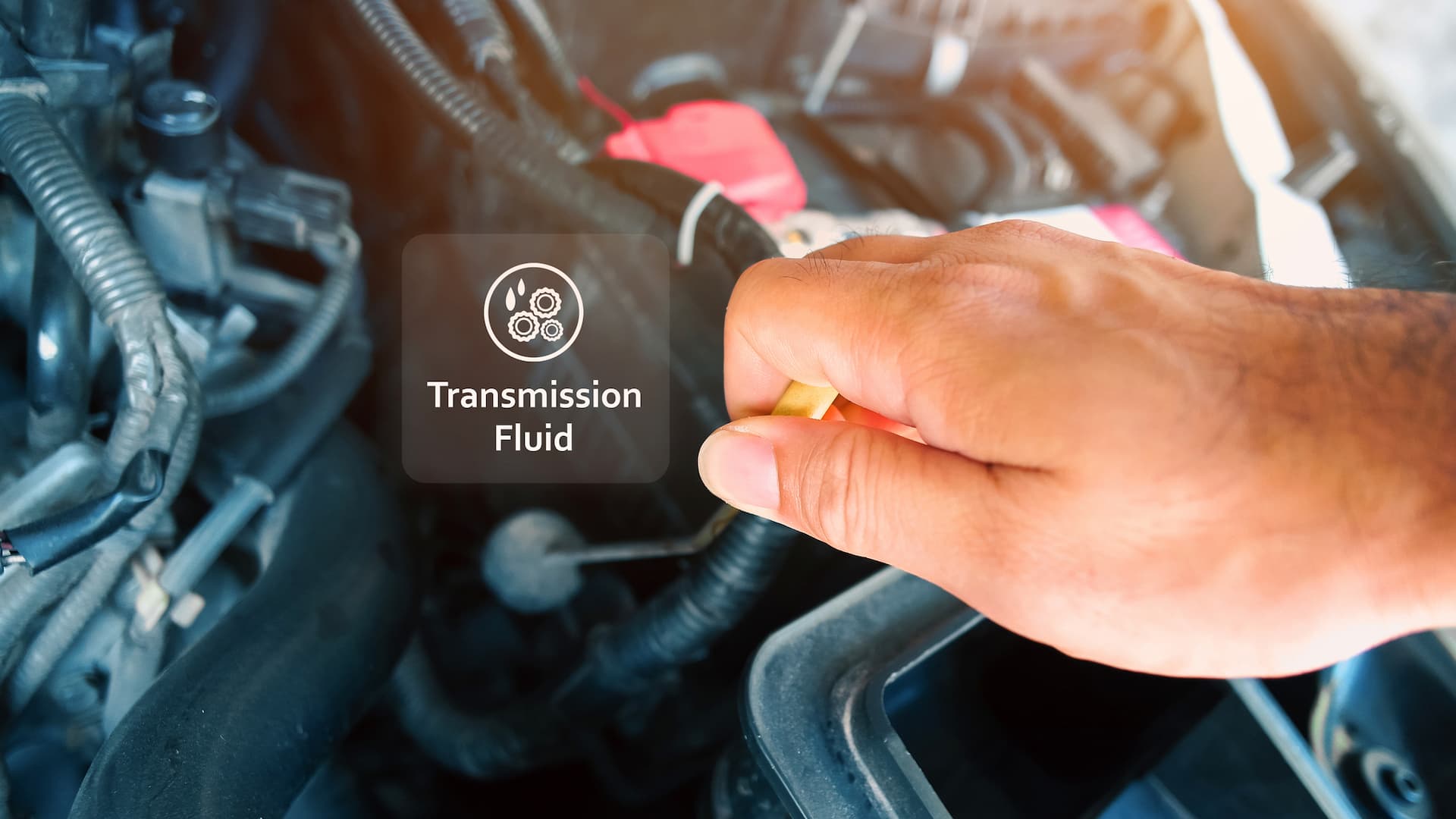
- Pop the hood and locate the automatic transmission dipstick. It looks similar to the engine oil dipstick and is found near the rear of the engine compartment where the transmission meets the engine.
NOTE: If the mechanic can’t find your vehicle’s transmission fluid dipstick, you likely have a sealed transmission.
- Carefully remove the transmission dipstick as the fluid and other internal components may be hot.
- Wipe the transmission fluid dipstick clean using a lint-free cloth, reinsert it fully into the dipstick tube, and remove it to check the transmission fluid level.
NOTE: Automatic transmissions typically have a dipstick, while manual transmissions require removing a fill plug to check the fluid level.
- Examine the markings at the tip of the transmission dipstick. Most dipsticks have two “full” indicators — one for cold and one for warm fluid. The fluid should reach the “warm” line if the engine is at normal operating temperature.
- If the fluid level is below the recommended range, they’ll insert a long funnel into the dipstick tube and slowly add transmission fluid.
- Keep an eye on the fluid level to prevent adding excess fluid.
- Once the fluid reaches the proper level, they’ll fully reinsert the transmission fluid dipstick and close the hood.
- If the fluid is dark, burnt, or contaminated with debris, further inspection or a complete transmission fluid replacement service may be necessary.
After adding the right amount of transmission fluid, a mechanic may also investigate symptoms of a leak that could have caused the fluid level to drop in the first place.
Now that we’ve cleared up how to check for leaks, let’s go over some other important related topics:
- 6 Clear Signs of a Transmission Fluid Leak
- How Often Should You Change Transmission Fluid?
- Why Is It Important to Change Transmission Fluid?
- How Much Does a Transmission Fluid Replacement Cost?
6 Clear Signs of a Transmission Fluid Leak
Call an automotive mechanic ASAP when you spot these signs:
1. Red Puddle Under Your Car
A red puddle underneath your car could indicate a transmission fluid leak. However, since some vehicles use red-colored engine coolant, distinguishing between the two can be challenging.
The main difference lies in how the fluids age — transmission fluid gradually darkens to a brown or black shade, while engine coolant retains its red or pink color over time. So, if the fluid is bright red, it’s most likely engine coolant; if it’s dark red, it’s likely transmission fluid leaking.
2. Low Fluid Level
If the transmission fluid level drops noticeably after topping it up with fresh fluid, it may clearly indicate a potential leak.
Use the transmission fluid dipstick to check the fluid level. If the reading is below the minimum marker, add the appropriate amount of fresh transmission fluid and inspect the system for signs of a leak.
3. Rough Transmission
A sudden drop in transmission fluid levels caused by a leak can lead to noticeable performance issues, such as rough gear changes or slipping gears. The engine’s revolutions per minute (RPM) may rise as you press the accelerator, but the vehicle might not respond with the expected speed.
Sometimes, you may feel jerking during gear shifts or experience difficulty engaging a gear. However, this condition could also stem from a faulty transmission solenoid.
4. Burning Smell
A low transmission fluid level increases friction between the internal components. Consequently, the engine compartment overheats and produces a burning smell. The burnt smell is especially noticeable when you’re driving at high speeds.
Why?
At high speeds, the transmission is under greater load and operates at higher temperatures.
5. Limp Mode or Check Engine Light On
The Engine Control Unit (ECU) may activate limp mode or trigger the Check Engine Light if it detects major transmission issues. These can include overheating, fluid leak, or low fluid level.
When this happens, you’ll likely be unable to go over the speed of 30 miles per hour and second gear.
6. Humming Noise
A humming sound from the transmission is rare and usually indicates a faulty transmission part. Such strange noises are typically caused by increased friction due to low transmission fluid or a transmission fluid leak.
Regularly changing your transmission fluid is essential to prevent leaks and also avoid transmission failure. Let’s look at how often this important maintenance should be performed.
How Often Should You Change Transmission Fluid?
As part of routine maintenance, replacing your transmission fluid is key to optimal engine performance.
Here are the typical intervals for different transmission types:
- Automatic transmission fluid (ATF): 45,000 to 100,000 miles
- Manual transmission fluid (MTF): 30,000 to 60,000 miles
- Continuously Variable Transmission (CVT) fluid: 25,000 to 50,000 miles
Knowing when to perform a transmission fluid change is just one part of the equation; understanding why this routine maintenance matters is just as important.
Why Is It Important to Change Transmission Fluid?
A timely transmission fluid change can help:
- Lubricate internal components, reducing the need for costly transmission repair
- Prevent the gaskets from cracking or drying out, which can lead to leaks and other issues
- Control your car’s transmission temperatures, reducing the risk of overheating and avoiding potential transmission failure
- Prevent wear on metal surfaces, extending the lifespan of your transmission system
- Increase the rotational speed of your transmission for smoother shifting and better performance
If you’re wondering how much you may have to shell out for this service, keep reading.
How Much Does a Transmission Fluid Replacement Cost?
The average cost of replacing old fluid depends on your vehicle’s transmission system — manual, automatic, or continuously variable transmission.
Let’s look at the price range for each.
- Manual transmission fluid replacement can cost $120 to $230, which includes:
- Parts cost: $50 to $60
- Labor cost: $70 to $170
- Automatic transmission fluid replacement ranges between $300 and $510, which includes:
- Parts cost: $150 to $280
- Labor cost: $150 to $230
- CVT fluid replacement may cost around $340 to $370, which includes:
- Parts cost: Approximately $200
- Labor cost: $140 to $170
NOTE: If your mechanic notices a thick sludge or unhealthy fluid condition, they’ll recommend a transmission flush instead of a fluid replacement. Depending on your car’s size, transmission flush will likely cost around $150 to $400.
Protect Your Transmission with Routine Fluid Checks
Even small steps like checking transmission fluid regularly can make a big difference in long-term performance. Monitoring fluid levels helps avoid unexpected breakdowns and costly transmission repair.
Not sure how to handle it yourself?
Let AutoNation Mobile Service take care of your vehicle’s transmission maintenance.
Our experienced mobile mechanics can check for leaks, top off your car’s transmission fluid, and perform related services right from your driveway. Every service comes backed by our 12-month | 12,000-mile warranty, so you drive with confidence.
Book your transmission fluid replacement service today and keep your vehicle running smoothly, mile after mile.