You’ve got your repair tools and the new transmission filter ready.
But not sure how to change a transmission filter?
It’s okay to hesitate, as replacing the filter means sliding under the car and working with a delicate transmission pan and gasket, which can be challenging.
Don’t worry!
We’ll review the steps in detail and explain why you should leave the replacement up to a professional.
This Article Contains:
- How to Change a Transmission Filter Step-by-Step
- 6 Warning Signs You Need a New Transmission Filter
- How Much Does a Transmission Filter Change Cost?
- How Frequently Should You Replace a Transmission Filter?
- What Causes a Transmission Filter Failure?
- 4 Smart Ways to Keep Your Transmission Filter in Top Shape
How to Change a Transmission Filter Step-by-Step
Transmission filters are usually found in automatic or continuously variable transmission (CVT) vehicles, and not in manual transmission cars.
If your vehicle has a transmission filter (trans filter), regular replacement is essential for maintaining the system’s performance.
However, replacing the filter requires changing the fluid and securing the seals correctly. Without experience, you risk leaving contaminated fluid behind or misaligning the gasket. That’s why you should call an experienced technician.
Here’s how they’ll change the filter in continuously variable and automatic transmission cars:
Step 1: Prepare to Drain the Fluid
The mechanic will park your vehicle and engage the parking brake. Then, they’ll start the car and let it run for a few minutes to warm up the fluid. This helps suspended debris mix with the fluid for more efficient draining.
Next, they’ll turn off the engine, raise the vehicle using jack stands, and place a large drain pan beneath the transmission. Depending on your car’s design, the transmission will typically be behind or beneath the engine.
Step 2: Collect the Drained Fluid
In case your transmission (including a sealed one) has a drain plug, they’ll remove it to let the fluid collect in a drain pan. If there’s no drain plug, they’ll remove transmission pan bolts from one side to the other, allowing the fluid to drain slowly and in a controlled manner.
Step 3: Remove the Old Filter
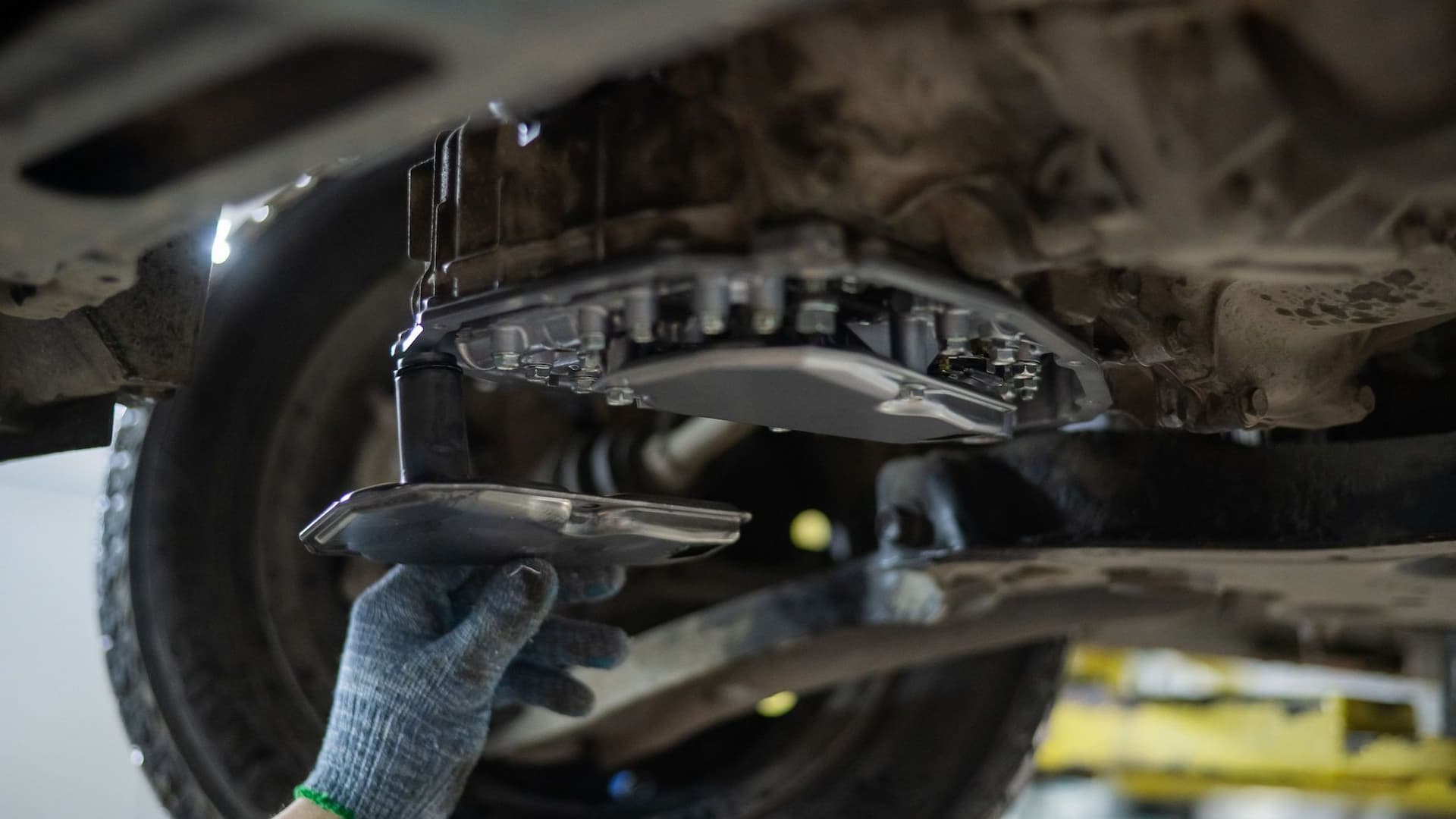
They’ll detach the transmission pan and unscrew the filter’s bolts or clips. If your car has a press-fit filter, they’ll carefully pry it loose.
The technician will gently remove the old filter and its O-rings (seals). Some residual fluid may leak during this step, which they’ll collect in the drain pan.
Step 4: Install the New Filter
They’ll fix the new filter, lubricate the O-rings, and secure them properly. Then, they’ll clean the transmission pan, remove contaminants, and replace the old pan gasket with a new one.
Next, they’ll reattach the transmission pan and torque the bolts according to the manufacturer’s specifications.
Step 5: Add the New Fluid
The mechanic will send the old fluid to a recycling facility and lower the vehicle. Based on the service manual and your car’s transmission type, they’ll choose the right transmission fluid (continuously variable or automatic transmission fluid).
They’ll add the new transmission fluid through the dipstick tube or fill plug using a funnel.
Step 6: Test Drive the Car
They’ll restart the engine, let it idle, and shift through all gears to circulate the new fluid.
Finally, they’ll look for leaks, recheck the transmission fluid level, and top up if necessary. They’ll also take a short test drive to rule out transmission problems.
Not sure if your car’s transmission needs a filter change?
Here’s how you can confirm:
6 Warning Signs You Need a New Transmission Filter
Your vehicle needs a transmission filter replacement if you notice:
- Active dashboard lights: A clogged or failing trans filter can affect the hydraulic pressure in the system. This can trigger the check engine warning, transmission light, and error codes like P0868.
- Transmission leak: Pressure imbalance due to a clogged filter can strain seals, gaskets, and the cooler line. Eventually, one of these transmission components will cause a leak, especially around the transmission pan.
- Gear shifting trouble: A clogged filter can restrict fluid flow to essential parts like the torque converter (in automatic transmissions) and the hydraulic control system (in CVT systems). This can cause rough shifting or delayed gear engagement, especially while accelerating and driving uphill.
- Odd noises: Whining, buzzing, or grinding sounds from the transmission area usually indicate a stressed transmission pump that isn’t receiving ample fluid.
- Weird burning smell due to an overheated transmission: When the filter restricts fluid flow, internal transmission components receive less lubrication, increasing friction and heat. This can overheat the transmission, resulting in a burnt smell from the fluid or scorched internal parts.
- Contaminated transmission fluid: Dark or gritty fluid indicates the filter isn’t trapping metal or dirt particles.
Now that you know you need to change the filter, let’s see how much it’ll cost to swap out the old one.
How Much Does a Transmission Filter Change Cost?
Depending on your vehicle model, filter type, and quality, transmission filter replacement costs between $90 and $270 (including labor).
While changing the filter, you might also spend on:
- Automatic transmission fluid change: $225 to $450
- Continuously variable transmission fluid change: $275 to $370
- Transmission pan gasket replacement: $85 to $220
NOTE: Manual transmission cars don’t use a transmission filter but require periodic manual transmission fluid or gear oil changes, which are usually less expensive.
Wondering if you need to spend on this service often?
Keep reading to find out.
How Frequently Should You Replace a Transmission Filter?
To maintain smooth transmission and engine performance, you should change the transmission filter every two years or 30,000 miles (whichever comes first). Its lifespan depends on your driving habits, usage frequency, and maintenance routine.
However, installing the right one can reduce the need for frequent replacements.
Here’s how you can choose:
- Evaluate the regular maintenance history: If your transmission has had multiple repairs over time, it may be more sensitive to replacements. So, it’s safer to stick with an OEM (original equipment manufacturer) filter that ensures a proper fit and reduces the risk of compatibility issues.
- Assess your driving requirements: A standard transmission filter suits light and everyday driving. But if you tow heavy loads or live in extreme heat, you’ll benefit from a heavy-duty filter with enhanced filtration and cooling properties.
- Check compatibility: Since engine designs vary between car makes and models, it’s best to refer to the owner’s manual to choose the right transmission fluid and filter. Installing the wrong filter can cause improper sealing or even transmission damage, which can affect the overall engine performance over time.
Even with the right filter installed, it’s essential to understand what can cause it to fail over time.
What Causes a Transmission Filter Failure?
A transmission filter can go bad due to:
- Excess dirt and contaminants in the transmission fluid
- Neglected transmission fluid changes
- Low transmission fluid levels
- High transmission temperatures that lead to overheating
- Lack of an auxiliary transmission cooler during heavy-duty driving, such as towing or hauling
- Faulty transmission filter, pan, or gasket
Want to know how to prevent these issues?
Read further to learn how.
4 Smart Ways to Keep Your Transmission Filter in Top Shape
Your transmission filter will last longer if you:
- Follow the regular maintenance and transmission service schedule without fail.
- Check for a leak or low transmission fluid level often.
- Avoid hard braking and sudden acceleration to prevent transmission overheating.
- Schedule a transmission flush once a year to clean out dirt from parts, including the torque converter and cooler line, helping your filter last longer.
Get Swift Transmission Filter Replacements From Mobile Auto Experts
Changing a transmission filter is as critical as replacing components like the engine oil filter and cabin air filter. However, unlike other filters, replacing the transmission filter requires more time, patience, and technical skills.
If you’re stuck in the driveway with transmission problems, let AutoNation Mobile Service help.
Our mobile technicians can repair the transmission filter and quickly get you back on the road.
You also get upfront pricing and a 12-month, 12,000-mile repair warranty on all services, like brake rotor or differential fluid replacement.
Book your slot and get back to smooth shifting — no stress, no mess.