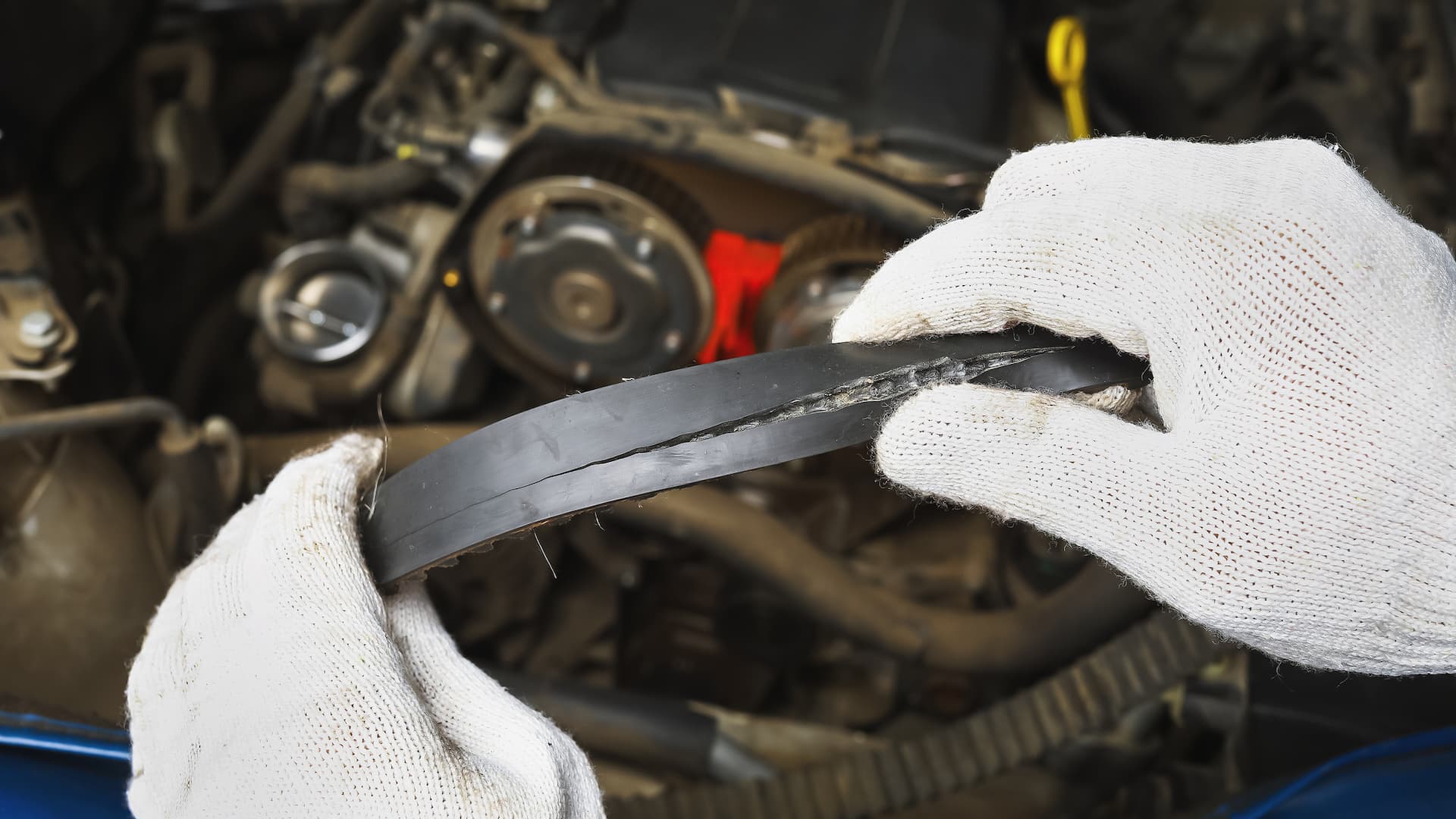
Thinking of changing your car’s worn timing belt?
A timing belt synchronizes the rotation of the crankshaft and camshaft, ensuring the engine’s valves open and close at the right intervals.
But here’s the catch: Replacing a faulty timing belt is far from a simple DIY task. You’ll need to know your engine’s configuration, how to properly align timing marks, and get hold of special tools. Even a minor misalignment can cause serious engine damage.
Sounds complex?
This post will guide you on how to change a timing belt step-by-step, so you know exactly what to expect and why it’s best to call a professional for this job.
This Article Contains:
- How to Change the Timing Belt (A Step-By-Step Guide)
- How Often Should You Replace the Timing Belt?
- 11 Warning Signs You Need to Replace the Timing Belt
- How Much Does It Cost to Change a Timing Belt?
How to Change the Timing Belt (A Step-By-Step Guide)
Timing belt replacement requires an in-depth understanding of the engine’s components and timing system. If you’re inexperienced, it’s best to leave this job to a professional mechanic.
Here’s how your mechanic will go about the replacement process:
Step 1: Source the Correct Replacement Belt
- They’ll refer to the manufacturer’s manual to confirm the exact timing belt specification your vehicle requires. If the old belt is broken or slipped, they might remove it and compare it to ensure the new belt is correct.
- Gather detailed information about your car, including the make, model, engine size, and vehicle identification number (VIN), to avoid any mismatch during part selection.
- Select a timing belt kit that also includes new gaskets, gasket adhesives, tensioners, and seals that may need replacing during the job.
Step 2: Disconnect the Car Battery
- Disconnect the negative battery cable to prevent electrical shorts.
- If applicable, note down any radio codes or preset settings, as some vehicles may require them to unlock the stereo after battery disconnection.
Step 3: Detach the Alternator or Serpentine Belt and Other Accessories
- Remove the alternator belt or serpentine belt, depending on your car’s model, by loosening its mounting bolts.
- Remove obstructing components out of the way, including the power steering pump, air conditioning compressor, and alternator. For the AC system, they’ll leave the refrigerant lines intact — the compressor is usually just unbolted and repositioned.
- If your car has a distributor cap, they’ll remove it by releasing any clips or screws. This is necessary in older engines where the camshaft drives the distributor and may block access to the timing components.
NOTE: For modern vehicles with electronic ignition, this isn’t necessary, as they don’t use a distributor and the ignition timing is controlled electronically rather than mechanically.
Step 4: Align Timing Marks
- With a spanner or socket, they’ll rotate the crankshaft until the timing mark aligns with “0” on the timing scale. If the engine uses a distributor, they’ll also check that the rotor aligns with the index mark for cylinder #1 — if not, they’ll rotate the crank one complete turn.
- If the harmonic balancer (built into the crankshaft pulley) blocks the timing cover, they’ll remove it using special tools. They’ll need a new crankshaft seal during the pulley’s reinstallation.
- Next, they’ll remove all bolts holding the timing cover and carefully lift it away. Some engines have a two-piece cover or components that partially overlap, so they’ll refer to the service manual if needed.
- Once the timing components are exposed, they’ll inspect and confirm that the camshaft and crankshaft timing marks are properly aligned.
Step 5: Watch for Leakage
- Check the area around the belt for oil or coolant leaks, focusing on the camshaft and crankshaft seals, valve cover, water pump, and bypass hose.
- If there’s a leak, they’ll fix it before continuing.
Step 6: Relieve Tension and Inspect Components
- Loosen the belt tensioner by pivoting it away to release belt tension.
- Inspect the tensioner pulley for signs of wear or damage. If the pulley shows looseness or makes grinding noises, they’ll replace it to prevent premature belt failure.
- If your vehicle uses a hydraulic tensioner, the mechanic will remove it at this stage so that they can reset and reinstall it later.
Step 7: Remove and Replace the Timing Belt
- With tension relieved, they’ll slide the old timing belt off the pulleys. If it’s stuck in place, they’ll gently pry it loose.
- Then, they’ll install the new timing belt by ensuring the teeth are properly seated and all alignment marks are intact.
Step 8: Reset the Hydraulic Tensioner (If Applicable)
- If your vehicle has a hydraulic tensioner, they’ll compress it in a vise (a clamping tool used to hold objects firmly), align the pinholes, insert a holding pin (a small locking tool to keep the tensioner compressed), and reinstall it onto its mount.
- Once the belt is in place, they’ll remove the pin to apply proper tension.
Step 9: Perform Final Test
- Reassemble all previously removed parts, such as the alternator, belts, covers, and reconnect the battery.
- To finish, they’ll start the engine and perform a test drive in a quiet area, checking for noise, misalignment, or performance issues.
Wondering how long your new timing belt will last?
Let’s break down the recommended replacement intervals.
How Often Should You Replace the Timing Belt?
Most timing belts should be replaced between 60,000 and 100,000 miles, but it’s crucial to follow the manufacturer’s specific recommendation for your vehicle.
If you notice any signs of belt wear or damage, don’t wait — have it inspected by a professional. In such cases, early replacement may be necessary to avoid engine damage.
Sometimes, the belt also gives you clues before it fails. Let’s find out what they are.
11 Warning Signs You Need to Replace the Timing Belt
Take your vehicle to the nearest repair shop or call a mobile mechanic if you notice these signs:
- Lit check engine light
- Squeaky noises from the timing belt area
- Difficulty starting the engine
- Vibration while driving
- Reduced engine power
- Rough idle
- Frequent engine misfires
- Overheated engine
- High exhaust fumes
- Low oil pressure
- Oil leakage near the timing belt cover
Worried about the expense?
Here’s what you can expect to pay for a timing belt replacement.
How Much Does It Cost to Change a Timing Belt?
Replacing a worn timing belt with a new one typically costs between $400 and $1,100. This estimate includes:
- Parts: $100 to $350
- Labor: $300 to $750
Get Timely Fixes for Your Timing Belt
Your timing belt plays a significant role in engine performance. Replacing it on schedule prevents serious (and expensive) damage down the line.
Since timing belt replacement is a complex job, it’s best left to a trusted professional. Luckily, AutoNation Mobile Service can handle your timing belt replacement with ease and expertise.
Our skilled mobile mechanics bring all necessary tools and parts right to your driveway, ensuring a reliable job backed by our 12-month | 12,000-mile warranty.
Schedule your timing belt replacement service today and enjoy worry-free driving for miles to come.