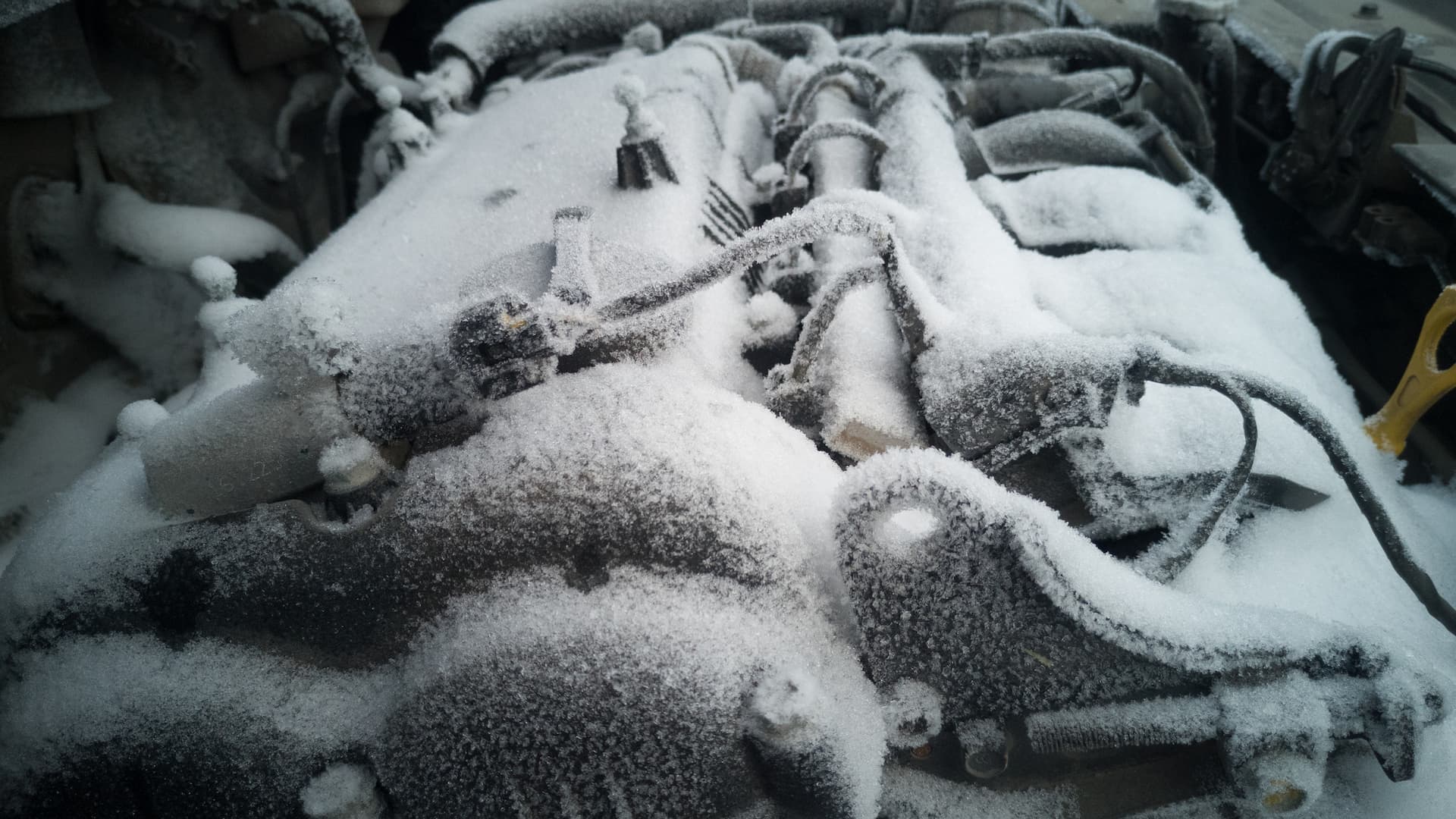
Nothing says “bad morning” like a frozen engine that refuses to start. Before you lose your patience (or gloves), know this — getting your vehicle moving comes down to warming the engine and starting it gently.
Common solutions for warming up a frozen engine include engine block heaters and dipstick heaters, while extreme cold may prompt riskier options, such as weed burners.
We’ll cover all you need to know about how to heat up a frozen engine, the tools you can use, and potential risks to avoid. We’ll also share simple steps to keep your engine from freezing in the future.
This Article Contains:
- How to Heat Up a Frozen Engine and Start Your Car in Winter
- 6 Key Tips to Stop Your Engine from Freezing in Winter
How to Heat Up a Frozen Engine and Start Your Car in Winter
Here’s what you should do to warm up the engine and get your car running in freezing weather:
A. Thaw the Engine
You can heat up your engine using an:
- An engine block heater: This is a built-in electric device that heats the coolant or the engine block itself, which in turn warms the oil and internal engine parts. To use it, plug the heater into a standard wall outlet. In normal freezing temperatures, leave it plugged in for 2 to 4 hours before you start your engine. In severely cold conditions, leave it overnight (8 hours or more) for the best results.
- An oil pan or dipstick heater: This is a small electric heater, either attached to the oil pan or inserted through the dipstick tube, that warms the freezing engine oil directly. To use it, plug the heater in and allow it to run for 1 to 3 hours, depending on the temperature and the heater’s power.
- A portable heater: Use a portable electric or propane heater to blow warm air into the engine bay when no built-in heaters are available. To use it safely, aim warm air toward the engine for 30 to 60 minutes. This should only be done outdoors or in a well-ventilated, open area.
IMPORTANT: Never use a heater in a closed garage, as carbon monoxide buildup can be deadly.
- A weed burner: This device produces intense heat and is used for severely frozen engines. You should typically aim it around the oil pan area, rather than directly at engine components.
CAUTION: This method can be risky as open flames can ignite oil residue, melt wiring, damage seals, or cause fires. That’s why it should be performed only by a mechanic.
BONUS TIP: Insulate the engine with the help of an engine blanket to prevent heat from escaping once the engine is warm. While it won’t heat a frozen engine on its own, it is very effective when combined with heaters.
B. Start the Vehicle
Once you are confident that the engine and fluids have been warmed, you can attempt to start the vehicle. Here’s how:
- Turn the key to the ON position (not START) and wait 10 to 20 seconds. This ensures the fuel pump can build pressure and the car’s computer can run its checks.
CAUTION: Avoid repeated cranking without breaks if your car doesn’t start immediately. It can overheat the starter and cause unnecessary wear.
- Start the engine and let it idle for about 30 to 90 seconds. In very cold weather, allow it to run for a bit longer so the oil can circulate properly and the engine can warm up. While the engine is idling, check if any warning lights have come on and listen for any unusual noises.
- Once you start driving, take it easy for the first 5 to 10 minutes. Avoid hard acceleration, high RPMs, or heavy loads until the engine warms up and the transmission begins shifting smoothly.
Congrats, your engine is now warm and running properly.
So, let’s keep it that way.
Read on to know how.
6 Key Tips to Stop Your Engine from Freezing in Winter
Here are some effective ways to prevent your engine from seizing in the cold:
- Ensure the antifreeze or coolant level is full, and that the mixture is rated for winter temperatures.
- Always use a manufacturer-recommended engine oil for cold weather.
- Test your car battery at recommended intervals and replace it if it’s weak. Ideally, you should replace the battery every 3 to 5 years.
- Wrap a battery blanket or warmer around the unit to keep it close to starting or cranking temperature during cold weather.
- Keep the fuel tank at least half full. A fuller tank leaves less space for moisture to form inside the fuel system, which reduces the risk of frozen fuel lines.
- Park indoors whenever possible. A garage or covered parking area shields your vehicle from extreme cold and wind.
Get Professional Help for a Frozen Engine with AutoNation Mobile Service
Warming up a frozen engine requires more than just patience — it takes knowing what you’re doing.
Instead of risking a DIY, let a professional handle it. If you are stuck at home due to a seized engine, AutoNation Mobile Service can send expert technicians straight to your driveway.
We’re available seven days a week, offer upfront pricing, and back every service with a 12-month | 12,000-mile repair warranty.
Reach out today for reliable car repairs right from your doorstep.