If you’ve ever wondered, “Is gear oil the same as transmission fluid?” you’re not alone.
They sound like the same thing, and both are used for lubrication, so it’s easy to assume they’re interchangeable.
In reality, these fluids are designed for very different systems — one for manual gearboxes, the other for automatics — and using the wrong one can lead to poor performance or costly damage.
Keep reading to learn what each does, how they differ, and when you should replace them.
This Article Contains
- What Do Gear Oil and Transmission Fluid Do?
- What’s the Difference Between Transmission and Gear Oil?
- Can You Use Gear Oil for Transmission Fluid?
- When Should You Change Your Gear Oil or Transmission Fluid?
What Do Gear Oil and Transmission Fluid Do?
Both fluids reduce friction and wear inside your vehicle’s transmission system, but each is formulated differently.
A. Gear Oil
Gear oil is a thick, high-viscosity lubricant used in manual transmissions, differentials, and axles.
It’s made to handle the intense friction and pressure of gears meshing together by forming a strong protective film that prevents metal-to-metal contact and overheating.
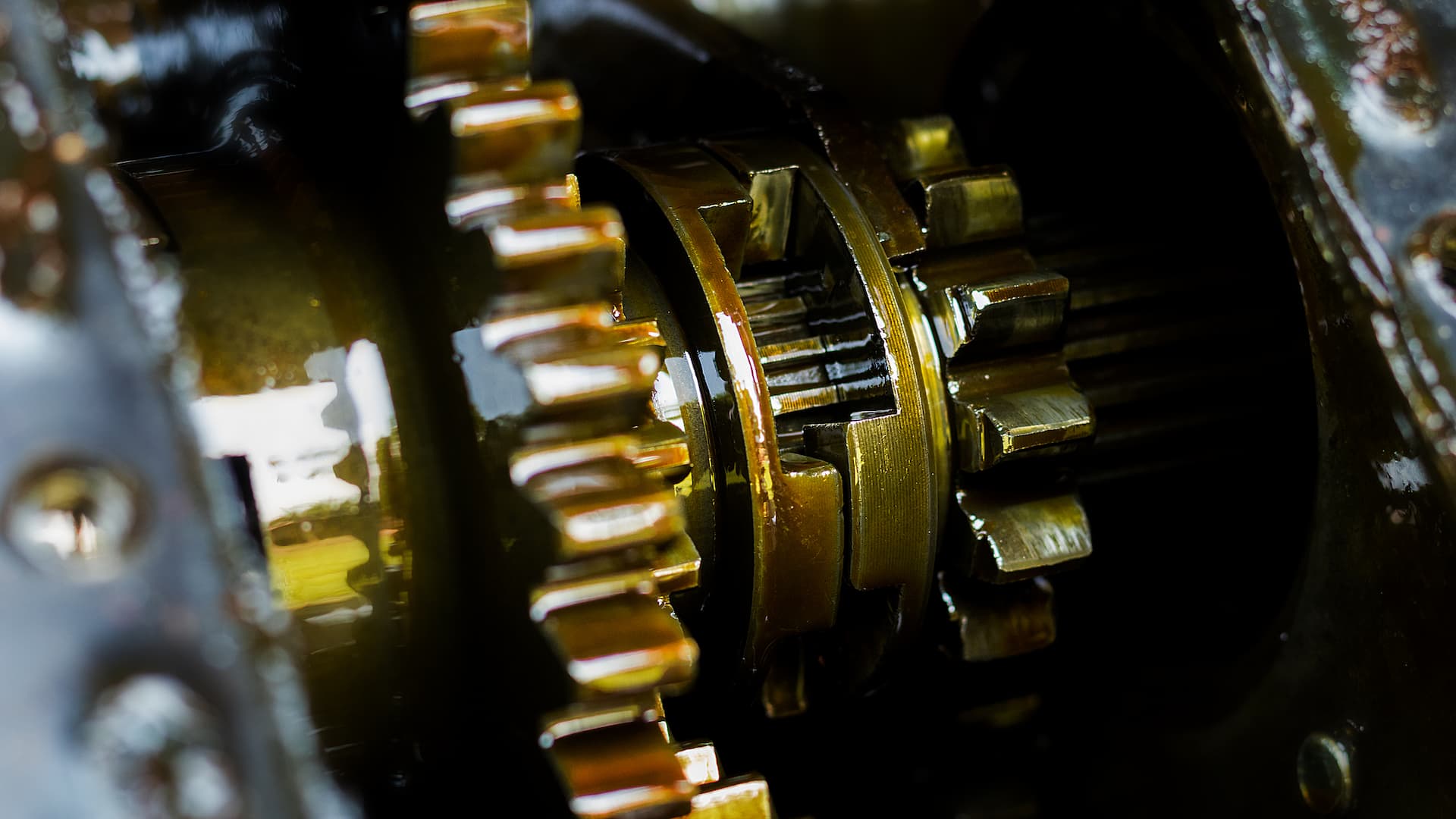
Because it’s heavier, gear oil is common in trucks, 4WDs, and heavy-duty vehicles that experience high torque. It usually has a golden-yellow color and a noticeable odor from the extreme-pressure (EP) additives that protect the gears under load.
B. Transmission Fluid
Automatic transmission fluid (ATF) is thinner and more versatile, designed for automatic and CVT transmissions. It not only lubricates but also cools and powers hydraulic components, allowing smooth, automatic shifting.
Fresh ATF typically appears red or pink, flows easily, and contains detergents, anti-foam agents, and seal conditioners to keep the system clean and responsive.
What’s the Difference Between Transmission and Gear Oil?
Although both keep transmissions running smoothly, transmission fluid and gear oil differ in thickness, heat tolerance, and chemical composition.
1. Viscosity — How Thick Each Fluid Is
Gear oil is thick to cushion heavy gear contact.
Transmission fluid is thin, so it can move quickly through valves and passages for smooth hydraulic shifts.
In cold weather, gear oil thickens and flows more slowly, while ATF stays fluid enough for easy shifting and reduced strain on components.
2. Heat and Pressure Resistance — How They Handle Stress
Gear oil withstands mechanical pressure from high torque and gear engagement.
Transmission fluid resists thermal breakdown and maintains stability under the high heat and hydraulic pressure of automatic systems.
Both rely on additives to protect against wear and maintain performance under stress.
3. Cleanliness and Buildup Prevention — Keeping Free of Contaminants
Over time, tiny metal particles and contaminants can form sludge.
Gear oil uses anti-oxidants to prevent rust and buildup, while transmission fluid’s detergents keep internal parts clean and free from sticky deposits.
4. Foam Control — Preventing Air Bubbles
Automatic systems move fluid rapidly, which can create air bubbles or foam that affect hydraulic pressure. Transmission fluid includes anti-foam agents to maintain consistent pressure and smooth operation.
Gear oil’s thicker nature makes foaming much less of a concern.
Can You Use Gear Oil for Transmission Fluid?
No — unless your vehicle’s manufacturer specifically allows it.
These fluids are engineered for very different systems:
- Gear oil: for manual transmissions, differentials, and 4WD transfer cases.
- Transmission fluid: for automatic, CVT, and dual-clutch systems that depend on hydraulic flow.
Some older manual transmissions may require ATF instead of gear oil, but only if stated in the owner’s manual. Always check it to confirm the right fluid to use.
Using the wrong fluid can introduce these risks:
- Wrong viscosity: May cause hard shifting, poor lubrication, or gear damage.
- Additive mismatch: This can cause synchronizers or seals to wear out.
When Should You Change Your Gear Oil or Transmission Fluid?
Regular fluid changes keep your transmission performing at its best and prevent expensive repairs later.
Gear Oil:
- A change is usually needed every 30,000–60,000 miles, or sooner if you tow, haul heavy loads, or drive off-road.
- Warning signs include noisy gears, grinding, or dark, burnt-smelling oil.
Transmission Fluid:
- The typical interval is every 60,000–100,000 miles, depending on your vehicle and driving habits.
- Warning signs include transmission slipping, delayed or harsh shifting, and a burnt smell.
TIP: Always use OEM-recommended fluids to maintain performance and warranty coverage.
Keep Your Gear Shifts Smooth with AutoNation Mobile Service
Gear oil and transmission fluid may both serve as lubricants, but they have distinct purposes. Don’t mix them. Their additives, viscosity, and design are meant for specific systems.
Always follow manufacturer recommendations and replace fluids on schedule to keep your transmission running smoothly for years.
For quick, professional help with gear oil or transmission fluid changes, contact AutoNation Mobile Service. We’re available 7 days a week, and all repairs and maintenance are backed by a 12-month/12,000-mile warranty.
Book online easily, and let our expert technicians come to you — keeping your vehicle protected, efficient, and ready for the road.