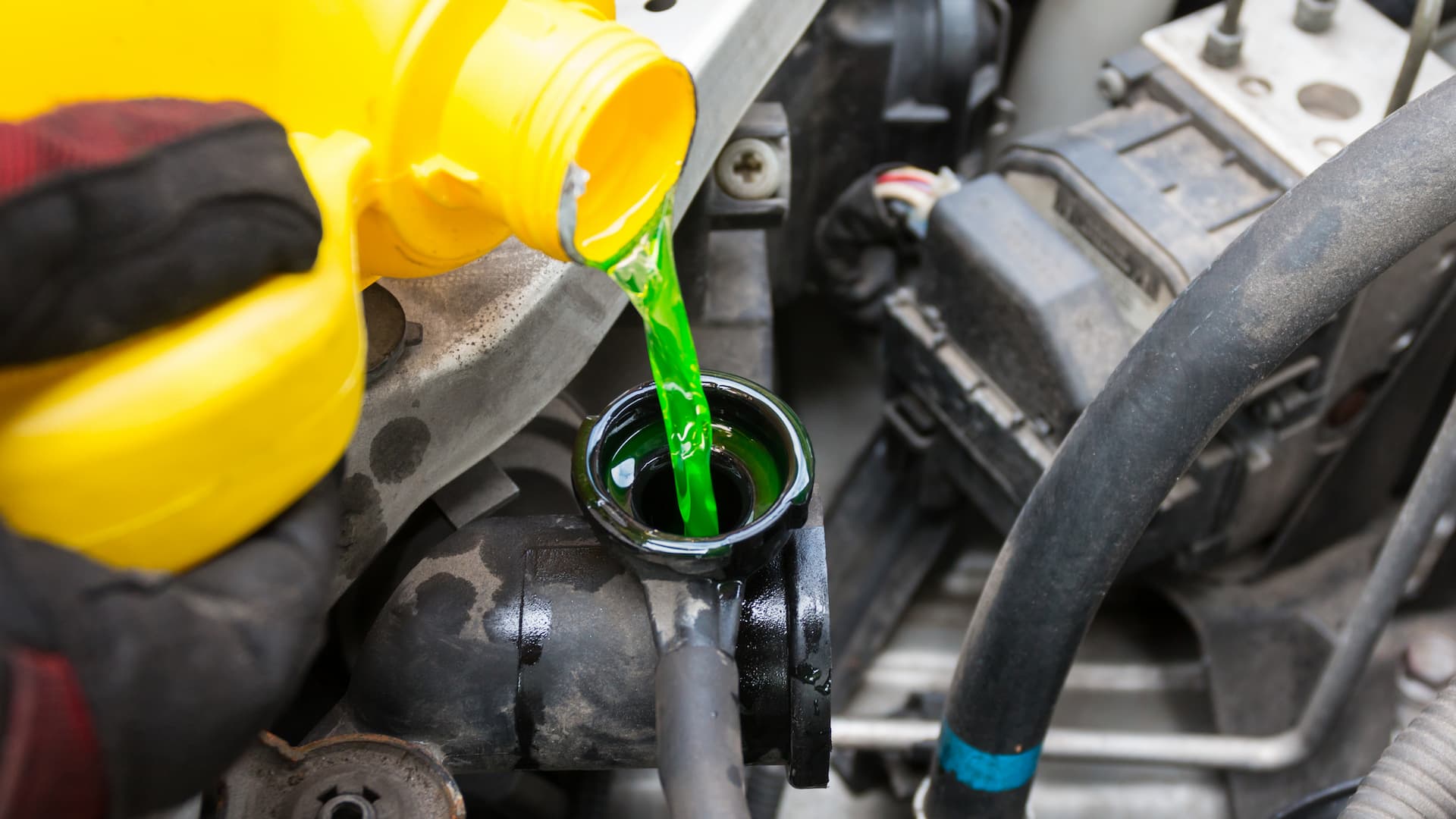
Engine coolant keeps your car from overheating and prevents freezing in cold temperatures. When it becomes old or dirty, you need to flush and replace your engine coolant to keep your car running at its best.
While some car owners choose to flush engine coolant themselves, it’s often safer and easier to have a skilled mechanic handle the process.
Here’s a quick breakdown of how to flush engine coolant:
- Check the system: A mechanic will look for any issues with your cooling system (e.g., worn hose or loose drain valve) or specifics about your vehicle they need to keep in mind for the coolant change.
- Drain the coolant: They will open the radiator fill cap and drain plug to let the old coolant fully drain out.
- Flush the system: They’ll flush with distilled water (and a chemical flush solution if needed), repeating the process several times until only clean water comes out.
- Add new coolant: Next, they pour the correct coolant type and water-to-antifreeze ratio into the radiator overflow tank (or reservoir) based on your vehicle’s specifications.
- Check operating temperature: They’ll run the engine with the heat on to remove air pockets, ensuring it reaches and maintains the correct temperature.
If you’re looking for convenience and reliable service, a mechanic from Autonation Mobile Service can perform a coolant flush right from your driveway.
And if you want more details, below, we’ll walk you through the complete step-by-step process a mechanic follows for a coolant flush and coolant change. We’ll also reveal signs to replace your coolant, helping you avoid costly damage and keep your engine running efficiently.
This Article Contains:
- How to Flush Engine Coolant (A Step-By-Step Guide)
- How Often Should You Change the Engine Coolant?
- 6 Signs You Need to Change the Engine Coolant
- 4 FAQs on Engine Coolant
How to Flush Engine Coolant (A Step-By-Step Guide)
Some DIY guides suggest letting the radiator drain, then disconnecting the lower radiator hose or heater hose and using a garden hose to flush the system with tap water.
While simple, the garden hose method can leave behind chemicals from unclean water and risk damage to your heater core.
Most mechanics follow a more controlled approach using distilled water, chemical flushes, and special tools.
To begin with, your mechanic will require the following:
- Drain pan
- Funnel (preferably a radiator funnel)
- Several 5-gallon jugs of distilled water
- Pliers
- Chemical flush (if the first drain comes out very grimy)
- Antifreeze or 50/50 coolant (premixed coolant in a 50/50 water-coolant ratio)
Before starting the work, your mechanic will determine the correct type, amount, and water-to-antifreeze ratio needed for your car’s cooling system.
This is how they’ll perform an engine coolant flush and change:
- Park the car on level ground outdoors and let the engine block cool completely.
- Inspect the car radiator for worn parts that need replacing. For example, a cracked radiator cap or worn radiator hose can compromise system pressure and lead to overheating.
- Jack up the car (if necessary) and keep the radiator drain plug (or drain valve) at the lowest point for proper drainage.
- Remove the radiator fill cap to avoid a vacuum and place a drain pan under the radiator drain valve.
- Remove the drain plug to let all the fluid drain out, then put the drain plug back in.
NOTE: In many places, it’s illegal to dispose of coolant improperly, as it’s a harmful pollutant. Never pour old fluid down drains or toilets, and never let it leak or pool in your environment. Your mechanic will safely dispose of the old fluid for you.
- Put the funnel into the car radiator and pour in about a gallon of distilled water.
- Add a chemical radiator flush if needed, then continue filling the coolant system with clean water.
- Start the engine (with the heating on full) and allow the water pump to pull the fluid into the coolant system, making room to add more distilled water. Then, close the radiator cap.
- Check the instructions for how long to let the chemical flush sit. Otherwise, drive the car for at least 10 minutes with the heat on. Monitor that the car reaches and maintains the proper operating temperature.
- Park and let the engine cool.
- Open the radiator cap, position your drain pan, and open the radiator drain valve or remove the drain plug to let the fluid out.
- Repeat the flushing process with distilled water only (no chemical flush) until the fluid comes out clean and clear. This ensures that the old antifreeze and any sludge or debris are removed from the cooling system, heater core, and engine components.
- In some cases, a mechanic may open the engine block drains to drain the coolant out of the engine.
- Check the radiator capacity and the correct water-to-coolant ratio in the car’s manual and fill the cooling system with fresh coolant accordingly. They may choose to use premixed coolant.
- Run the engine with the heat on and the radiator cap off to allow the water pump to bleed any air out of the system. This would lower the coolant level in the radiator tank, allowing them to add any remaining coolant.
- Finally, they’ll close up the radiator cap and take the car for a drive (heating on), monitoring that the car reaches and maintains its proper operating temperature.
- If there are any issues with the car’s operating temperature, they may bleed the system again and top up the coolant reservoir if needed.
This can be a long process, depending on the condition of the old coolant. Fortunately, you shouldn’t need to do it very often.
How Often Should You Change the Engine Coolant?
Coolant can last a long time without needing a change — five to ten years, depending on the type used. However, it’s best to perform a radiator flush every two to three years.
Why?
Coolant often contains additives that balance pH levels and prevent corrosion. Over time, those additives become less effective and less protective of your car’s cooling system. The fluid can also become contaminated with debris or break down and form sludge.
You’ll notice some red flags when it’s time for fresh coolant. Let’s go over what to look out for.
6 Signs You Need to Change the Engine Coolant
Visit a mechanic ASAP to get new coolant when you spot these signs:
- The coolant warning light is on
- Frequent overheating
- Heater malfunctions, weak airflow, or odd smells from the heater
- Signs of a coolant leak, like drops of coolant appearing under your car
- Low coolant level in the reservoir
- The coolant looks dirty, milky, or separated in the coolant reservoir
Have more doubts?
Check out the next section to tackle a few lingering questions.
4 FAQs on Engine Coolant
Here are a few things about coolant that often confuse car owners:
1. What’s the Difference Between Coolant and Antifreeze?
Antifreeze is a chemical solution that lowers the freezing point of water.
Coolant is a mixture of antifreeze and water that cools your car’s engine components so it doesn’t overheat. The antifreeze ensures the water in the coolant doesn’t freeze at cold temperatures.
Cars need a mixture in the correct ratio to control temperature properly. Using straight coolant (antifreeze only) or straight water could lead to overheating or freezing. You can either mix the coolant yourself or buy pre-diluted coolant.
2. Why Is It Important to Use the Right Type of Coolant?
Using the wrong coolant can damage your car’s cooling system, cause corrosion, or form residues and clogs. Consequently, your engine won’t run at its best.
There are several different types of coolant. For example:
- IAT (Inorganic Additive Technology): Bright green and usually used in older vehicles.
- OAT (Organic Acid Technology): Orange and works for GM, Volkswagen, and Saab vehicles.
- HOAT (Hybrid OAT): Yellow and best for Ford, Chrysler, and most European cars.
Your mechanic will be able to recommend the correct type and dilution ratio (as straight coolant is bad for your car).
It’s also crucial to use distilled water for coolant. Tap water (and even filtered water) may contain minerals and contaminants that harm the cooling system and cause buildup.
3. Which Coolant Additives Should You Use?
In most cases, for the average driver, the only additive worth considering is an anti-corrosion additive because water corrodes metal. Recognizable brands include No-Rosion, HyperKuhl (for aluminium radiators), and Purple Ice.
However, anti-corrosion additives aren’t strictly necessary as a proper coolant mix already has some anti-corrosion properties. As long as you check on your coolant and maintain it as necessary, you may not need additives.
4. How Much Does it Cost to Flush Engine Coolant?
You can expect to pay around $140 to $250 to have a professional mechanic perform a coolant flush for you. This includes the cost of coolant, flush solution, additives, and labor.
However, there may be additional costs if the system needs other repairs, such as replacing a worn hose or fixing a coolant leak.
Wondering where you can find a reliable, affordable mechanic to assist you with an engine coolant flush?
Flush Away Coolant Troubles with AutoNation Mobile Service
AutoNation Mobile Service makes flushing and replacing the engine coolant simple and stress-free.
Our expert mobile mechanics come right to your driveway with all the tools they need to do the job — no shop visits, no towing, no mess. We offer upfront pricing, easy online bookings, and a 12-month, 12,000-mile warranty on all car repairs.
We can also maintain your other fluids, such as brake and transmission fluid, or check your engine oil and perform an oil change.
Book your engine coolant flush today to keep your car running cool, clean, and protected.