A winter emergency kit is a simple way to stay safe and prepared when cold weather throws the unexpected your way. From staying warm during delays to handling low visibility or minor breakdowns, the right supplies can make a stressful situation manageable.
Let’s discuss what to keep in your winter car kit and the dos and don’ts of winter driving.
This Article Contains:
- 20 Essential Items to Carry in Your Car’s Emergency Winter Kit
- Important Car Preps You Must Do Before Winter
- What to Avoid When Driving in Winter
- What to Do If You’re Stranded
20 Essential Items to Carry in Your Car’s Emergency Winter Kit
A well-stocked winter kit covers essentials such as warmth, visibility, communication, and basic vehicle recovery needs.
Here’s a quick checklist of what you should stock:
- Flashlight and extra batteries: Provides light to inspect your vehicle or signal for help in dark conditions. Extra batteries are important since cold weather drains power fast.
- Jumper cables or portable jump starter: They help restart a weak or dead battery, which is more likely in cold weather when battery performance drops.
- Ice scraper and snow brush: Help clear windshields, windows, mirrors, and lights to ensure proper visibility and prevent unsafe driving conditions.
- Warm blankets or extra clothing: Help retain body heat if you’re stuck in freezing temperatures, especially during long waits for roadside assistance.
- Gloves, hats, socks, and boots: They protect against frostbite and keep your hands and feet warm, allowing you to safely handle tasks outside the car.
- Non-perishable snacks and bottled water: Supply basic nourishment during unexpected delays, when road closures or severe weather limit access to food and help.
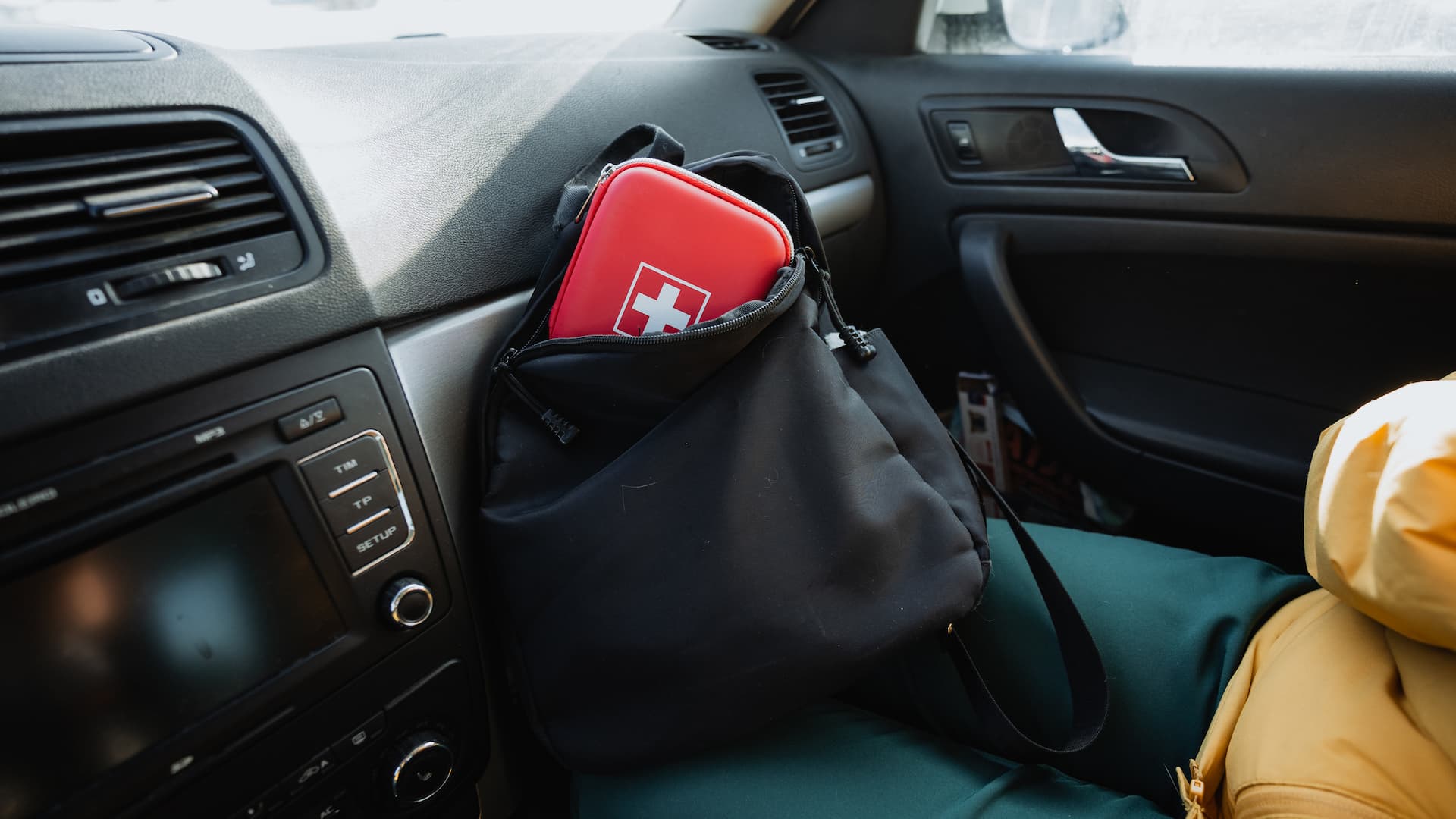
- First-aid kit: Enables quick response to minor injuries or emergencies while waiting for assistance in cold or remote conditions.
- Tire traction aids or sand/kitty litter: Improve grip when wheels are stuck on ice or packed snow, helping you regain movement without excessive wheel spin.
- Small shovel: Can be used for clearing snow from around your tires or freeing your car if it is stuck in a drift.
- Spare tire and tire repair kit: Ensures that a flat tire doesn’t leave you stranded indefinitely. Always confirm that your spare tire is inflated and that all necessary repair tools are present.
- Road flares or reflective triangles: They help increase your vehicle’s visibility to others. These items warn approaching drivers and help emergency responders locate your immobilized car faster in poor conditions.
- Phone charger or power bank: Keeps your phone powered so you can call for help and check weather or road updates.
- Multi-tool or basic toolkit: Helps handle quick, minor fixes like tightening parts or changing fuses so you can keep going until help is available.
- Funnel and small container of engine oil and antifreeze: Allows you to quickly top off fluids. Maintaining correct fluid levels is necessary to prevent engine damage in very cold temperatures.
- Windshield washer fluid (rated for subzero temperatures): Prevents washer fluid from freezing on contact, helping clear salt, slush, and grime for safe visibility.
- High-pitched whistle: Lets you signal for help without draining your voice or phone battery, especially useful in low-visibility or remote areas.
- Emergency radio: Keeps you informed when phone service is unavailable, providing weather alerts and road updates through battery or hand-crank power.
- Maps: Gives a reliable, non-electronic navigation backup. Use a paper map to find alternate routes or local points of interest if your GPS or phone battery dies.
- Fuel management reminder: Keep your tank at least half full. In case you get stranded, this fuel reserve enables you to periodically run your engine to maintain cabin heat.
- Car manual/emergency procedure guide: It helps you quickly diagnose and address vehicle-specific issues while you are waiting for help.
Having the right gear in your trunk is only half the battle; the other half is ensuring the vehicle itself is up to the challenge.
Important Car Preps You Must Do Before Winter
Before the first snowflake falls, take these proactive steps to confirm your car is mechanically sound and ready for freezing temperatures.
- Tire and chain checks: Inspect tread depth and tire pressure, which drops in cold weather. Test-fit snow chains ahead of time so you’re not struggling to install them during a storm.
- Comprehensive component inspection: Have a mechanic check your battery, belts, hoses, and radiator, as freezing temperatures put extra stress on these parts. You should also verify that your lights, brakes, and wipers are fully functional.
- Regular maintenance: Schedule a professional tune-up before winter starts. It helps catch small issues early, thereby reducing the risk of breakdowns in harsh weather conditions.
Don’t hit the road this winter without reviewing our essential car care tips.
But remember — to stay safe on the road, your driving habits are just as important as your gear.
What to Avoid When Driving in Winter
Steer clear of these common mistakes to maintain control and reduce risks on icy roads:
- Skipping pre-trip checks: Failing to check essentials like engine oil and brake safety before you leave increases the risk of a breakdown in dangerous, freezing conditions.
- Driving with poor traction: Low tread makes it challenging to stop or turn safely on snow and ice.
- Ignoring weather updates: Driving into a storm unprepared significantly increases your chances of getting stuck or involved in an accident.
- Sudden movements: Don’t accelerate or steer sharply if you start to slide. Smooth, steady movements help you regain traction and prevent a spinout.
Now, even with the best prep, emergencies can happen.
What to Do If You’re Stranded
If you find yourself stuck, follow these steps to stay safe until help arrives:
- Stay in your vehicle, as it provides the best shelter and makes it easier for rescuers to locate you.
- Contact emergency services immediately with your location. Do this early while your phone battery and signal are strongest.
- Activate hazard lights and place flares or triangles. This warns other drivers and helps emergency teams find you in low visibility.
- Use blankets to retain body heat and consume snacks for energy. Staying hydrated helps your body regulate its temperature.
- Use a shovel to remove snow from around your tires. If wheels are slipping, spread sand, kitty litter, or floor mats under the tires to regain grip.
Pack the Kit, Let AutoNation Mobile Service Handle the Rest
A well-stocked emergency winter kit helps you handle the unexpected when conditions turn cold, slippery, or unpredictable.
But preparation doesn’t stop at what you keep in your trunk.
AutoNation Mobile Service ensures your car is ready for winter before problems start. You can book our mobile auto repair and maintenance services online and get upfront pricing. Plus, every repair is backed by a 12-month | 12,000-mile warranty.
Schedule a service before the weather puts your car to the test.