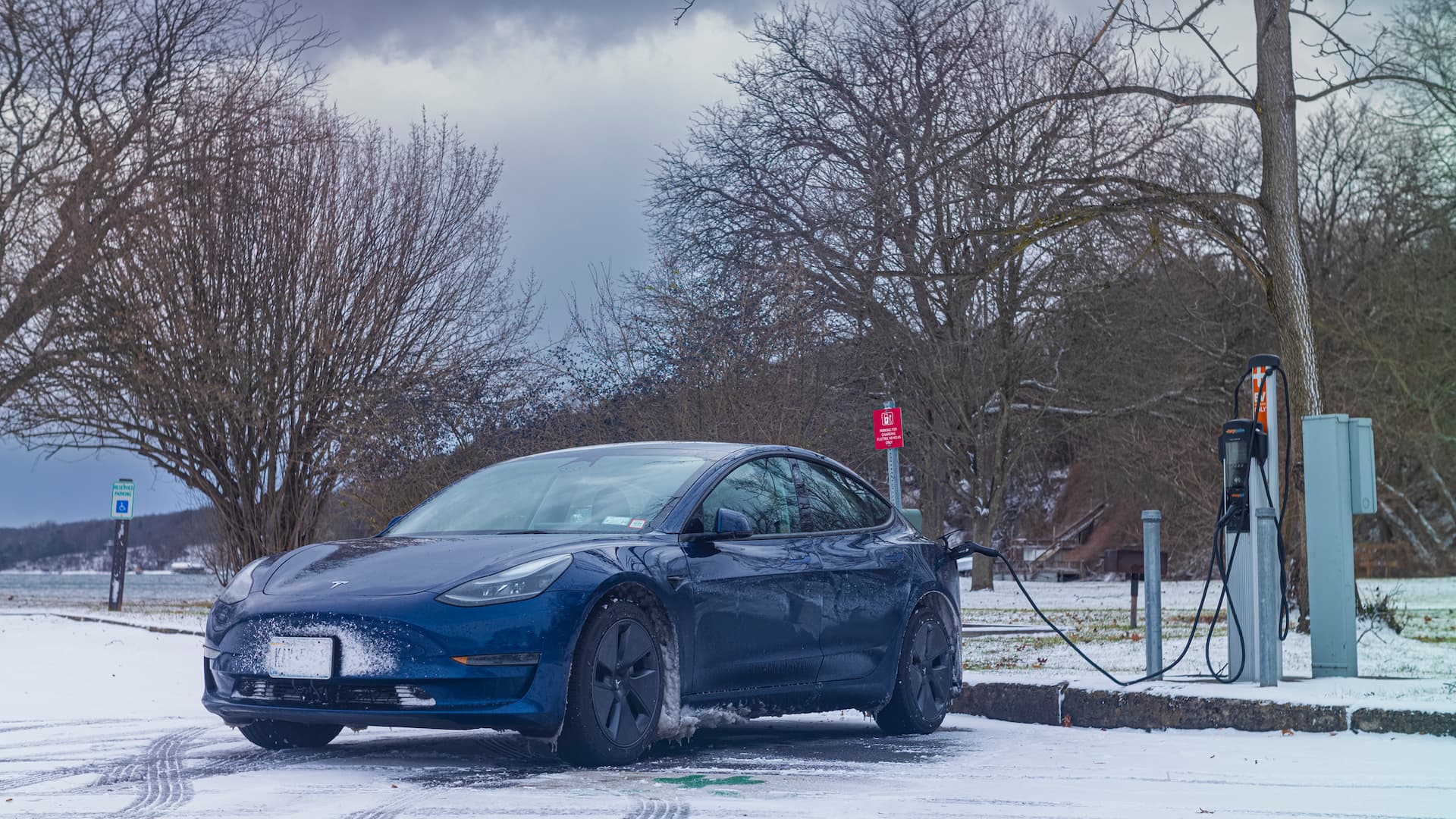
Does cold weather affect electric cars?
It does — mainly by reducing driving range and slowing charging speeds.
However, the extent of the impact varies depending on the model, trip length, and driving habits. Newer electric vehicles (EVs) are also becoming better at handling winter conditions, thanks to features such as heat pumps and more advanced energy management systems.
Let’s take a closer look at what happens with cold weather, and how to get the most out of your EV in those circumstances.
This Article Contains:
- Why Does Cold Weather Affect Electric Cars?
- How Does Cold Weather Affect EV Charging and Performance?
- How Can You Reduce EV Range Loss in the Cold?
Why Does Cold Weather Affect Electric Cars?
Cold weather changes how the battery operates and increases the energy needed to keep the cabin warm — both of which reduce driving range.
1. Batteries Are Less Efficient in Cold Temperatures
EVs use lithium-ion batteries, which rely on chemical reactions to release stored energy. When it’s cold, these reactions slow down and the battery’s internal resistance increases. This makes it harder for the battery to deliver power efficiently, leading to a temporary drop in usable range.
2. Heating the Cabin Requires Extra Energy
Gas-powered vehicles produce waste heat that can be reused to warm the cabin. EVs don’t generate that same excess heat, so warming the interior requires drawing energy from the battery. On short trips where the heater works hard, this can create a noticeable dip in efficiency.
How Much Range Loss Should You Expect?
In most moderately cold conditions, EVs typically see about 10–20% less range. In very cold, subzero temperatures, especially when the cabin heater is used frequently, range loss can approach 30–40%.
This loss is temporary. It doesn’t harm the battery or permanently reduce capacity. Once temperatures warm up, the original range returns.
How Does Cold Weather Affect EV Charging and Performance?
Cold weather influences not only how far you can drive, but also how quickly you can recharge, and how the car feels on the road:
1. Charging Speeds Slow Down
Cold batteries can’t accept charge as quickly, especially at DC fast chargers. The vehicle may need to warm the battery first, which leads to slower charging speeds and longer charging times.
2. Battery Preconditioning Helps
Many EVs can pre-warm, or ‘precondition,’ the battery before you arrive at a charger. In most models, setting the charger as your destination in the built-in navigation system triggers this automatically. Preconditioning helps raise the battery temperature for better charging performance, and is one of the most effective ways to maintain charging speed in winter.
3. Winter Driving is Stable, but Winter Tires Make it Better
Because the battery pack sits low in the vehicle, EVs have a low center of gravity, which supports traction and stability. Electric motors also deliver torque smoothly — helping with control on slippery roads.
However, winter tires still make a significant difference in stopping power and grip.
4. Tire Pressure Drops in the Cold
As temperatures fall, tire pressure naturally decreases. Low tire pressure reduces efficiency and reduces traction. Checking and adjusting tire pressure regularly helps maintain both range and safety.
How Can You Reduce EV Range Loss in the Cold?
Small changes in how you warm, park, and drive your EV can make winter driving smoother and more efficient.
- Pre-condition while plugged in: Warming the cabin and battery before driving helps conserve range since the energy used for heating is drawn from the charger rather than the battery.
- Use heated seats and steering wheel when possible: These features use considerably less energy than heating the entire cabin, keeping you warm while minimizing battery drain.
- Drive smoothly and reduce speed: Gentler acceleration and slightly lower speeds help conserve energy and extend range in cold weather.
- Park in a warmer environment when available: Parking in a garage or enclosed space helps keep the battery from getting too cold, reducing the energy needed to warm it back up before driving.
- Plan charging ahead with a small buffer: Mapping out charging stations in advance and leaving additional range margin helps avoid unnecessary stress when temperatures fluctuate.
- Check tire pressure regularly: Maintaining recommended tire pressure improves both efficiency and winter traction.
Find out more about EV battery maintenance and what happens when the EV battery finally wears out.
Your EV Can Handle Winter — With a Little Planning
Cold weather can cause EVs to lose range and reduce charging speeds. But these effects are manageable. Simple habits, such as pre-conditioning, efficient heating use, and planning ahead for charging, can help you drive confidently all winter long.
Need some help prepping your car for winter?
AutoNation Mobile Service is available 7 days a week, offering a 12-month/12,000-mile warranty on all work performed. You can book your service online at your convenience.
Whether you’re preparing for winter driving or simply due for routine service, you can count on us for reliable support.