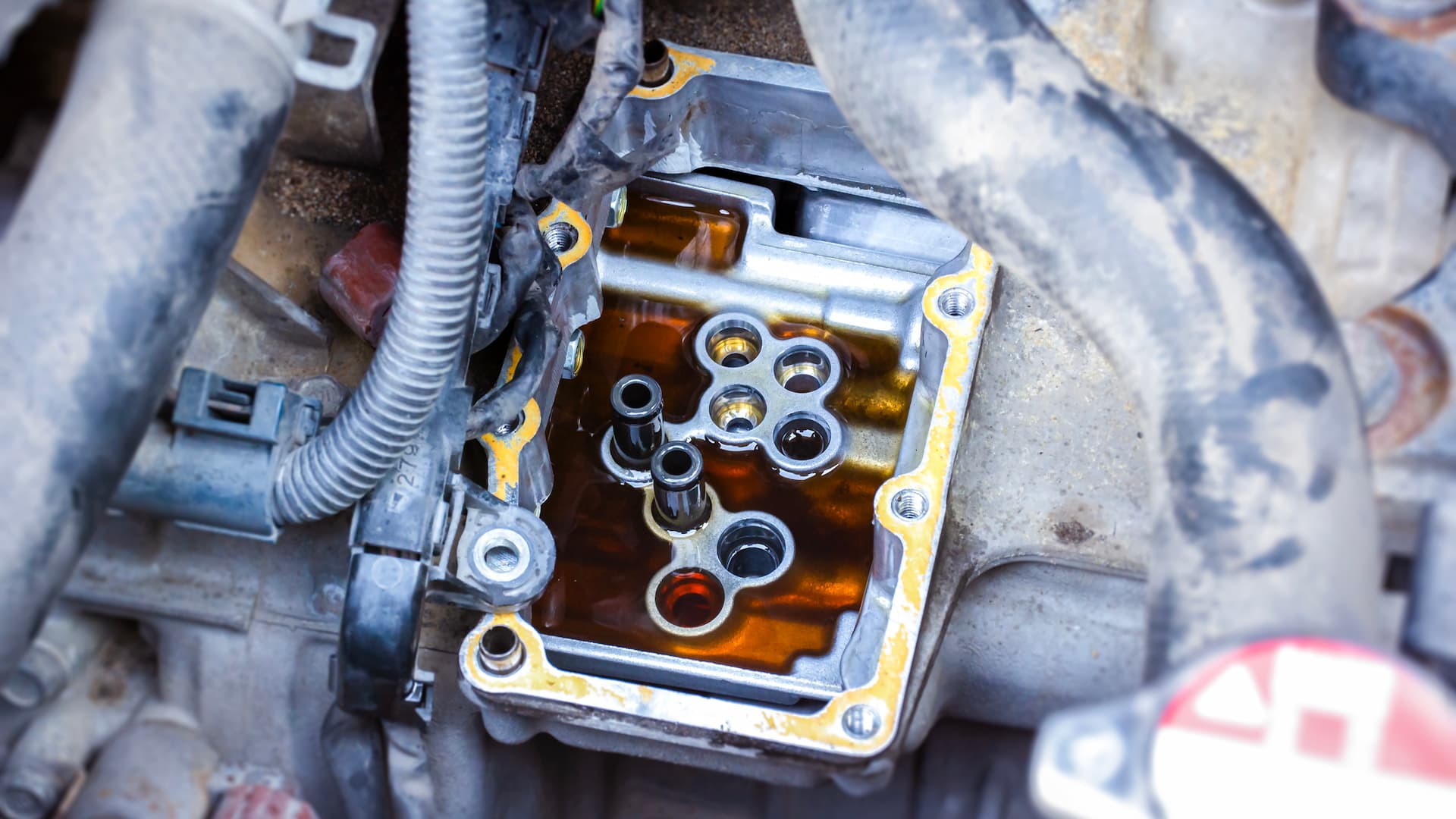
Transmission fluid is the lifeblood of your car’s transmission, keeping it cool, lubricated, and shifting smoothly. But once that fluid turns dirty, it can spell trouble, causing rough shifts, slipping gears, overheating, and repair bills you don’t want to see.
In this guide, we’ll go over nine noticeable dirty transmission fluid symptoms so you know exactly what to watch for and when to take action.
This Article Contains:
- 9 Common Dirty Transmission Fluid Symptoms
- What If It’s a Bad Transmission Control Module and Not Dirty Trans Fluid?
- When Should You Replace Your Transmission Fluid?
- How Is Transmission Fluid Changed?
Let’s go!
9 Common Dirty Transmission Fluid Symptoms
When your car’s transmission fluid gets dirty or breaks down, you’ll usually spot these warning signs:
1. Dark or Discolored Fluid
Fresh transmission fluid is bright red or pink. If it looks brown or black, it means the fluid is old or contaminated and can no longer protect the transmission.
2. Milky Transmission Fluid
Milky fluid usually means that water, coolant, or engine oil has leaked into the transmission. This type of contamination is serious because it can quickly damage internal components.
If you spot milky fluid, have a mechanic find and fix the leak source ASAP, then change the fluid.
3. Thick Fluid or Sludge Buildup
Old transmission fluid can evaporate and thicken over time. Once it becomes sticky or sludgy, it can’t flow through the system or lubricate the parts correctly. If not addressed immediately, it can risk severe damage to your transmission.
4. Metal Shavings in the Fluid
Metal shavings in the fluid are a warning sign that internal parts are wearing out and grinding against each other. If ignored, the damage can worsen and lead to transmission failure.
5. Burning Smell
When the fluid gets too dirty, it loses its ability to cool and lubricate the transmission. As a result, the transmission overheats, and the fluid begins to burn.
A burnt smell from the dipstick or while driving is a strong warning that the fluid should be replaced before more damage occurs.
6. Difficulty Shifting Gears
If your transmission fluid is low or dirty, shifting may become difficult. In a manual car, the gear stick may feel stiff or resistant, while in an automatic, shifts may feel delayed or rough.
7. Slipping Gears
Slipping happens when the transmission can’t stay in the proper gear. You might notice the engine revving without the car speeding up, a sudden loss of power, or the vehicle unexpectedly shifting between gears.
This is often due to contaminated or low fluid that can no longer maintain hydraulic pressure.
8. Vehicle Surging
If your car suddenly surges forward or jerks while driving, it could be due to restricted transmission fluid flow. Contaminants or debris in the fluid can block circulation, causing the transmission to behave unpredictably.
9. Strange Noises
Unusual noises like whining, grinding, or clunking can mean the transmission fluid isn’t lubricating key internal parts such as gears, bearings, and clutch packs.
But is dirty fluid the only cause of these symptoms?
Let’s find out.
What If It’s a Bad Transmission Control Module and Not Dirty Trans Fluid?
A bad Transmission Control Module (TCM) can cause problems similar to dirty transmission fluid, such as slipping gears or rough shifting. However, TCM issues also have their own distinct warning signs.
Here’s how to spot them:
- Watch for TCM-specific symptoms: Unpredictable shifting, transmission stuck in one gear, hard shifts, loss of power, or the check engine light turning on are all signs of a faulty TCM.
- Check the trans fluid: Look at its color, smell, and level. If the fluid is still clean and at the right level, the problem may not be fluid-related.
- Use an OBD-II scanner: Plug in a scanner to check for electronic faults. If the TCM is failing, you’ll often see error codes like:
- Inspect wiring and connectors: Check the TCM’s wiring harness and connectors for corrosion, damaged pins, or loose connections, since these can also trigger shifting problems.
If the fluid checks out and the scanner shows TCM-related codes, the issue is likely electronic rather than dirty transmission fluid.
That said, replacing the fluid on time is key to avoiding transmission damage. That brings us to the next question:
When Should You Replace Your Transmission Fluid?
Transmission fluid replacement intervals vary by transmission type:
- Manual transmission fluid: Every 30,000 to 60,000 miles
- Automatic transmission fluid: Every 60,000 to 100,000 miles
The exact interval depends on your vehicle and driving conditions, so the safest approach is to follow your manufacturer’s service schedule.
Let’s see how the replacement process works.
How Is Transmission Fluid Changed?
Changing transmission fluid is more complex than it looks. Using the wrong fluid type or skipping a step can cause severe transmission damage, so it’s best to have a professional mechanic do it.
Here’s a quick overview of the process they’ll follow:
- Warm up the engine and check the fluid
- Lift the vehicle and drain the old fluid
- Inspect the fluid for dirt or metal shavings
- Replace the transmission filter (if required)
- Reinstall the drain plug and refill with fresh fluid
- Recheck fluid levels and take the car for a test drive
Looking for a detailed, step-by-step walkthrough?
Read our complete guide on how to change dirty transmission fluid.
Transmission Service Made Easy with AutoNation Mobile Service
Staying on top of your transmission fluid is the best way to avoid bigger problems down the road. If you’ve started noticing dirty or worn fluid symptoms, don’t wait to get it checked.
With AutoNation Mobile Service, you can easily book an online appointment and have your car serviced right in your driveway. All repairs also come with a 12-month, 12,000-mile warranty for added peace of mind.
Contact us today to keep your transmission healthy.