
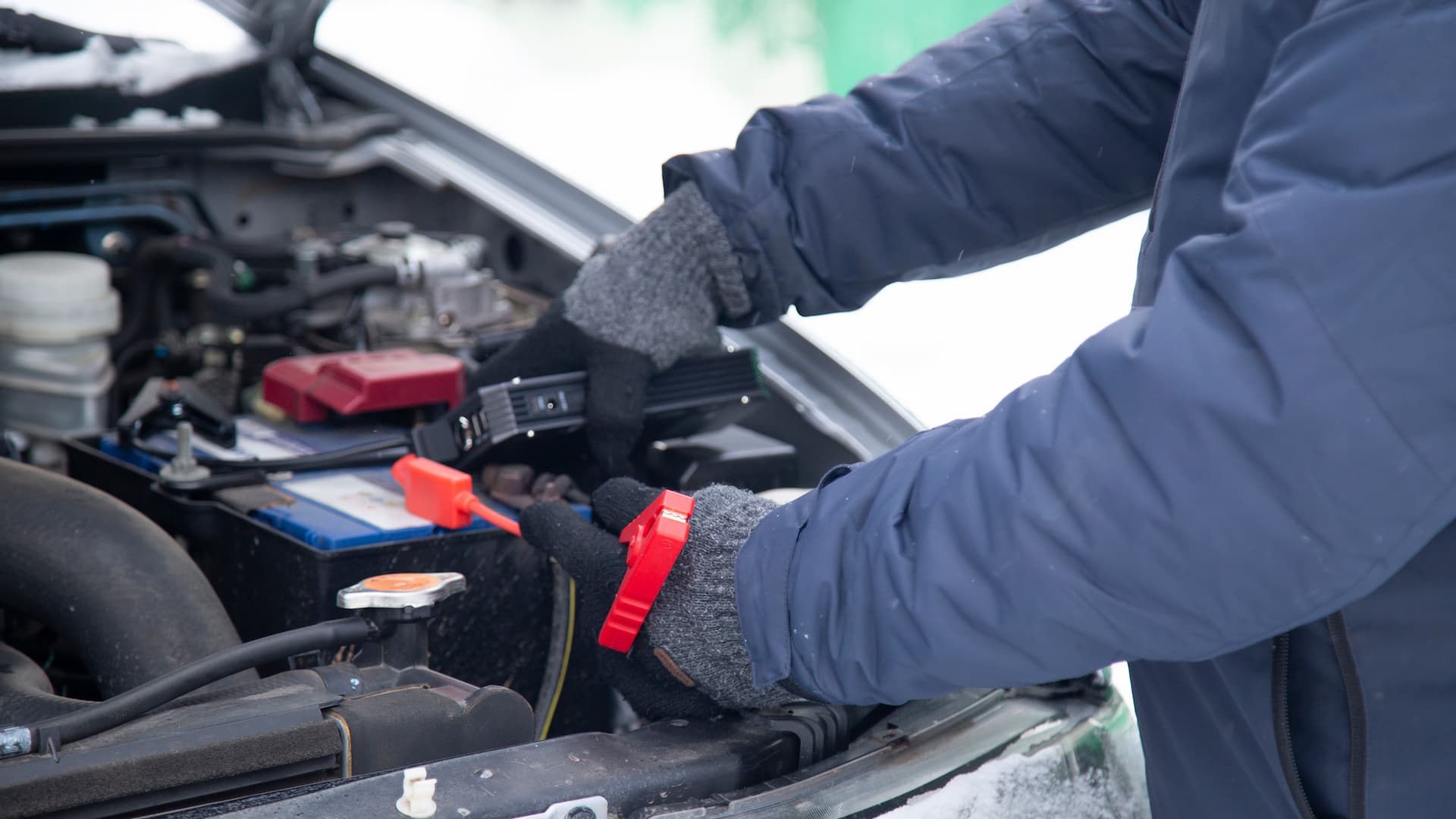
It’s a freezing morning: lights are bright, dash glows — yet the engine won’t start.
Even with a strong battery, cold weather can expose weak links in your fuel, fluids, or starting systems. Here’s how to figure out what’s happening, and what you can do to get moving.
This Article Contains:
- Car Won’t Start in the Cold, But the Battery is Good? Reading the Signs
- Electrical Gremlins in the Cold
- Frozen Fuel Lines
- Cold Weather Fluid Trouble
- Ignition and Sensor Problems
- Tips For an Easier Cold Crank
Car Won’t Start in the Cold, But the Battery is Good? Reading the Signs
If your car refuses to start in cold weather, listen carefully when you turn the key (or press Start). The sound and speed of the crank can reveal a lot:
- Cranks fast but won’t fire: The starter spins normally, so power’s fine — but the engine isn’t getting spark or fuel. Possible culprits include frozen fuel lines, clogged injectors, or worn spark plugs.
- Cranks slowly, like it’s dragging through molasses: The battery may test “good,” but thick oil, a cold-soaked starter, or partially frozen coolant adds drag.
- Single click, then nothing: The starter solenoid is trying to engage, but can’t. You might have a failing starter motor or a corroded terminal restricting current.
- No click, no crank: If your lights still work, suspect the ignition switch, a neutral safety sensor, or wiring faults.
Each sound is a clue whether you’re dealing with an electrical, fuel, fluid, or ignition issue.
Let’s take a closer look at them.
Electrical Gremlins in the Cold
Cold weather is hard on your electrical system. Even a healthy-looking battery can struggle to deliver enough power.
1. It Might Still Be the Battery
Older batteries lose efficiency when temperatures drop. Even newer ones can fail if they lack the cold-cranking amps (CCA) needed to handle freezing starts.
Fix and prevent:
- Replace batteries over four years old or with low CCA
- Turn off accessories before shutdown
- Drive long enough for the alternator to recharge
- Keep terminals clean and tight
- Use a battery tender overnight
2. Check the Alternator
A weak alternator can leave your “good” battery undercharged.
Fix: If voltage drops below 13.5V while running, your alternator needs a repair or rebuild.
3. Starter Trouble
A single click or grinding sound points to a failing starter motor or solenoid.
Fix: Replace it before it strands you in the cold.
Frozen Fuel Lines
Moisture in the tank or lines can freeze below 0°C, blocking fuel flow — a common reason for winter no-starts.
Other signs include sputtering, jerky acceleration, or revving without pressing the gas.
Fix and prevent:
- Keep your tank at least half full to reduce condensation
- Add fuel-line antifreeze to absorb moisture
- Use top-tier fuel with lower alcohol content (ethanol attracts water)
- Add a fuel stabilizer if your car sits for weeks
Cold Weather Fluid Trouble
When temperatures plummet, fluids thicken, adding resistance that slows cranking or movement.
1. Motor Oil Too Thick to Crank
If your engine turns over sluggishly, the oil may be too viscous.
Fix: Switch to a winter-grade oil, such as 5W-30 instead of 10W-40.
2. Coolant or Antifreeze Not Rated for Freezing Temps
Coolant that isn’t rated for low temperatures can freeze, and even lead to engine block cracks.
Fix: Use coolant rated to –40°C (or appropriate for your climate).
Quick checks:
- Coolant in the reservoir should look clean and bright, not rusty or milky.
- Oil on the dipstick should look normal. Milky residue suggests coolant contamination.
Ignition and Sensor Problems
You need both a strong spark and accurate sensor data for a cold start.
1. Worn or Weak Spark Plugs
Cold air-fuel mixtures need a robust spark. Old or fouled plugs can fail under stress.
Fix: Replace spark plugs and inspect ignition coils.
2. Faulty Sensors or Timing Issues
Crankshaft or temperature sensors can misread data in extreme cold, confusing the ECU and preventing ignition.
Fix: Have a mechanic run a diagnostic scan to pinpoint the error.
For a little extra help on icy mornings, try these:
Tips For an Easier Cold Crank
Starting a car in the cold can be challenging. Here are some tricks to help get that spark firing:
- Warm up the battery: Turn on your headlights for 10 seconds, then start.
- Avoid engine flooding: Don’t crank repeatedly — wait 30 seconds between tries.
- Jump-start the car: If it fires up, have your charging system tested.
- Protect the battery: Use a block heater or battery blanket overnight.
- Keep your car sheltered: Park in a garage or wind-protected spot.
If it still refuses to start, it’s time to get professional help.
Don’t Let the Cold Catch You Off Guard
Cold weather magnifies every weakness in your car. Even with a “good” battery, problems in your fuel, fluids, or ignition can leave you stranded. Before winter hits, switch to winter-grade oil, top up antifreeze, test your battery’s CCA, and keep your tank filled. A little preparation makes cold starts far easier.
Need a hand with a cold engine?
AutoNation Mobile Service comes to you 7 days a week, with easy online booking and a 12-month/12,000-mile warranty for all maintenance and repairs.
Book your service today and stay ahead of winter.