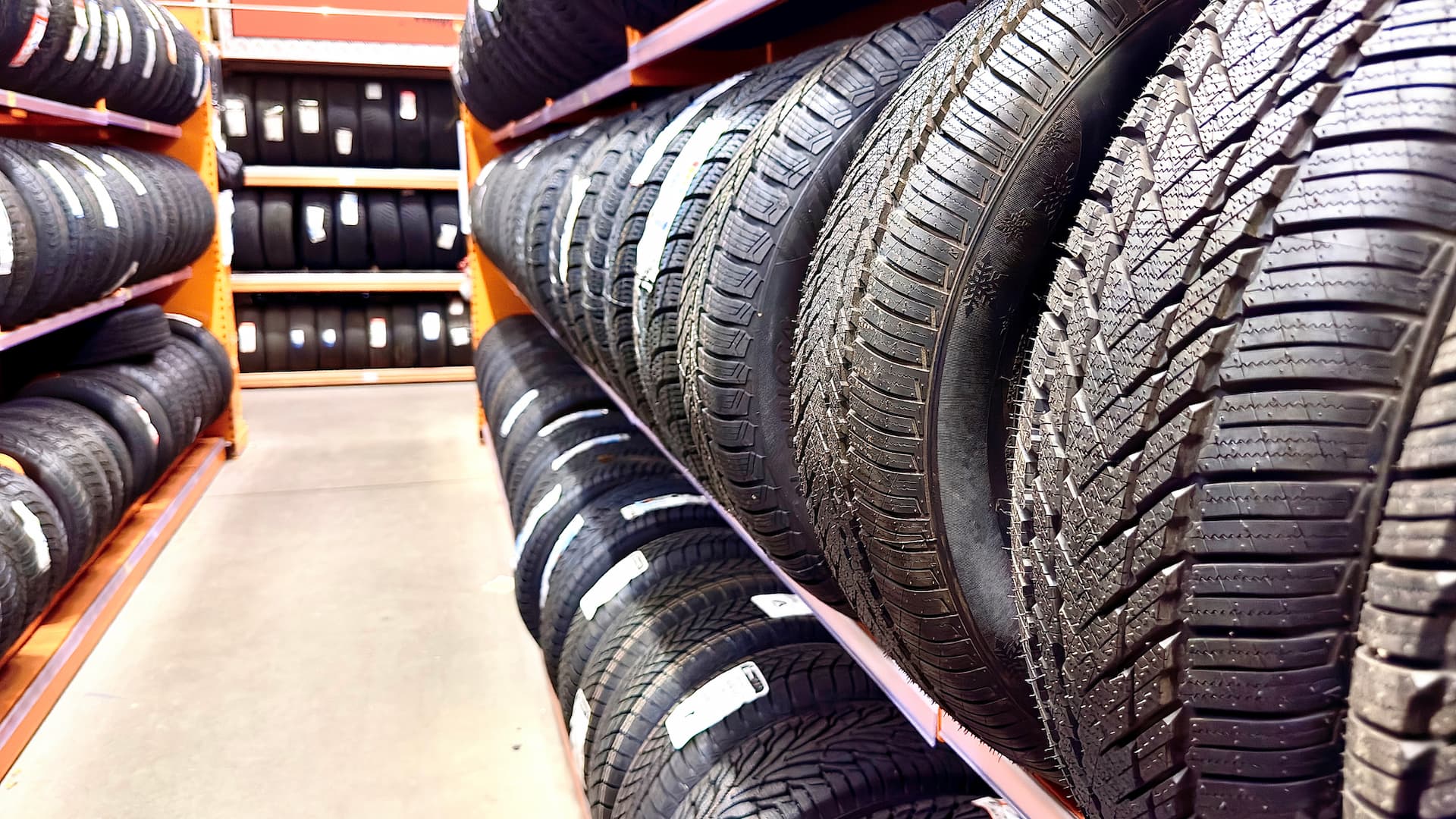
Your car’s shiny paint job and feature-packed dashboard might grab attention, but it’s the tires that truly keep you safe. They’re the only part of your vehicle that actually touches the road.
But guess what, choosing the right tires depends on more than just the size. It’s also about tread design, climate, driving style, and even the type of vehicle you drive.
Unsure where to begin?
This guide breaks down all the factors you must consider before buying new tires so you can make a wise, confident choice.
Let’s begin!
1. Vehicle Requirements
Your car already tells you which tires are best for it in terms of size and specifications. To find out, just check the owner’s manual or the placard on the driver’s door.
Look for details like:
- Recommended tire size
- Load index (maximum weight the tire can carry)
- Speed rating (maximum speed the tire can safely handle)
More importantly, stick to the same type and size on all four wheels for balance and safety.
If your car still has the Original Equipment Manufacturer tires, you can check the sidewall markings to find the perfect match.
The marking may read something like: 255/55 R17 72H
Here’s what each means:
- 255 is the tire width (mm)
- 55 is the sidewall-to-height ratio
- R stands for radial (tyre’s internal construction)
- 17 is the wheel diameter (in inches)
- 72 is the load index (the maximum weight it can carry) – 355 kg per tire
- H is the speed rating – up to 130 mph
2. Tread Pattern
Those grooves, channels, and sipes do more than give tires their “look”. They directly affect grip, water dispersion, and even road noise.
Broadly, tread patterns fall into three categories:
- Conventional (symmetric): The most common, can be mounted either way. These are versatile for everyday driving.
- Directional (unidirectional): You can recognize them by “V” or arrow-like designs. They must be mounted in a specific direction for maximum water evacuation and stability. They are commonly found in winter tires.
- Asymmetric: These have different tread designs on the inner and outer sidewalls. The inner pattern improves wet grip, while the outer enhances cornering and durability.
3. Climate Considerations
The climate in which you regularly drive plays a huge role in tire choice.
Here are some options to choose from:
- All-season tires: These are a safe bet if you drive in a moderate climate with mild winters. All-season tires are designed to handle a bit of everything.
- Winter tires (often called snow tires): If your region gets heavy snow, ice, or temperatures consistently below 44°F, winter tires are a must. They’re made with softer rubber and special tread patterns that grip cold, slippery roads far better than all-seasons.
- Summer tires: If you drive in warm, dry weather most of the year, summer or performance tires give you the best handling, traction, and cornering response.
TIP: For extreme winter conditions or mountain driving, keep a set of snow chains handy. Some states even require them during storms.
3. Driving Style
The way you drive has a direct impact on the tires you should choose:
- For short commutes and smooth driving: Touring or all-season tires are ideal since they use harder compounds and symmetric tread patterns, giving you a quiet ride, better fuel economy, and long tread life.
- For long-distance, steady speeds: Grand touring tires work best because they’re designed with higher speed ratings (H or V), heat-resistant rubber, and noise-reducing tread patterns. This makes them safer and more comfortable for extended trips.
- For spirited cornering, fast acceleration and braking: Ultra-High-Performance (UHP) or asymmetric tires are your match. They use softer rubber for maximum grip, stiff sidewalls for sharper handling, and come with higher speed ratings (W or Y) for high-speed safety.
- For SUVs and minivans: Extra Load (XL) or Light Truck (LT) tires are the way to go. They have reinforced sidewalls, higher load indexes, and stronger construction to keep your vehicle stable under weight while still offering durability.
- For off-roading: All-Terrain (A/T) or Mud-Terrain (M/T) tires are your best bet, built with aggressive tread blocks for grip, reinforced casing to resist punctures, and durability to handle rough surfaces. However, they can be noisier on highways.
4. Additional Factors
Small details can impact your road safety, vehicle performance, and even fuel economy. So, keep these in mind before you buy:
- Date of manufacture: You should avoid tires older than 6–12 months, as rubber hardens with age.
- Rubber compound: Softer rubber ensures better grip but faster wear. On the other hand, harder rubber means longer life but less traction.
- Quality and warranty: Check brand reputation and read warranty fine print.
- Fuel efficiency: Opting for low rolling-resistance tires can help improve mileage, especially for EVs.
- Treadwear rating: Higher rating = longer life; lower rating = better grip.
- Run-flat technology: These let you drive 50–80 miles after a puncture.
- EV-specific tires: These are reinforced for extra weight. Plus, it’s designed for range and quiet operation.
- OEM tires: It’s best to stick with manufacturer-recommended tires for fit and safety.
PRO TIP: Avoid buying retreaded tires. They may save money upfront, but they often compromise safety and performance.